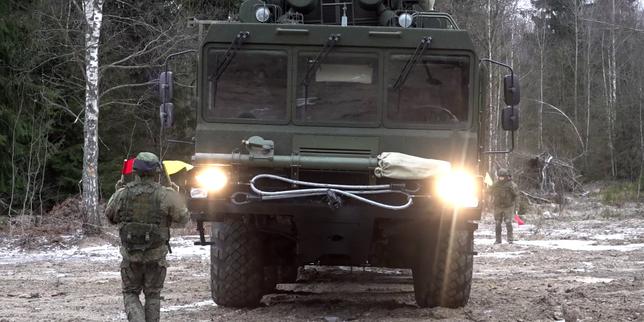
Volodymyr Zelensky is telling the world to brace for another imminent Russian Orechnik missile strike. The media is dutifully printing the warnings. The public is panicking.
This is exactly what the Kremlin engineered to happen.
The mainstream geopolitical analysis of Russia’s newer missile capabilities is fundamentally flawed. We are witnessing a masterclass in psychological warfare, yet western commentators treat it as a straightforward military escalation. By reacting to the Orechnik—an experimental ballistic missile system—as an existential tactical threat rather than a high-cost propaganda tool, western leadership plays directly into Vladimir Putin’s hands.
Stop analyzing the payload. Start analyzing the theater.
The Oreshnik Illusion: Breaking Down the Mechanics
To understand why the current panic is misplaced, we must look at what the Orechnik actually is. Stripped of the terrifying rhetoric, it is essentially a modified intermediate-range ballistic missile (IRBM), likely derived from RS-26 Rubezh technology, configured to carry multiple independently targetable reentry vehicles (MIRVs).
When Russia fired it at Dnipro, the world gasped at the footage of multiple kinetic warheads raining down in luminous streaks. It looked like the end of the world.
In reality, it was an incredibly expensive fireworks show.
- The Cost-Benefit Absurdity: Manufacturing an IRBM with MIRV capability costs tens of millions of dollars per unit. Using such a weapon to deliver conventional, non-nuclear explosives to a single localized target is the military equivalent of using a gold-plated sledgehammer to crack a nut.
- The Production Bottleneck: Russia cannot mass-produce these missiles. Military intelligence estimates from agencies like Janes and the International Institute for Strategic Studies (IISS) consistently show Russia’s high-precision manufacturing lines are severely bottlenecked by Western component sanctions, despite smuggling networks. They have dozens of these weapons, not thousands.
- The Interception Paradox: While the Orechnik’s terminal speed makes it incredibly difficult for standard air defense systems like the Patriot PAC-3 to intercept, its strategic utility is near zero if it only carries conventional explosives.
I have watched defense ministries burn through billions of dollars chasing phantom threats because they failed to separate a adversary's capability from their capacity. Russia has the capability to launch an Orechnik. It completely lacks the capacity to sustain an Orechnik-based air campaign.
Dismantling the "People Also Ask" Flawed Premises
The internet is flooded with terrified queries about this weapon. The answers being provided by mainstream outlets are cowardly and incomplete. Let's fix that.
"Can the Orechnik missile carry nuclear warheads?"
Yes, it can. But asking this question misses the entire point of nuclear deterrence. If Russia decides to launch a nuclear strike, they do not need a new, experimental IRBM to do it; they have thousands of legacy ICBMs and submarine-launched ballistic missiles that can already bypass most global defense grids. The Orechnik exists precisely to occupy the gray zone below nuclear deployment while carrying the terrifying visual signature of a nuclear strike. It is designed to scare the West into self-deterrence.
"Why aren't Western air defenses stopping it?"
Because Western air defense doctrine, developed by companies like Raytheon and MBDA, was never designed to protect every single square inch of a nation from specialized, multi-million-dollar ballistic missiles carrying conventional warheads. It is economically unsustainable. The correct response to an Orechnik launch is not to buy a billion dollars' worth of new interceptors; it is to ignore the spectacle and destroy the production facilities or the logistics chains supplying the launchers.
The Self-Deterrence Trap
The real danger here isn't the physical destruction the Orechnik causes on the ground in Ukraine. The danger is the political paralysis it induces in Washington, London, and Berlin.
Every time Volodymyr Zelensky issues an urgent, late-night warning about an imminent strike, he inadvertently validates Putin's strategy. The Kremlin wants the Ukrainian population exhausted by air raid sirens. More importantly, they want Western politicians to look at the threat of an unstoppable ballistic missile and say, "Maybe we shouldn't allow Ukraine to use Storm Shadow or ATACMS deep inside Russian territory."
The True Strategy: The Orechnik is not a weapon of war; it is a weapon of communication. It is a physical memorandum sent to NATO, written in rocket fuel, demanding that the West back down.
Imagine a scenario where a casino bully spends his entire life savings on a single, massive, terrifying revolver. He walks into the room, spins the chamber, and points it at the crowd. He can only afford three bullets, and shooting anyone means the entire room will jump him. If you run away, the bully wins without firing a shot. That is the Orechnik doctrine.
The Unconventional Playbook for the West
If Western leadership wants to neutralize the threat of Russia's new missile tech, they need to stop reacting like terrified bureaucrats and start acting like cold-blooded strategists.
1. Call the Bluff Globally
The next time an Orechnik launch is detected via early-warning satellites, the response should not be a panicked media blitz. It should be a coordinated, indifferent shrug. Publicly categorize the weapon as a "gross misallocation of Russian state capital" and an "inefficient conventional delivery system." De-escalate the psychological premium Russia derives from the weapon.
2. Symmetrical Authorization
For every Orechnik Russia prepares or launches, the West must instantly lift another layer of restrictions on Ukraine’s long-range targeting capabilities. Link the two directly. If Russia deploys an experimental IRBM, Ukraine gets immediate targeting clearance for twenty deeper strategic nodes inside Russia using existing Western stockpiles. Turn Russia's psychological weapon into a liability for their own domestic infrastructure.
3. Target the Supply Chain, Not the Missile
The technical reality of the Orechnik's guidance systems means it relies heavily on diverted dual-use electronics. Instead of debating the deployment of more Patriot batteries—which take years to build—the immediate focus must shift to aggressive, secondary sanctions on the front companies in Central Asia and East Asia that facilitate the flow of microelectronics to Russian design bureaus like NPO Mashinostroyeniya.
The downside to this approach is obvious: it requires stomach. It means accepting the risk that a conventional Orechnik missile might hit a high-profile target without an interceptor blowing it up mid-air. It requires telling the public a brutal truth: in modern warfare, you cannot protect everything, and trying to do so guarantees defeat.
Continuing down the current path—tracking every rumor of a launch, shifting diplomatic postures based on missile tests, and treating an inefficient delivery system as a paradigm-shifting threat—ensures that Russia wins the psychological war without ever needing to achieve victory on the battlefield.
Stop watching the sky for the next streak of light. Look at the balance sheet, look at the production limits, and realize you are being conned by an adversary running low on options.