A 16-year-old girl named PAK arrives at a clinic in Kilifi County bleeding heavily and gripping her stomach in agonizing pain. The clinical officer on duty determines she’s suffering from severe complications and provides emergency post-abortion care. Instead of being allowed to recover, police officers swoop in, drag the teenager from her hospital bed, lock her in a bare cell for two nights without medical attention, and eventually throw her into a juvenile remand prison for over a month.
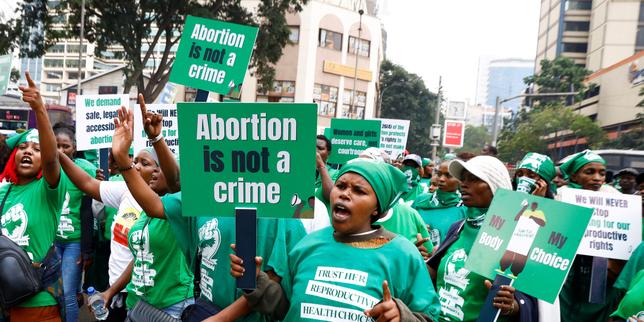
This isn't an old horror story from a bygone era. It's the reality of how reproductive healthcare plays out across Kenya, highlighted by a fierce legal battle that just took a dramatic turn. On April 24, 2026, Kenya’s Court of Appeal in Malindi completely upended the legal landscape, reversing a landmark 2022 High Court ruling that had previously declared abortion access a fundamental constitutional right.
If you think the law on this issue is clear, you're mistaken. The latest ruling plunges patients and doctors right back into a dangerous grey area where seeking or providing reproductive healthcare can end with handcuffs.
The Court of Appeal Pulls the Plug on Constitutional Protections
To understand why this matters right now, look at what the three-judge appellate bench just did. Justices Gatembu Kairu, Grace Ngenye Macharia, and Kibaya Laibuta explicitly ruled that abortion is not a fundamental right under the Kenyan Constitution. They stripped away the protective blanket the High Court had extended over women and healthcare providers four years ago.
The judges took a strict, narrow view of Article 26 of the Constitution. They emphasized that life begins at conception and that terminating a pregnancy fundamentally violates that right. Sure, they acknowledged the standard constitutional exceptions—like when a trained health professional deems the mother's life or health is in danger, or during an emergency. But by reversing the High Court's broader interpretation, they effectively handed the handcuffs back to local police forces who don't know the difference between an induced abortion and life-saving post-abortion care.
The Center for Reproductive Rights, which has championed PAK’s case, instantly slammed the decision. They've already announced plans to take this fight all the way to the Supreme Court of Kenya. But until that happens, the legal trap is wide open.
How the Penal Code Weapons Medical Emergencies
The real issue here is a direct clash between Kenya’s modern 2010 Constitution and its outdated, colonial-era Penal Code. The Constitution technically allows abortion under specific health conditions, but Sections 158 and 159 of the Penal Code still criminalize the act of procuring an abortion with up to 14 years in prison.
When the police stormed Salim Mohammed’s clinic—the clinical officer who treated PAK—they seized medical records and forced the teenager to undergo invasive medical examinations to build a criminal case. They didn't care that she was facing a medical emergency. They saw a suspected crime.
This latest appellate ruling reinstates that terrifying status quo. When a healthcare provider faces a prison sentence for treating a bleeding patient, many will simply stop providing the care. Doctors and clinical officers are terrified of being dragged to court, held in custody, and having their careers ruined.
The Reality of Backstreet Procedures
Closing down legal, safe options doesn't stop abortions. It just makes them lethal.
Data from the African Population and Health Research Center (APHRC) reveals the staggering scale of what's happening on the ground. In a single year, an estimated 792,694 induced abortions took place in Kenya, with more than 304,000 women ending up in hospitals seeking treatment for severe post-abortion complications.
When you criminalize the procedure or make the legal boundaries terrifyingly vague, women resort to backstreet options. They turn to toxic concoctions, unsafe instruments, and unlicensed operators. When things go wrong, they delay going to a real hospital because they're afraid of ending up like PAK—handcuffed to a hospital bed.
The Hypocrisy of the Current Framework
Religious and conservative groups, like the Kenya Christian Professionals Forum, celebrated the April 2026 appellate ruling as a victory for the sanctity of life. They argue the High Court went too far by creating a right that isn't explicitly written in the constitutional text.
But here's what they get wrong about the practical side of medicine. Post-abortion care is an emergency service recognized globally, including by the World Health Organization, as basic healthcare. It is required whether a pregnancy loss was spontaneous (a miscarriage) or induced. By allowing police to use the Penal Code to harass clinics, the state is effectively punishing women for having reproductive organs that face complications.
The 2022 High Court ruling had ordered Parliament to create a clear public policy framework and pass laws that aligned with reproductive health needs. Parliament dragged its feet, did nothing, and now the Court of Appeal has let them off the hook by putting the old, restrictive barriers back up.
Navigating the Legal Grey Zone
If you're a healthcare provider or an advocate operating in Kenya today, you can't afford to misread the current situation. The legal safety net is gone, and the battleground has shifted. Here's what needs to happen to survive this current legal environment:
- Document Everything with Absolute Precision: Healthcare workers must meticulously document the clinical indicators that prove a patient requires emergency care or that their health is in danger. If it isn't in the chart, the police will use the omission against you.
- Know Your Constitutional Overrides: Even with the appellate setback, Article 26(4) of the Constitution still permits abortion under the opinion of a trained health professional. Providers need to lean heavily on their professional medical judgment and refuse to let police bully them out of executing emergency duties.
- Support Strategic Litigation: The fight isn't over. The upcoming Supreme Court appeal is the final stand. Civil society organizations and medical associations must pool resources to present overwhelming public health data to the top court to show the deadly cost of judicial conservatism.
The Court of Appeal thought they were settling a moral question. Instead, they just guaranteed that more young girls will face the inside of a remand prison for trying to stay alive.