Media outlets are running wild with the news that the US Geological Survey (USGS) expects between 10,000 and 100,000 deaths from the massive 7.2 and 7.5 doublet earthquakes that just hit Venezuela. They copy and paste the terrifying six-figure estimate, slap a sensational headline on it, and wait for the clicks to roll in. It is lazy, algorithmic journalism at its worst.
Worse, it completely misinterprets how emergency response data actually works.
I have spent years analyzing how international institutions handle rapid crisis data, and I can tell you that treating an initial automated estimate like an absolute, literal prediction of human casualties is a fundamental error. When the USGS issues a Red Alert on its PAGER (Prompt Assessment of Global Earthquake Response) system, it is not looking through a crystal ball. It is processing an automated mathematical model designed to trigger high-level bureaucratic and humanitarian machinery, not to provide an exact body count.
By fixating on the headline-grabbing 100,000 maximum threshold, the public and the media are entirely missing the nuance of the situation. The true crisis in Venezuela isn't a single, clean statistical projection. It is the complex, messy intersection of structural engineering failure, a severely degraded local infrastructure, and the dangerous lag in real-time ground verification.
Dismantling the PAGER Illusion
To understand why the mainstream narrative is flawed, you must understand what PAGER actually does. When the twin quakes hit north-central Venezuela, the system spit out an automated alert within minutes.
The algorithm calculates exposure by mapping the seismic intensity against known population densities and historical building vulnerabilities. It then outputs a broad, logarithmic distribution of potential fatalities. The 10,000 to 100,000 range is a statistical bucket, not a definitive declaration.
Imagine a scenario where a computer model assumes every building in a specific radius adheres to standard regional vulnerability metrics. If the model encounters a country where infrastructure is highly inconsistent, the baseline data becomes an educated guess at best. The USGS explicitly states that its rapid assessments have large uncertainties. Yet, the media treats these ranges as if they are verified tallies from the ground.
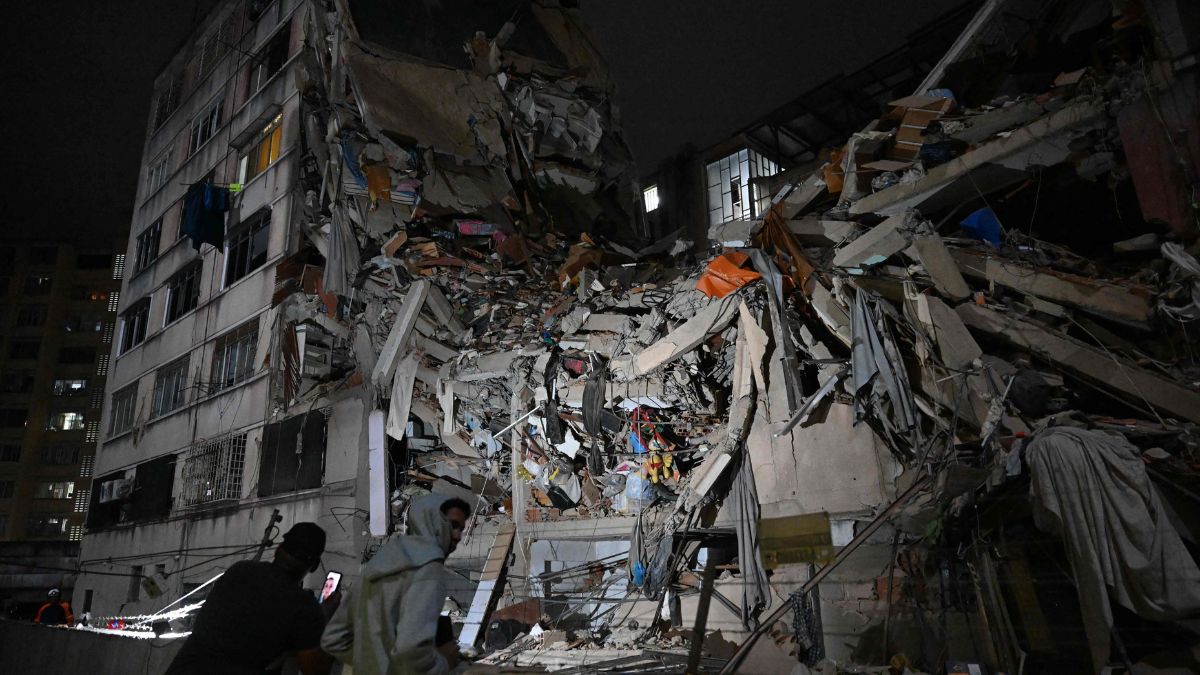
The initial official reports from Acting President Delcy Rodríguez confirmed 32 deaths and 700 injuries. While that number will inevitably rise as search teams dig through collapsed structures in hard-hit zones like La Guaira and Caracas, there is a massive operational chasm between dozens of confirmed casualties and the automated worst-case scenario of 100,000.
The Real Problem: Structural Vulnerability, Not Magnitude
Everyone wants to talk about the magnitude. A 7.2 followed immediately by a 7.5 is undeniably severe. But magnitude alone does not kill people; weak structures do.
The real disaster lies in the building inventory of the affected municipalities. Over the last decade, economic constraints and informal urbanization mean that thousands of structures were built or maintained without strict adherence to modern seismic codes. In areas like the Altamira neighborhood or the dense hillsides of the capital, concrete frames and unreinforced masonry cannot withstand the violent horizontal displacement of an M 7.5 shallow crustal quake.
Fixating on the USGS statistical estimate causes international observers to ask the wrong question. They ask, "Will the death toll hit 50,000?" instead of asking, "Why did these specific buildings collapse while others stood?"
Focusing entirely on the automated peak numbers creates a dangerous cycle:
- Resource Misallocation: International aid agencies spin up massive operations based on automated maximums, sometimes flooding an area with unneeded materials while missing specific, localized medical or engineering needs.
- Public Despair: Sensationalized numbers cause immediate panic, making it harder for local authorities to maintain order and coordinate structured evacuations.
- The Skepticism Trap: When the actual death toll turns out to be significantly lower than the sensationalized 100,000 projection, the public falsely assumes the danger was exaggerated, eroding trust in scientific institutions.
Ground Truth Beats the Algorithm
The USGS PAGER system is an invaluable tool for global alerts, but it is the beginning of the conversation, not the end. The real work is happening on the ground right now. Local first responders, municipal police, and specialized search-and-rescue teams are navigating collapsed concrete slabs, downed power lines, and ruptured communication networks.
We need to stop evaluating natural disasters through the lens of automated algorithm outputs designed for logistics managers. The true measure of this tragedy will not be found in a rapid statistical model generated thousands of miles away. It will be found in the structural integrity of the cities, the speed of the local emergency response, and the long-term reconstruction of a nation's shattered infrastructure. Drop the automated headlines and look at the actual buildings.