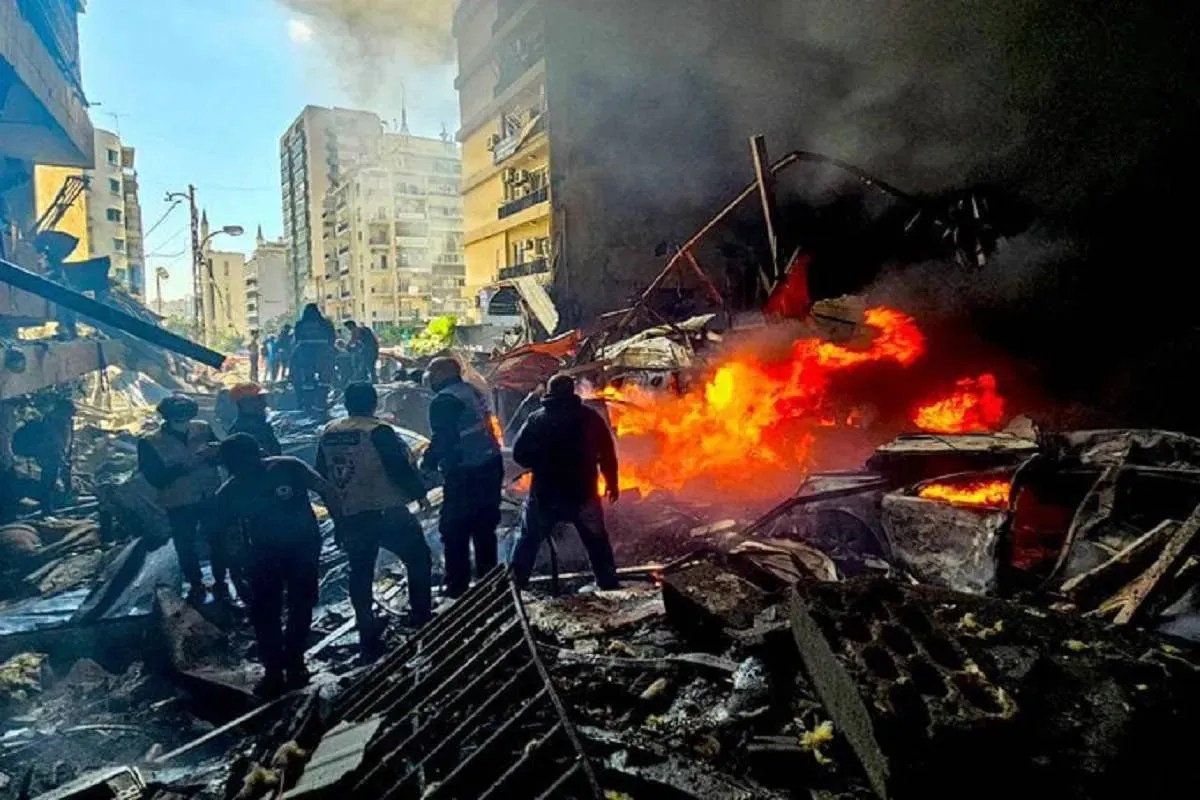
Diplomats in Washington love handshakes. They love the optics of a signed document, the flash of cameras, and the sweeping announcements of a brokered truce. But if you want to know what a ceasefire actually looks like, you don't look at a press release from the US State Department. You look at the sky over southern Lebanon.
Just hours after Israeli and Lebanese envoys agreed to a conditional truce in Washington, Israeli drones were buzzing low over Tyre and Nabatieh. The ink wasn't even dry on the paperwork before an Israeli drone slammed into a vehicle on the Kfar Remman-Haboush road. In Kfar Tebnit, another drone strike turned a busy roundabout into a smoking crater. A family driving along a southern highway found themselves in the crosshairs, leaving a couple and their young daughter wounded inside a mangled car.
It's a brutal disconnect. On paper, there's a diplomatic breakthrough. On the ground, the war hasn't missed a beat.
The Flaw in the Washington Deal
The fundamental issue with this latest diplomatic push isn't a lack of effort. It's a lack of reality. The United States brokered this agreement directly between the sovereign governments of Israel and Lebanon. They even mapped out ambitious "pilot zones" where the official Lebanese Armed Forces would take exclusive control, pushing out all non-state actors.
But there's a massive, elephant-sized variable missing from that equation: Hezbollah.
Hezbollah wasn't at the table in Washington. The group explicitly rejects direct talks between Israel and the Lebanese government. While Lebanese President Joseph Aoun suggested the truce could take effect within 24 hours once all parties approve, Hezbollah's leadership has remained publicly defiant. Senior official Mahmoud Qmati made it clear that the group won't accept a partial ceasefire that serves Western or Israeli interests.
You can't negotiate a peace deal when the primary combatant on one side is completely excluded from the conversation. The Lebanese state simply doesn't have the military muscle or the political leverage to disarm Hezbollah or force them away from the border. Expecting the regular Lebanese army to walk into southern territory and politely ask battle-hardened militants to pack up and leave is wishful thinking at best.
Israel's Strategy of Active Defense
If you listen to Israeli Defense Minister Israel Katz, Israel isn't pretending this paper truce changes the immediate tactical reality. Even as the diplomatic announcements flooded the news, Katz was explicit: Israeli forces retain full freedom of action.
"The army will, at this stage, continue its fire and ground operations, remain in the security zone in Lebanon up to the Yellow Line... and without the return of the population, while continuing to dismantle terrorist infrastructure on the ground."
Israel’s military strategy isn't paused for negotiations. They've declared everything south of the Zahrani River a combat zone. They aren't waiting for a political consensus in Beirut before they act on intelligence. If an Israeli drone operator spots a rocket launcher, a weapon transport, or a suspected operative on a motorcycle, they pull the trigger.
The rationale from Jerusalem is straightforward. They view the previous April 17 truce as a complete failure because Hezbollah continued to launch rockets and drones into northern Galilee. From the Israeli perspective, a ceasefire that stops Israeli airstrikes but allows Hezbollah to reposition and rearm is a strategic trap. So, they keep the drones in the air and the artillery loaded.
The Geopolitical Chessboard
This conflict isn't just a border skirmish between two neighbors; it's a proxy battleground heavily influenced by regional superpowers. The United States is pushing aggressively for this specific Lebanon truce to decouple the border fighting from the broader, ongoing conflict with Iran. Washington wants a win, and they want to secure commercial shipping lanes like the Strait of Hormuz.
Tehran, conversely, views Lebanon as its most critical frontline asset. Iranian leadership has repeatedly stated that any long-term understanding with the West is contingent on a total cessation of hostilities against Hezbollah. When Israel ramped up its operations in Beirut's southern suburbs, Iran temporarily walked away from the negotiating table entirely.
This creates a vicious cycle:
- Washington pushes the Lebanese government to sign an agreement.
- Israel signs on, but demands total operational freedom to strike whenever they see a threat.
- Hezbollah ignores the agreement because they weren't part of it and answer to a different strategic playbook.
- Israel launches drone strikes to counter Hezbollah's presence, violating the technical terms of the truce.
Moving Past the Diplomatic Illusions
If you're waiting for a sudden, peaceful resolution based on the latest headlines out of Washington, don't hold your breath. Real stability in the region requires a fundamental shift that goes beyond signed papers.
First, watch the actions of the Lebanese Armed Forces. If the regular army actually begins deploying into the proposed pilot zones in significant numbers, it will be the first real sign of structural change. Second, pay attention to the northern Israeli evacuation orders. Israeli citizens won't return to their homes in Galilee based on a diplomatic promise; they will only return when the rocket fire stops completely. Until the political agreements align with the military realities on the ground, expect the skies over southern Lebanon to remain filled with the sound of drones. Links on paper mean nothing when the bombs are still falling.