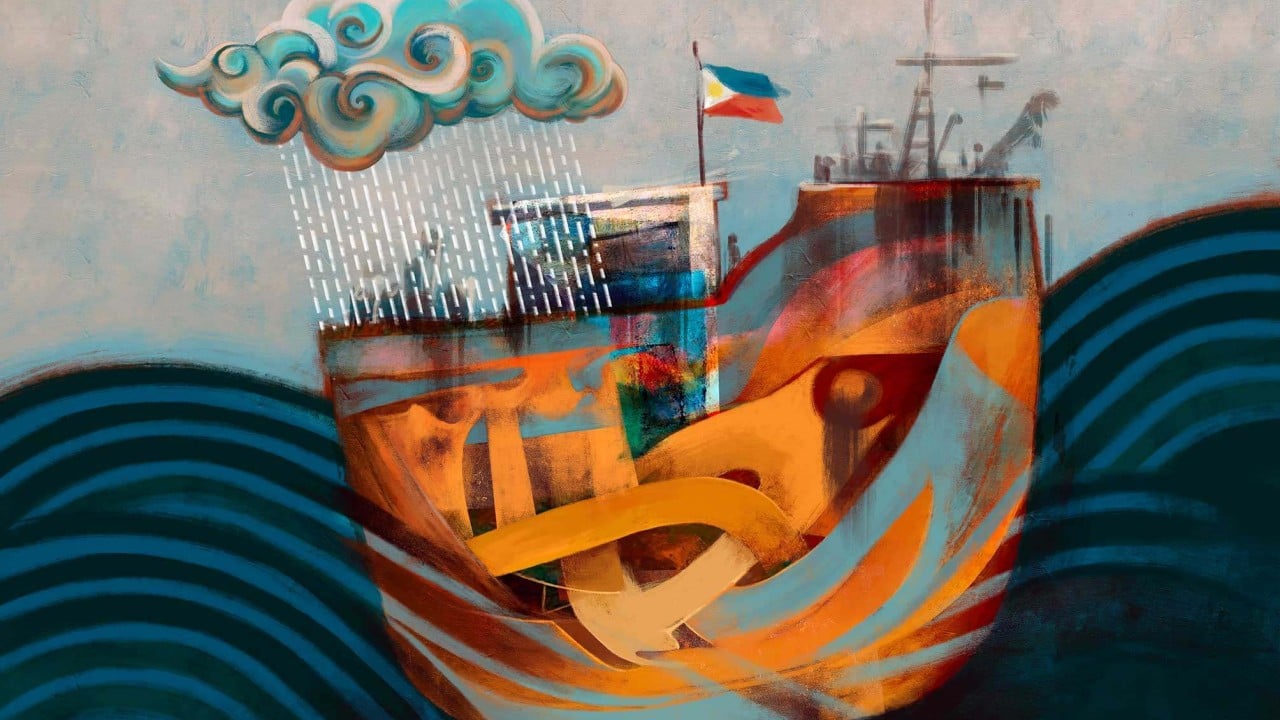
Diplomacy in maritime Asia often resembles an elaborate theater. Two capitals exchange notes about restraint, while thousands of miles away, gray-hulled ships trade water cannon blasts near contested shoals.
Observers frequently argue that the core issue in the South China Sea is a simple lack of paperwork. The prescription is almost always the same. Draft a binding Code of Conduct. Put the agreements in writing. Sign the documents, secure the borders, and watch the friction evaporate.
That theory collapses the moment it meets operational reality.
Beijing and Manila do not suffer from an absence of ink. They suffer from fundamentally incompatible definitions of sovereignty that no formal treaty can easily bridge.
The Myth Of The Missing Document
Treaties work when two parties share a baseline agreement on what they own and where their borders begin. Without that shared reality, a written contract becomes an instrument for endless legal warfare rather than peace.
Consider the United Nations Convention on the Law of the Sea. Both China and the Philippines are signatories. Both nations recognize the document as valid international law. Yet, they read the same chapters and arrive at wildly divergent conclusions.
Manila looks at its exclusive economic zone, extending two hundred nautical miles from its coastline, and sees legally protected waters. Beijing looks at the same maritime space through historical maps, claiming vast resource rights within a sweeping boundary line that encompasses nearly the entire body of water.
When legal frameworks flatly contradict one another, adding another layer of written agreement simply shifts the argument from the water to the conference room. It does not resolve the underlying tension.
Operational Realities On The Water
To understand why paper agreements fail to halt maritime friction, look at what happens daily near the disputed features.
The strategy deployed by maritime forces in these contested zones relies on ambiguity. Coast guard vessels, maritime militias, and naval support ships engage in maneuvers designed to establish physical presence without crossing the threshold of conventional warfare. This is gray-zone conflict.
Gray-zone tactics thrive precisely because written agreements are vague. A code of conduct might ban the use of military force, but does it ban a civilian-flagged militia ship from ramming a supply vessel? Does it restrict water cannons?
By operating just below the level of armed conflict, states create facts on the ocean floor. They build outposts, sink pilings, anchor floating barriers, and escort fishing fleets into disputed lagoons.
A signed document sitting in a foreign ministry archive does nothing to stop a steel hull from cutting across a competitor's bow in a heavy sea.
Why Formalizing Fails
Diplomats have spent decades attempting to finalize a binding Code of Conduct between the Association of Southeast Asian Nations and Beijing. The negotiations drag on for structural reasons that go beyond mere political stubbornness.
First, the enforcement mechanism is entirely missing. International maritime law lacks a centralized police force. If a signatory violates a written clause, who exacts the penalty? Sanctions require consensus, and consensus is difficult to achieve when major economic powers hold vetoes or alternative trade networks.
Second, the definition of provocative behavior remains contested. What one nation views as a routine patrol, another perceives as an act of intimidation. Without an agreed vocabulary of action, a written code becomes a weapon of propaganda. Both sides accuse each other of treaty violations every time a supply mission leaves port.
Third, domestic political survival depends on projecting strength. No government in Manila can afford to be seen backing down from historic fishing grounds. No leadership in Beijing can compromise on what it considers core territorial integrity without facing severe internal backlash.
Writing down compromises requires political capital that neither side is willing to spend on a document that the other side will interpret to its own advantage.
The Economic Stakes Fueling The Friction
The persistence of this conflict is not driven by stubbornness alone. Trillions of dollars in global trade pass through these shipping lanes annually. Beneath the seabed lie vast reserves of natural gas and oil, sitting largely untapped while geopolitical rivals posture above them.
Furthermore, the surrounding fisheries provide sustenance and livelihoods for millions of coastal residents. When fish stocks dwindle due to overexploitation, commercial fleets push further outward, backed by their respective state navies.
This creates a high-stakes competition for resources. In an environment of scarcity, legal assurances carry little weight against immediate economic necessity.
Beyond The Treaty Trap
If formal written agreements cannot solve the crisis, what actually manages the friction?
History shows that stability in the region depends less on grand legal architecture and more on operational guardrails. These are tactical mechanisms designed to prevent accidental escalation at sea.
- Emergency communication channels between naval commanders allow frontline officers to de-escalate standoffs in real-time.
- Clear signaling protocols regarding distance, speed, and radio frequencies reduce the risk of misinterpretation during close encounters.
- Pragmatic fishing arrangements that separate resource access from sovereignty claims have occasionally lowered local temperatures, even if they remain fragile.
These measures do not solve the territorial dispute. They merely manage the danger while the underlying disagreement persists.
Relying on a signature to rewrite maritime ambition is a comforting illusion. The friction in the South China Sea is structural, geographical, and economic. It will not be resolved by ink on paper, but by the careful, grinding work of managing risk on a crowded, contested sea.