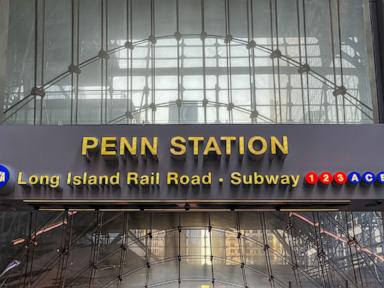
The media coverage surrounding the Sunday evening stabbings inside New York’s Penn Station is following a predictable script. The narrative focuses on the timeline: an emotionally disturbed individual slashes six people near tracks 5 and 6, transit police deploy pepper spray, a suspect is tackled into custody, and the city council issues a statement thanking the first responders for "quickly securing the scene."
Then comes the inevitable pivot to the upcoming mega-events. Journalists point out that this random act of violence occurred directly beneath Madison Square Garden on the eve of Game 3 of the NBA Finals. They note that President Donald Trump is scheduled to attend, and that the FIFA World Cup is coming to the region next. The underlying message from officials and mainstream outlets is always the same: Look at how fast we caught him, look at how much security we have lined up for the game, you are safe.
It is a comforting lie.
The lazy consensus treats this stabbing as an isolated glitch in an otherwise hardening security perimeter. In reality, the Penn Station attack exposes the fundamental flaw of modern urban security: theater does not prevent chaos.
The Myth of the Hardened Perimeter
For weeks, agencies like the Secret Service, the NYPD, and Amtrak Police have been coordinating "heightened security measures" around the Midtown transit hub. Thousands of law enforcement personnel have been deployed to secure the arena for the Knicks-Spurs Finals and the impending World Cup crowds. Yet, a single individual waving a knife managed to severely injure multiple people in the middle of the most heavily policed square mile on earth.
This happens because the security strategies deployed by major cities are reactive, designed for optics rather than systemic prevention. I have seen municipal governments waste tens of millions of dollars building massive physical cordons, installing facial recognition cameras, and flooding platforms with tactical gear. None of it stops a sudden, random act of violence carried out by a severely mentally ill person on a public platform.
- The Density Paradox: The very nature of a transit hub like Penn Station requires moving hundreds of thousands of people through tight choke points. You cannot run every commuter through an airport-style magnetometer without entirely paralyzing the infrastructure of the city.
- The Illusion of Deterrence: Heavily armed officers standing in clusters near main entrances do not deter an individual experiencing an acute psychotic episode. They are invisible to someone who is entirely detached from reality.
Imagine a scenario where the city doubles its police presence inside the concourse tomorrow. It still wouldn't change the mechanical reality of a knife attack. It takes less than three seconds to draw a weapon and inflict harm. Even if an officer is standing twenty feet away, the damage is done before a single step can be taken to intervene. The "fast response time" celebrated by politicians is cold comfort to the victims currently sitting in Bellevue Hospital.
The Cost of Event Centric Policing
The real crisis isn't a lack of police; it's the misallocation of resources driven by political optics. When major sporting events or presidential visits hit Manhattan, policing shifts from localized, community-level vigilance to high-visibility crowd control.
Just days before the stabbing, the NYPD arrested 26 people when an outdoor watch party near Seventh Avenue grew disorderly. The response from City Hall was immediate indignation regarding the assault of an officer. Resources were instantly diverted to managing fans and canceling future public watch parties.
When you treat security as a public relations campaign for tourists and visiting dignitaries, you neglect the daily operational reality of the transit system. The "emotionally disturbed person" archetype is not a rare anomaly in Penn Station; it is a permanent fixture of the environment. Over the last decade, mental health infrastructure has been systematically dismantled, leaving the subway and rail platforms to serve as de facto, subterranean asylum systems.
Cops are trained to react to crimes, not to diagnose or mitigate complex psychiatric decompensation before it turns violent. Relying on law enforcement to solve a crisis of severe mental abandonment is like trying to fix a plumbing leak with a sledgehammer. It looks like you're doing something forceful, but you're just shattering the wall.
Security Theater is a Compounded Failure
The conventional wisdom insists that the upcoming World Cup and NBA Finals games will be safe because of the massive federal and local footprints. They are wrong about why it will be safe.
If the games go off without a hitch, it won't be because a multi-agency task force successfully scared off bad actors. It will be because lightning rarely strikes twice in the same spot. The vast majority of transit attacks are random, unpredictable statistical anomalies that bypass the multi-million dollar perimeters entirely.
The downside of acknowledging this truth is obvious: it forces us to admit that absolute safety in an open society is a myth. No amount of surveillance, tactical gear, or political posturing can entirely insulate a commuter from the randomness of a crowded room.
The official response to this tragedy will almost certainly involve more checkpoints, more restricted access points, and longer delays for everyday New Yorkers trying to catch the Long Island Rail Road or NJ Transit. The city will punish the commuters to prove to the broadcasters and sponsors that they are taking the issue seriously.
Stop asking if the security perimeter for the NBA Finals is tight enough. It is the wrong question. The real question is why we accept an urban policy that lets the most vulnerable and dangerous individuals rot on the platforms until they pick up a knife, while spending millions to make sure billionaires and politicians can watch a basketball game in peace.
The perimeter didn't fail on Sunday night. The system did. No amount of extra police on Monday morning will change that.