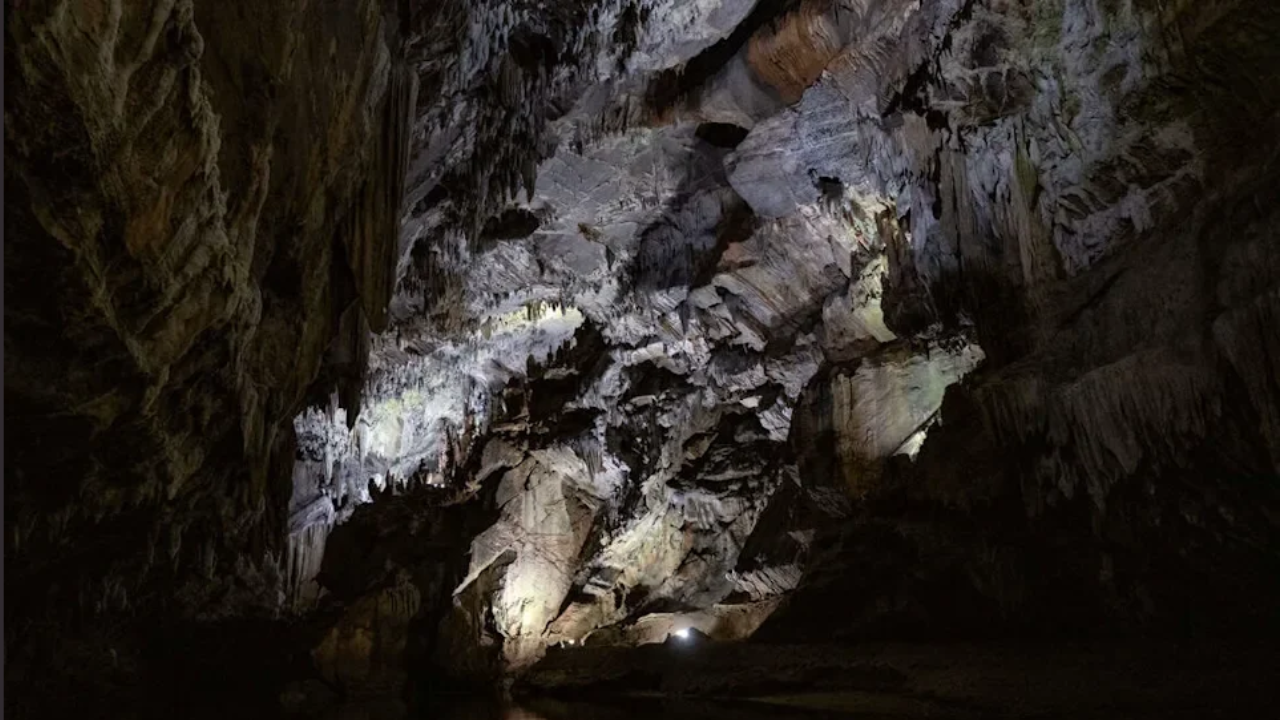
Every local news outlet in Pennsylvania is running the exact same sob story right now. A 118-year-old family business hits the market. The headlines drip with nostalgia. They mourn the end of an era at Penn’s Cave & Wildlife Park. They treat a $34 million asking price like a funeral notice for small-town Americana.
That coverage completely misses the real story.
This isn't a sad farewell to a roadside attraction. It is one of the smartest, most aggressive liquidity plays in regional hospitality. While reporters are busy romanticizing century-old boat tours through Centre Hall, institutional buyers are looking at something entirely different: an irreplaceable, high-margin, anti-recession cash machine disguised as a family souvenir stand.
If you look at the $34 million price tag and think the Campbell family is simply ready to retire, you don't understand how alternative real estate assets are priced in 2026.
The Nostalgia Trap in Hospitality Journalism
Mainstream coverage of legacy attraction sales always falls into the same lazy trap. Writers focus on the founding date—1908—and the fact that Penn’s Cave is America’s only all-water cavern and farm-nature-wildlife park. They frame the sale as a bittersweet surrender to modern times, implying that multi-generational family businesses eventually run out of steam.
Let’s look at the actual mechanics of what is being sold.
Penn’s Cave isn't just a hole in the ground with a gift shop. It sits on roughly 1,600 acres of contiguous central Pennsylvania land. It includes a limestone cavern navigable exclusively by motorboat, a wildlife park, a gemstone panning operation, a maze, a restaurant, and an airstrip. Most importantly, it sits roughly 18 miles from Penn State University in State College—a captive, affluent, transient market of tens of thousands of students, alumni, and visiting parents who cycle through the region every single year.
When local journalists call this a "historic family landmark," they obscure the financial reality. You cannot build another Penn’s Cave. Environmental regulations, zoning laws, and basic geology make replicating an all-water limestone cavern impossible. In commercial real estate and private equity, that is called a permanent moat.
I have sat across the table from family-office buyers who will gladly pay a 20% premium just to avoid the permitting nightmare of greenfield development. Here, the permits were grandfathered in before the Titanic sank.
Why $34 Million Is a Strategic Anchor Not a Wishful Number
To the average reader, $34 million for a rural tourist stop sounds absurd. People compare it to residential real estate or standard farmland in Centre County and assume the sellers are delusional.
They are looking at the wrong comps.
In the hospitality and leisure sector, attractions with high barriers to entry trade on multiples of
Imagine a scenario where a regional attraction draws roughly 100,000 to 150,000 visitors annually across its peak spring-to-fall operating window, supplemented by Penn State football weekends and school field trips. Factor in bundled ticket pricing for the cavern boat tour and wildlife park, high-margin food and beverage sales, and retail gift shop markups that routinely clear 60% to 70% gross margins. Add agricultural leases or timber value across 1,600 acres of rural acreage.
Suddenly, $34 million doesn't look like a sentimental number pulled out of thin air. It looks like a disciplined valuation anchored to both cash flow and raw acreage—roughly $21,250 per acre if you ignored the operating business entirely, or an 8x to 11x cash-flow multiple if the business nets $3 million to $4 million annually.
Sellers don't hire commercial brokers and slap a $34 million price tag on a 118-year-old asset by accident. They do it because private equity roll-ups—companies like Herschend Family Entertainment, Palace Entertainment, or mid-market experiential leisure funds—are starving for yield.
The Myth of the Dying Roadside Attraction
Another massive misconception baked into the coverage of Penn's Cave is the idea that traditional roadside attractions are relics losing out to digital entertainment and mega-theme parks.
The exact opposite is true.
Post-2020 consumer behavior permanently shifted spending away from physical goods toward experiential travel, specifically within a three-to-four-hour drive of major metropolitan areas. Penn’s Cave sits within a half-day drive of Pittsburgh, Philadelphia, Baltimore, Washington D.C., and New York City.
Families facing $1,000-a-day price tags at Orlando theme parks are actively hunting for regional "drive-to" alternatives. A family of four can visit Centre Hall, take a guided boat tour through subterranean limestone formations, ride a bus through elk and bison pastures, eat lunch, and drive home for a fraction of what a single day at a corporate resort costs.
Legacy operators understand this dynamic better than anyone, which is why selling at the peak of the regional experiential boom is brilliant timing. You don't sell an asset when attendance is cratering and the roof is leaking. You sell when the parking lot is full, capital expenditures are manageable, and buyers are flush with dry powder looking for inflation-hedged businesses.
What Everyone Gets Wrong About Buying a 118-Year-Old Business
If you ask casual observers what happens next, they usually assume a wealthy local buyer will step in to "save" the cave and keep everything exactly the same.
That is fantasy. Nobody writes a $34 million check to run a museum of 1950s tourism.
Whoever buys Penn’s Cave at or near that asking price will have to aggressively modernize the revenue model to service their debt or hit their internal rate of return targets. And frankly, legacy family businesses almost always leave massive amounts of money on the table because they prioritize tradition over optimization.
I have watched dozens of generational hospitality businesses transition to institutional ownership. The playbook is remarkably consistent, and it always shocks locals who thought the old owners were already maximizing profits:
- Dynamic pricing replaces flat ticket rates. Family owners love predictable, printed-on-a-brochure pricing. Institutional operators immediately implement surge pricing for Penn State home game weekends, peak October foliage weeks, and holiday Mondays.
- Upsells get engineered into every square foot. Instead of a basic general admission ticket, buyers introduce VIP small-group boat charters, private after-hours photography tours, and tiered wildlife feeding experiences.
- Land monetization goes vertical. Sitting on 1,600 acres with only a fraction used for guest operations is a luxury family owners can afford when there is no mortgage. A new buyer carrying $20 million in commercial debt will immediately evaluate adding luxury glamping domes, high-end RV resorts, or wedding venues on the perimeter acreage to capture overnight stays instead of letting tourists spend their hotel dollars in State College.
- Operational seasonality gets stretched. Cave temperatures stay constant around 52 degrees Fahrenheit year-round. While surface wildlife tours slow down in winter, aggressive operators create subterranean holiday light experiences or winter culinary events to turn a seasonal asset into a twelve-month revenue generator.
Answering the Questions Nobody Wants to Ask
Whenever a landmark like Penn's Cave hits the market, the same predictable questions dominate local forums and search bars. Most of them are built on flawed assumptions.
Is Penn's Cave closing?
No. Listing an operating business for sale is a transfer of equity or assets, not a liquidation. Closing the doors would destroy the exact cash flow justifying the $34 million valuation. The boats will keep running because an empty cave is worth a fraction of a profitable tourist destination.
Why didn't the next generation just take over?
People love to blame younger generations for lacking work ethic when a family business sells. In reality, keeping a 118-year-old enterprise inside a growing family tree becomes mathematically impossible over four or five generations. By generation four, you don't have one heir; you have a dozen cousins with wildly different financial needs, risk tolerances, and career paths. Liquidating at $34 million cleanly resolves succession politics that would otherwise tear a family apart in probate court.
Will the new owners ruin the charm of Penn's Cave?
Here is the brutal truth: "charm" doesn't pay commercial insurance premiums, maintain FAA-charted grass airstrips, or fund wildlife veterinary care. If a buyer pays tens of millions of dollars, expect higher ticket prices, tighter corporate branding, and aggressive monetization of the surrounding land. That isn't ruining the business—it is the financial price of keeping a century-old attraction solvent for the next fifty years.
The Hidden Risks of the Penn's Cave Playbook
I am bullish on the brilliance of this listing, but let's not pretend buying an aging, hyper-specific rural attraction is risk-free. Any institutional buyer evaluating Penn’s Cave faces three serious headaches that spreadsheets tend to gloss over.
First, key-person and institutional knowledge risk. When a family operates a unique geological and zoological site for over a century, vital operational knowledge lives inside the heads of longtime employees—how the cave water levels respond to heavy spring runoff, how specific animals behave during breeding seasons, and where aging underground infrastructure needs delicate maintenance. You cannot download 118 years of muscle memory into a standard operating procedure manual during a 60-day due diligence window.
Second, labor scarcity in rural Pennsylvania. Centre Hall is idyllic, which is great for tourists and terrible for hiring seasonal tour guides, boat captains, and kitchen staff. Unlike urban attractions that pull from massive municipal labor pools, rural operators compete fiercely with Penn State University and regional employers for a limited number of workers.
Third, biological and geological concentration risk. You cannot diversify away from a single cavern. If an unprecedented weather event floods the subterranean waterway for three months, or if an infectious disease impacts the wildlife herd, there is no second location to absorb the revenue hit.
Stop Mourning Smart Exits
The narrative surrounding Penn’s Cave reveals a weird cultural blind spot. We celebrate tech founders when they build a software company in six years and sell it for $34 million. We call them geniuses. Yet when a family stewards a geological wonder, 1,600 acres of pristine Pennsylvania land, and a beloved regional business for 118 years—and finally cashes in their chips at a massive valuation—we treat it like a tragedy.
The Campbell family didn't fail to keep Penn's Cave going. They won the game. They built an unassailable moat, weathered world wars, recessions, and pandemics, and brought a trophy asset to market at the exact moment private capital is desperate for irreplaceable experiential real estate.
Next time you see a local news headline weeping over a legacy business going up for sale, ignore the sentimentality and check the asking price. You aren't watching an ending. You are watching a cash-out that Wall Street would envy.


