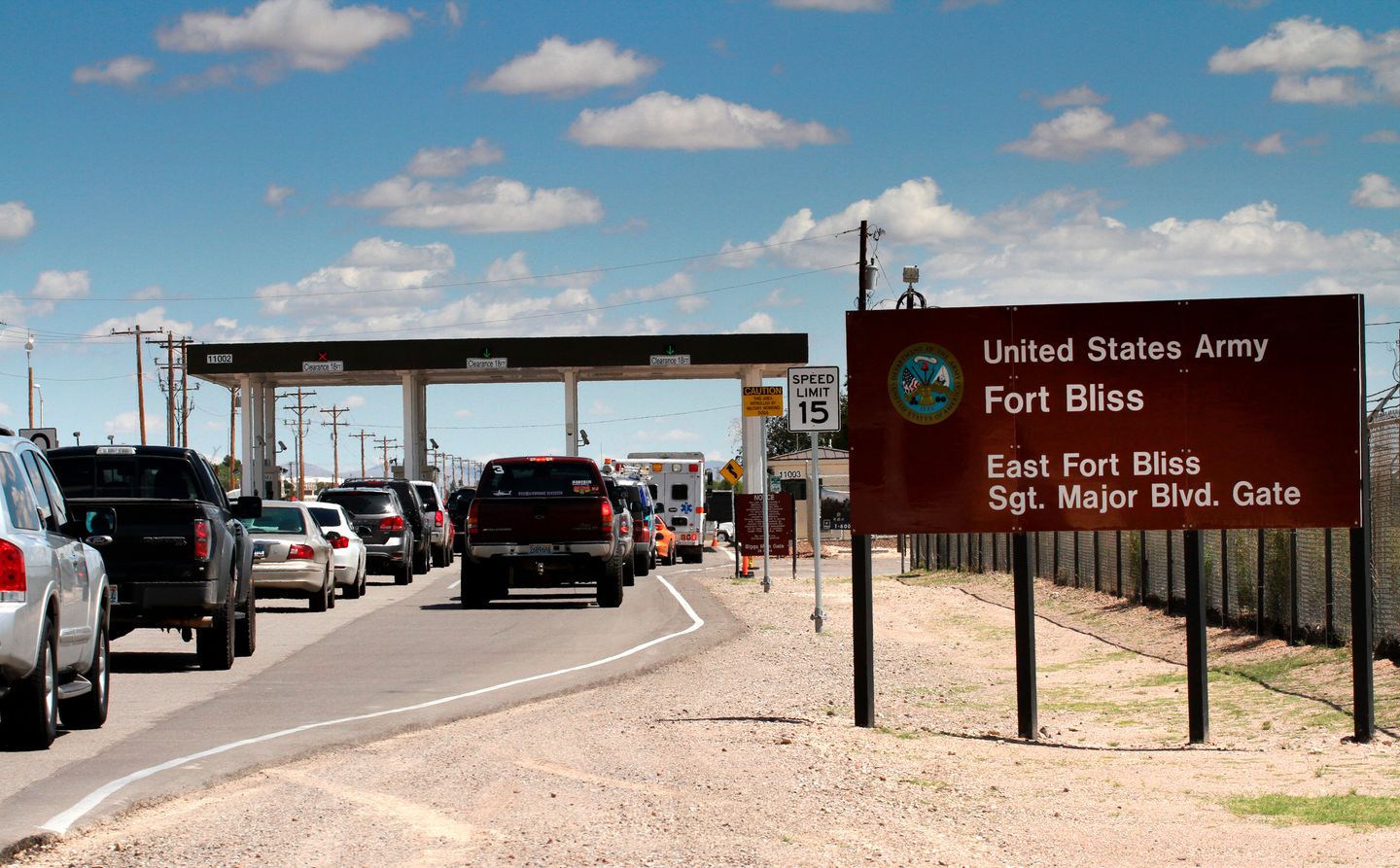
Defense contractors are salivating over the latest Department of Defense mandate demanding that military installations achieve 90 days of complete operational self-sufficiency. Every trade publication is dutifully parroting the press release. They frame this directive as a stroke of strategic genius designed to insulate American power projection from cyberattacks, grid failures, and supply chain blockades.
They are wrong. The 90-day self-sufficiency mandate is an accounting fiction disguised as military readiness.
If you have ever managed physical infrastructure at scale, you know the difference between an engineering specification and a political talking point. Washington loves round numbers. Ninety days sounds decisive. It fits neatly into a quarterly congressional briefing. On the ground, however, turning sprawling, suburbanized military cities into hermetically sealed survival bunkers violates the fundamental laws of thermodynamics, logistics, and modern economics.
The Myth of the Off-Grid Fortress
The lazy consensus assumes that energy and water independence is merely a procurement problem. Buy enough solar panels, bolt on some industrial battery banks, drill a few deep-water wells, and suddenly Fort Liberty or Camp Pendleton can survive a total collapse of the civilian grid for three months.
That is not how modern bases work. A contemporary military installation is not a medieval castle with a moat and a granary. It is an energy-guzzling industrial complex tethered to civilian infrastructure at a thousand invisible seams.
Consider the sheer scale of the load. A single major air base or armored installation consumes enough electricity to power a mid-sized American city. During peak summer months, cooling server farms, radar arrays, hangar bays, and base housing requires tens of megawatts of continuous, uninterrupted baseload power.
Solar arrays and wind turbines do not provide baseload power. They provide intermittent generation. To bridge a 90-day blackout using renewables and lithium-ion storage alone, the Pentagon would need to pave over thousands of acres of training land with photovoltaic panels and construct battery facilities so massive they would become prime kinetic targets themselves.
So, what is the actual fallback plan when the sun sets and the wind dies? Diesel generators.
Now do the math on fuel. Keeping a major installation running on backup diesel generation for 90 days requires millions of gallons of fuel stored on-site. Fuel degrades. It requires constant chemical stabilization, filtration, and circulation. Storing those volumes above ground creates a catastrophic fire and targeting hazard. Burying it in hardened underground tanks costs hundreds of millions of dollars per base, and federal environmental regulations make permitting new underground fuel storage nearly impossible.
Even if you solve the fuel storage nightmare, you still have not solved the people problem.
The Civilian Tether Nobody Mentions
Mainstream defense reporting treats military bases like isolated islands populated exclusively by active-duty troops eating MREs. Anyone who has actually walked through the gates of a stateside installation knows that is absurd.
Modern military bases are run by civilians. Contractors maintain the aircraft. Civilians operate the dining facilities, manage the IT networks, repair the HVAC systems, and staff the base hospitals. More importantly, those civilians live off-base. Their families shop at civilian grocery stores, drive on civilian highways, and rely on civilian municipal water and power.
Imagine a scenario where a sophisticated cyberattack or kinetic strike knocks out the regional power grid and severs logistics corridors for 90 days. The base might have pristine microgrids and underground cisterns. Outside the fence, the surrounding town has no electricity, no running water, no functioning ATMs, and empty supermarket shelves by day four.
Do you really believe the civilian contractors who keep the base's intelligence networks and flight lines operational are going to commute through a collapsing municipality to clock in for their shifts? They will be at home protecting their families and rationing bottled water.
Within two weeks, a "self-sufficient" base loses half its technical workforce. Active-duty personnel are immediately pulled off warfighting duties to run sewage treatment plants, guard perimeter fences against desperate locals, and manage basic municipal sanitation. Your 90-day power projection hub instantly degrades into an armed refugee camp.
What Does Military Installation Self-Sufficiency Actually Mean?
Let us strip away the Pentagon jargon and define the terms precisely. In military engineering, energy resilience is not the same thing as total autarky.
Energy resilience—governed by standards like the Unified Facilities Criteria (UFC)—means ensuring that critical mission loads have redundant, survivable power during a disruption. Critical loads are the command centers, satellite uplinks, runway lights, and secure communications nodes. They typically represent less than 15 percent of a base's total energy footprint.
Total self-sufficiency, by contrast, implies sustaining the entire installation—barracks, commissaries, administrative buildings, and recreational facilities—without external inputs.
When Defense Department officials blur the line between critical mission resilience and 90-day base-wide self-sufficiency, they create perverse incentives. Defense contractors do not want to sell the Pentagon lean, targeted redundancy for 15 percent of a base. They want to sell billion-dollar microgrid overhauls for 100 percent of it.
I have watched defense primes pitch sprawling, gold-plated energy projects to base commanders who rotate out of their posts every two years. The commander gets a ribbon-cutting ceremony and a bullet point for their promotion board. The contractor locks in a 20-year Energy Savings Performance Contract (ESPC). Three years later, the system sits half-functional because the base lacks the specialized technicians to maintain the proprietary software controlling the inverters.
The Logistics Trap of Just-in-Time Warfare
The obsession with 90-day static endurance also ignores how modern supply chains actually function. For the past three decades, the Pentagon systematically dismantled its internal logistics depots and adopted commercial "just-in-time" inventory management to save money.
Spare parts for fifth-generation fighter jets, circuit boards for radar systems, and pharmaceuticals for base clinics are not sitting in warehouses on-base. They are manufactured by single-source sub-tier suppliers scattered across the globe and shipped via commercial carriers like FedEx and UPS.
You can give a base 90 days of electricity and water, and it will still be combat-ineffective by day twelve because a $400 proprietary valve in a cooling pump failed and the factory in Ohio has no power to manufacture a replacement.
Water is an even uglier bottleneck. Treating wastewater and pumping potable water requires massive amounts of electricity and continuous deliveries of industrial chemicals like chlorine, sodium hypochlorite, and coagulants. Most municipal and base water treatment plants keep less than two weeks of treatment chemicals on-site because storing hazardous gases and corrosive liquids in bulk is a safety liability. You cannot achieve 90 days of water independence without turning every military base into a hazardous chemical depot.
Why the Pentagon Is Asking the Wrong Question
If you are a base commander or a defense planner, stop asking how to keep the lights on for 90 days. That question leads directly to bloated infrastructure budgets and brittle, over-engineered microgrids.
The real question is: How fast can we disperse our combat power when a base is compromised?
In any high-end peer conflict—whether in the Indo-Pacific or Eastern Europe—fixed installations are dead weight. Modern satellite reconnaissance and hypersonic or ballistic missile salvos mean that any static base within theater range will be targeted within the first 48 hours of hostilities.
Building a 90-day self-sufficient fortress on Guam or Okinawa is like building a bigger, shinier battleship in 1940. You are pouring concrete and capital into a stationary target.
Even for stateside bases, which serve as power projection platforms rather than frontline operating locations, the 90-day metric is misaligned with operational reality. If the continental United States suffers a grid-down event lasting three months, the Department of Defense will not be quietly sitting behind base fences executing normal training schedules. The military will be deployed domestically under Defense Support of Civil Authorities (DSCA) mandates to restore national infrastructure.
The Nuclear Elephant in the Room
If the Pentagon is genuinely serious about multi-month, off-grid power without massive fuel logistics, there is only one technology capable of delivering it: micro-nuclear reactors.
Projects like the Strategic Capabilities Office's Project Pele—a transportable, high-temperature gas-cooled microreactor—are the only engineering efforts that actually match the rhetoric of multi-month independence. A single microreactor can produce 1 to 5 megawatts of continuous, weather-independent baseload power for years without refueling.
Yet, look at the timeline and the political reality. Regulatory hurdles from the Nuclear Regulatory Commission, local NIMBY opposition from surrounding communities, and skyrocketing nuclear fabrication costs mean that deploying microreactors across hundreds of domestic bases will take decades, not years.
Until microreactors are mass-produced like jet engines, any promise of 90-day base self-sufficiency relies on diesel, batteries, and wishful thinking.
The Brutal Truth About Distributed Resilience
There is a legitimate vulnerability in our defense infrastructure. The civilian electrical grid is aging, transformers take up to two years to replace if destroyed, and adversaries actively probe utility networks. Ignoring that threat is suicide.
However, the counter-intuitive solution is not to build impenetrable, self-contained mega-bases. The answer is radical decentralization and stripping bases down to their bare operational bones.
- Sever Non-Essential Loads Immediately: Stop trying to power the entire base during a crisis. Install automated load-shedding switches that instantly sever power to base housing, golf courses, commissaries, and administrative offices the second the civilian grid drops. Route 100 percent of backup generation strictly to flight lines, command centers, and medical facilities.
- Abandon Single-Point Microgrids: A centralized base microgrid still relies on miles of underground copper cabling and centralized substations. One well-placed sabotage charge or flood ruins the entire network. Instead, deploy modular, containerized power generation—portable diesel-electric hybrids and ruggedized battery trailers—directly to individual mission-critical buildings.
- Pre-Position Dumb Hardware, Not Smart Tech: Stop buying complex, software-heavy energy management systems that fail when an update glitches or a server crashes. Stockpile mechanical spare parts, manual transfer switches, and standardized generators that a 19-year-old mechanic with a wrench can fix without calling a contractor helpline.
- Adopt Agile Combat Employment (ACE) Principles at Home: The Air Force developed ACE to scatter aircraft across austere, unprepared airfields so adversaries cannot wipe out a wing in a single strike. Apply that exact mindset to base infrastructure. If a base cannot pack up its core command-and-control capabilities and relocate to a municipal airport or highway strip within 24 hours, no amount of on-base battery storage will save it.
The Cost of the Contrarian Approach
Taking this leaner, decentralized path has real downsides, and pretending otherwise would be dishonest.
First, it means accepting that quality of life on military bases will plummet during a crisis. Families living on-base will lose air conditioning, internet, and hot water within hours of a grid failure. Commanders will have to execute rapid evacuation plans for dependents rather than sheltering them in place. That is politically unpopular and emotionally brutal for military families.
Second, distributed, modular power is less fuel-efficient than centralized combined-heat-and-power plants. Running dozens of smaller generators burns more fuel per kilowatt-hour than running one massive turbine. You trade peak thermodynamic efficiency for survivability. In a warzone—or a domestic grid collapse—survivability wins every time.
Finally, tearing up the 90-day self-sufficiency playbook means walking away from massive federal green-energy subsidies and lucrative contractor partnerships. It requires Pentagon leaders to tell Congress that they do not need billions of dollars for sprawling solar farms; they need a few hundred million for ugly, unglamorous spare parts, manual switches, and hardened fuel bladders.
Stop Building Castles
History is littered with empires that poured their treasuries into static fortifications right before the nature of warfare changed. The Maginot Line was self-sufficient. It had underground railways, air conditioning, hospitals, and months of stockpiled supplies. The German army simply drove around it.
The Pentagon's 90-day self-sufficiency mandate is a modern Maginot Line built out of lithium-ion batteries and bureaucratic hubris. It solves a tidy, tabletop-exercise problem while ignoring the messy realities of civilian workforces, fragile supply chains, and peer-level kinetic threats.
Cut the ribbon-cutting ceremonies. Cancel the billion-dollar microgrid boondoggles. Strip the bases down to their warfighting core, teach troops how to operate in the dark, and stop pretending you can wall off a military installation from the country that sustains it.


