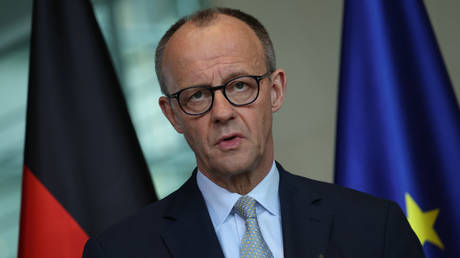
German Chancellor Friedrich Merz just threw a live grenade into the middle of Brussels, and half the commentators covering it are missing the real blast radius.
Ahead of the emergency European Union summit kicking off in Brussels on November 26, 2026, Merz drew a hard, unforgiving line in the sand. Berlin will veto the EU’s next seven-year budget—the 2028–2034 Multiannual Financial Framework (MFF)—unless every single one of the bloc’s 27 member states agrees to help bankroll a fresh €45 billion loan package for Ukraine.
Cue the fireworks. Slovak Prime Minister Robert Fico immediately branded the move "a textbook case of blackmail". Hungary’s Prime Minister Péter Magyar fired back that Budapest won't accept tying long-term European cohesion funds to Ukrainian aid. Meanwhile, Czechia and Bulgaria have dug in their heels, and state-backed pundits in Moscow are gleefully claiming Merz is holding Europe at knifepoint just to funnel cash back into German arms manufacturers.
Let's be honest here. Calling this a "hostage crisis" makes for great headlines, and Fico isn't wrong that Berlin is playing hardball. Yet if you look at the actual numbers sitting on the table in Brussels right now, Merz isn't acting out of sudden madness or pure corporate greed. He's responding to a cold, hard fiscal trap that the European Union spent four years building for itself.
Why Friedrich Merz Is Blocking the EU Budget Right Now
To understand why Germany's chancellor is willing to paralyze the entire bloc's financial future, you have to follow the math. It's brutal.
Last December, EU leaders patted themselves on the back after agreeing to a €90 billion loan facility for Kyiv. Problem solved, right? Hardly. Due to relentless Russian strikes on Ukrainian energy grids and ongoing frontline attrition, Kyiv faces a massive €70 billion funding gap for 2027 alone. Ukraine's Western allies acknowledged the shortfall at their October 2026 summit, and Brussels pledged to cover two-thirds of it—roughly €45 billion—on top of what was already promised.
Here is where the EU's internal machinery broke down. Four countries—Hungary, Slovakia, Czechia, and Bulgaria—refused to join the new €45 billion joint-borrowing mechanism.
Under normal EU workarounds, Brussels might simply let a "coalition of the willing" of 23 member states guarantee the debt while the four holdouts sit on the sidelines. That's exactly how European leaders dodged Hungarian vetoes in the past.
Merz looked at that arrangement and said no more.
"If the European Union finances something, it does so as the European Union," Merz told reporters upon arriving in Brussels on November 26. "And this European Union has 27 members, not 23 or 24".
Think about what happens when four countries opt out of joint EU guarantees. The remaining 23 states—led by Germany as Europe's largest economy—have to absorb a bigger share of the financial liability. Berlin has already shouldered a disproportionate chunk of bilateral military and financial aid to Kyiv while its own domestic industrial base has struggled with high energy costs and sluggish growth. Merz, a former corporate lawyer and BlackRock supervisory board chair who built his political brand on fiscal discipline, knows he cannot go back to the Bundestag and tell German taxpayers they're covering the tab for Bratislava, Budapest, Prague, and Sofia while those same governments happily cash checks from Brussels' regional development funds.
The Double Squeeze on Brussels' Trillion-Euro Wallet
If you think Merz's ultimatum is strictly about Ukraine, you're only seeing half the chessboard. He's fighting a two-front war over the 2028–2034 MFF, and the headline figures explain why Berlin is furious.
Back in July 2026, European Commission President Ursula von der Leyen unveiled an initial long-term budget proposal worth an eye-watering €1.985 trillion. Germany and a bloc of wealthy net-contributor nations immediately rejected it as bloated. Over the weekend leading into the November summit, European Council President António Costa tried to broker peace by tabling a slimmed-down compromise worth €1.781 trillion—still nearly 50 percent larger than the current 2021–2027 budget framework, and containing up to €100 billion earmarked for Ukraine over the seven-year cycle.
Merz walked into the summit on Thursday morning and torched Costa's compromise on arrival.
"The budget is still too high," Merz stated flatly, calling Costa's draft an unacceptable basis for negotiations. Behind closed doors, German officials have made clear they want roughly €400 billion shaved off the Commission's original figure, bringing the seven-year ceiling closer to €1.59 trillion. That means another €200 billion in cuts from Costa's already trimmed proposal.
Look at the political genius—and ruthlessness—of linking these two fights together:
- The Carrot and Stick for Eastern Europe: Countries like Hungary, Slovakia, and Bulgaria are massive net recipients of EU cohesion and agricultural subsidies. By tying unanimous approval of the 2028–2034 MFF to the €45 billion Ukraine loan, Merz is telling those governments they don't get to cherry-pick European solidarity. You want German-funded highway and infrastructure grants in 2028? Sign the Ukraine loan guarantee in 2026.
- Domestic Cover in Berlin: Back home, Merz is getting hammered from both flanks. During a heated Bundestag debate on November 25 over Germany's 2027 federal budget, both the far-right Alternative for Germany (AfD)—currently leading national polls—and the hard-left Die Linke demanded an immediate halt to Kyiv's funding. By demanding €200 billion in EU budget cuts while forcing reluctant neighbors to share the Ukraine burden, Merz can tell restless German voters he's protecting their wallets rather than writing blank checks.
What Critics Get Right—and Where the "Blackmail" Narrative Falls Apart
Let's give the critics their due. You don't have to sympathize with Viktor Orbán's old playbook or Robert Fico's Kremlin-friendly rhetoric to see why smaller EU capitals are livid.
First, Merz is breaking an unwritten rule of Brussels diplomacy. For decades, German chancellors from Helmut Kohl to Angela Merkel acted as the EU's consensus-builders—the quiet adults in the room who smoothed over crises with German checkbooks rather than public ultimatums. Merz has abandoned that tradition completely. Earlier this month, when welcoming Volodymyr Zelenskyy to Berlin, Merz openly complained that Europe's financial burden was "carried mostly by only a few member states". By threatening to block the entire seven-year financial framework unless four smaller states capitulate, Berlin is weaponizing its veto in the exact same way it spent years condemning Hungary for doing.
Second, Czech Prime Minister Andrej Babiš raised a legitimate structural point on November 22 when he argued that Ukraine aid shouldn't be baked directly into the EU's core internal budget. Once you embed emergency war financing inside the MFF, every routine dispute over farm subsidies, climate transition funds, or regional infrastructure turns into a geopolitical showdown over Kyiv. Greece and Slovenia have quietly echoed concerns about keeping the two tracks separate, worried that a stalemate over Ukraine could delay vital regional funding across Southern and Central Europe.
Yet the counter-argument—that Merz is merely orchestrating a slush fund for German defense contractors like Rheinmetall—doesn't hold up under scrutiny.
Yes, Germany's defense sector has surged since 2022, and Berlin is pushing to double its own defense spending while warning that Russia is escalating hybrid attacks across the Baltic, Poland, and Germany itself. Still, the €45 billion package at the center of this fight isn't a secret procurement contract for German tanks. It's macro-financial assistance designed to keep the Ukrainian state solvent—paying teachers, keeping hospitals running, repairing bombed-out power substations, and preventing a macroeconomic collapse that would send millions more refugees straight into Central Europe and Germany. As Merz pointed out in Brussels, nobody in Europe benefits from a fresh wave of millions of displaced people fleeing a frozen, bankrupt country.
The Ticking Clock of 2027 European Elections
Why is Merz forcing this confrontation now in late November 2026 instead of letting diplomats quietly hammer out a compromise next spring?
Because by January 2027, the political window slams shut.
Anyone who has watched Brussels negotiations up close knows that election calendars dictate everything. Behind closed doors at a preparatory meeting on November 24, French diplomats warned their counterparts that political pressure in Paris is already boiling over ahead of France's April 2027 presidential election. French officials explicitly stated that if EU leaders fail to lock in a deal before January, Paris won't be able to sign off on any major budget or Ukraine financing agreement until after French voters go to the polls in the spring.
And France isn't the only ticking bomb. Spain's Prime Minister Pedro Sánchez even skipped the November 26 Brussels summit entirely because he's fighting for his political survival ahead of a snap parliamentary election this Sunday. Meanwhile, Merz himself is still recovering from a bruising autumn after regional election losses to the AfD in Saxony-Anhalt sparked open talk of a leadership crisis in Berlin.
If this standoff drags into 2027:
- Ukraine runs out of budgeted Western cash by spring, just as winter energy repairs peak and ceasefire negotiations remain fragile.
- The French presidential campaign turns EU joint debt and Ukraine aid into radioactive political footballs.
- Populist opposition parties across Germany, France, and Central Europe gain months of free ammunition to campaign against "Brussels elites".
Merz knows this. That's why he isn't interested in polite diplomatic kick-the-can-down-the-road communiqués. He wants a binding commitment before the end of December 2026, and he's using the single biggest piece of leverage Germany possesses—its veto over the EU's trillion-euro wallet—to force every leader in the room to show their cards.
How This Standoff Likely Ends
Despite the apocalyptic headlines about an EU "hostage crisis," veteran Brussels watchers recognize the choreography happening right now. Day one of a major EU budget summit almost never produces a final handshake, and European Council President António Costa already admitted as much upon arriving at the Europa building, framing the two-day gathering as a step toward a December deal.
Watch three specific pressure points over the next four weeks to see who blinks first:
- The "Opt-Out" Rebate Formula: Keep an eye on whether the European Commission revives a modified version of past opt-out mechanisms. Even if Hungary, Slovakia, Czechia, and Bulgaria formally sign onto the 27-member framework to satisfy Merz's demand for institutional unity, Brussels lawyers are already hunting for accounting formulas that limit the direct fiscal exposure of reluctant states—perhaps by routing interest-rate subsidies through frozen Russian asset revenues rather than national budgets.
- Cohesion Fund Carve-Outs: Bulgaria and Hungary care far more about preserving their 2028–2034 regional development payouts than they do about picking a fatal fight with Berlin. If Merz softens his demand for €200 billion in additional cuts to Costa's €1.781 trillion draft—specifically sparing agricultural and cohesion envelopes—Watch Sofia and Budapest suddenly find room for "constructive abstention" or compromise on Kyiv.
- The December European Council Deadline: Treat the mid-December summit as the true drop-dead date. If leaders leave Brussels in December without a signed financing mechanism for Ukraine's €45 billion gap, France's pre-election freeze will take effect in January. At that point, Berlin's gamble will have backfired, leaving Kyiv scrambling for emergency bilateral loans while the EU's seven-year budget remains frozen well into 2027.
Track the yield spreads on EU joint bonds and watch whether Sweden and the Netherlands—two fellow frugal net contributors—publicly back Berlin's veto threat over the next 48 hours. When Europe's richest paymasters lock arms behind Merz, the holdouts in Central Europe rarely hold the line for long.