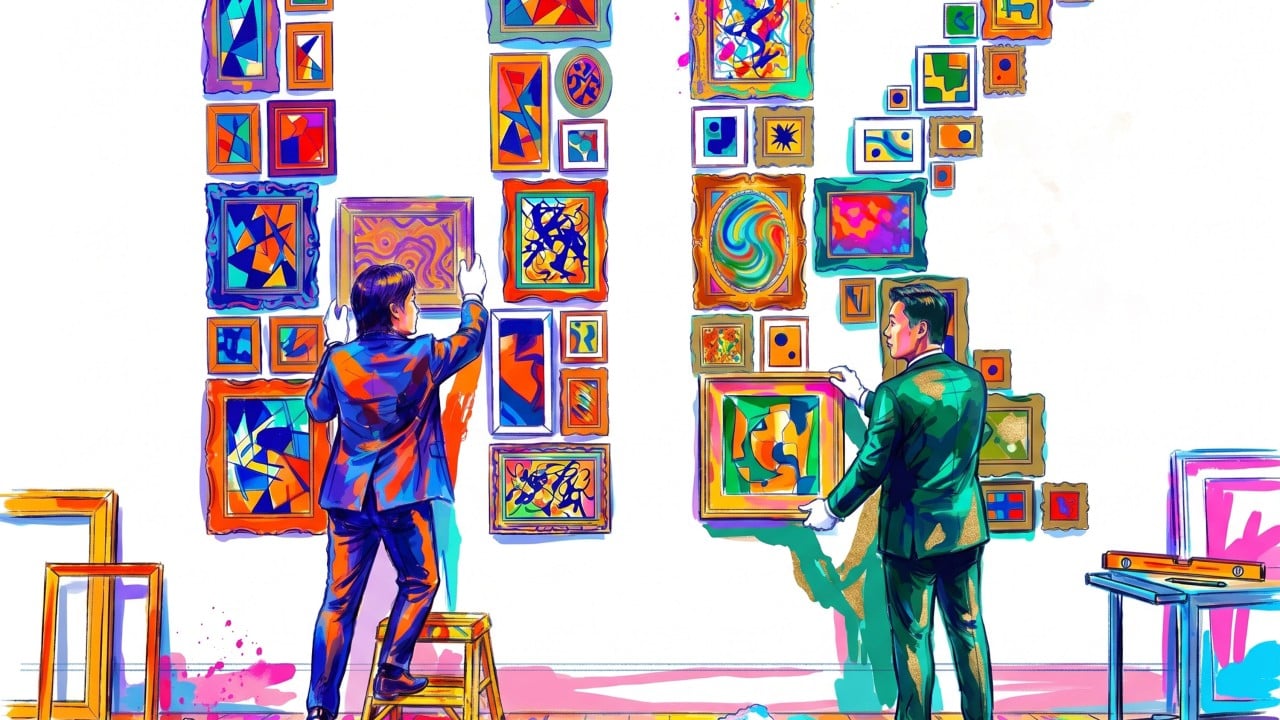
Everyone loves a flashy auction gavel. When a Basquiat or a Zao Wou-Ki breaks a record at Sotheby’s or Christie’s in Wan Chai, the financial press instantly declares that Hong Kong has conquered the global art market.
They're missing the real story.
Auction fireworks are great for press releases, sure. Yet any veteran art dealer, private banker, or logistics manager working in Asia will tell you that headline sales are just the storefront window. Becoming a permanent, world-class art trading hub isn't about one massive week in March during Art Basel Hong Kong. It’s about what happens during the other 51 weeks of the year—the unglamorous, hyper-technical infrastructure of freeports, tax codes, legal arbitration, and museum ecosystems.
If Hong Kong wants to rival New York and London over the next decade, its ambitions rest entirely on that invisible plumbing.
The Auction Trap and Why Vanity Metrics Lie
Let’s look at how art market coverage usually works. A major auction house sets up a regional headquarters, flies in blue-chip Western contemporary works, and sells them to a handful of ultra-high-net-worth buyers from Taipei, Seoul, Jakarta, and Mainland China. Boom. Instant hub status.
Except that’s not how sustainable markets operate.
Auction houses are transactional middlemen. They chase liquidity where it already exists, and if tax laws or buyer sentiment shift, those evening sales can shrink overnight. During the global art market cool-down that stretched from 2023 through 2025, auction houses across Asia felt the squeeze immediately as speculative buying dried up. According to the Art Basel and UBS Global Art Market Report, China (including Hong Kong) briefly reclaimed the number two spot globally before facing sharp corrections in high-end public auction turnover.
Why? Because relying on trophy sales makes a market brittle.
A genuine art trading hub needs deep primary gallery representation, private treaty sales, institutional buying, and regional artist development. When I walk through H Queen’s in Central or the industrial lofts of Wong Chuk Hang, the conversations with gallery directors rarely focus on $50 million evening lots. They focus on rent, local collector education, and whether mid-tier buyers are consistently acquiring works priced between $20,000 and $150,000. Without that middle market, an art hub is just a glamorous transit lounge.
Taxes, Freeports, and the Logistics Advantage
Here is where Hong Kong actually holds a massive, undeniable edge over almost every competitor in the Asia-Pacific region. Money hates friction, and fine art is notoriously expensive to move, insure, and store.
Hong Kong operates as a free port. There is no value-added tax (VAT), no goods and services tax (GST), and no import or export duties on artwork. Compare that to Mainland China, where importing art triggers steep customs duties and import VAT that can easily add over 13% to 17% to the landed cost of a painting. Even regional rivals like Singapore—which has aggressively courted wealth managers and hosted ART SG—levy a 9% GST on goods imported into the domestic market unless those works stay locked inside bonded storage.
In Hong Kong, a collector can fly a sculpture in from Zurich, hang it in their Repulse Bay living room for six months, lend it to a local museum, and ship it out to Tokyo without paying a single dollar in import tax. That zero-tax frictionlessness is practically unmatched globally.
The Airport Storage Play
Storage is the other half of this equation. Collectors don't hang $200 million worth of canvases on humid apartment walls during typhoon season. They need climate-controlled, museum-grade vaults.
For years, Singapore’s Le Freeport had a head start on ultra-secure, bonded art storage in Asia. Hong Kong responded by leaning directly into its aviation network. The Airport Authority Hong Kong has been actively developing dedicated art storage facilities right next to Hong Kong International Airport (HKIA), allowing high-value crates to move straight from cargo holds into temperature-regulated vaults without ever touching city traffic.
Think about what that changes for dealers. When physical inventory sits permanently in a city, private sales happen locally. Curators visit. Insurance underwriters set up shop down the street. Conservators relocate to restore damaged canvases. Storage isn't a side business—it's the anchor that keeps high-value assets physically rooted in the jurisdiction.
M+ and the Institutional Credibility Gap
For decades, critics dismissed Hong Kong as a "cultural desert"—a place where people traded art like luxury watches or fine Bordeaux, without caring much about art history or scholarship.
That critique doesn't hold water anymore, largely thanks to the West Kowloon Cultural District.
When M+, Asia’s first global museum of contemporary visual culture, opened its doors in late 2021, followed closely by the Hong Kong Palace Museum in 2022, it fundamentally rewired the city's credibility. A commercial market without major public institutions always feels slightly mercenary. Collectors want validation. They want to know that the artists they support are being researched, archived, and exhibited alongside canonical masters.
M+ gave Hong Kong institutional gravity. Suddenly, international museum directors had a reason to visit outside of March art fair week. Local collectors gained a flagship institution to donate works to—and in the art world, philanthropy and board seats are the ultimate social currency.
Still, having shiny museum buildings isn't enough on its own. Institutional trust requires curatorial independence and diverse programming. If museums become overly cautious or predictable, international curators notice immediately, and the city risks slipping back into being viewed purely as a commercial marketplace rather than a creative capital.
The Competition Is Fiercer Than Ever
If you think Hong Kong has Asia locked up, you haven't been paying attention to Seoul and Tokyo.
Over the past few years, Seoul has mounted a serious challenge. Frieze Seoul brought a massive wave of Western mega-galleries—Pace, Gagosian, White Cube, Hauser & Wirth—into Gangnam and Hannam-dong. South Korea boasts a fiercely passionate domestic collector base, tech-savvy younger buyers, and major corporate foundations like the Leeum Museum of Art.
Meanwhile, Tokyo continues to draw collectors thanks to a weak yen that made Japanese art and luxury goods irresistible to foreign buyers, alongside deep-rooted local institutions like the Mori Art Museum and the launch of Tokyo Gendai.
So where does Hong Kong beat them?
- Bilingual English-Chinese Business Infrastructure: International dealers don't need a translator to read a consignment contract in Hong Kong. The city operates under English common law, which gives Western galleries, auction houses, and art-backed lenders a level of legal comfort they simply don't have in civil-law jurisdictions across Northeast Asia.
- Capital Mobility: You can move eight-figure sums in US dollars, Euros, or Hong Kong dollars in and out of Hong Kong banks without currency controls or central bank approval bottlenecks. Try wiring $15 million out of several neighboring Asian economies on short notice and watch how fast a deal stalls.
- Geographic Proximity: Roughly half the world’s population lives within a five-hour flight of Hong Kong. It remains the cleanest geographic bridge between Mainland Chinese wealth and Southeast Asian collectors in Manila, Bangkok, and Jakarta.
Art Finance and Legal Plumbing Nobody Talks About
Ask a private banker at UBS, HSBC, or Citi Private Bank how ultra-wealthy clients actually use art, and they won't talk about aesthetics. They'll talk about collateral.
Art-backed lending—borrowing cash against a verified collection of blue-chip paintings—is a multi-billion-dollar business in New York and Geneva. In Asia, it has historically been slow to take off because banks struggled with valuation transparency, title verification, and repossession laws.
Hong Kong is quietly fixing those legal bottlenecks. Because its legal system follows common law precedents, banks can structure clear security interests over physical artworks stored in local vaults. If a borrower defaults, the lender knows exactly how the courts will enforce the lien.
Alongside lending, specialized art dispute resolution is gaining traction. Fake provenances, damaged shipments, and broken consignment promises happen constantly in the art trade, yet dealers hate public court battles that ruin their reputation. The Hong Kong International Arbitration Centre (HKIAC) has positioned itself as a neutral, confidential venue for resolving cross-border art disputes between Asian buyers and Western sellers.
Nobody writes breathless headlines about arbitration clauses or secured lending frameworks. Honestly, they’re dry as dust. Yet without them, major family offices won't treat Hong Kong as a primary base for managing multi-generational art collections.
What Still Holds Hong Kong Back
Being realistic means admitting where the friction still exists. Hong Kong’s advantages are formidable, but several structural headaches keep it from cruising effortlessly past London or New York.
Commercial real estate remains brutal. Even after post-pandemic office rent corrections, running a street-level gallery space in Central is wildly expensive compared to operating in Seoul or Taipei. High overhead forces galleries to play it safe, pushing recognizable, easy-to-sell artists rather than taking risks on experimental regional talent.
There’s also the perception issue among Western collectors and artists. Geopolitical tensions between Washington and Beijing, combined with stricter local governance rules introduced over the past several years, have made some Western institutions and artists hesitant. While commercial trade continues freely—and galleries regularly show provocative international works during Art Basel—reputational caution lingers in boardrooms in New York and London.
Finally, Hong Kong has a talent pipeline bottleneck. You can import million-dollar paintings overnight, but you can't import seasoned registrars, fine art conservators, specialized customs brokers, and mid-career curators instantly. Local universities have started expanding arts administration programs, yet the city still relies heavily on expat specialists for niche technical roles.
How Collectors and Dealers Should Approach Hong Kong Now
If you're evaluating Hong Kong as a base for buying, selling, or storing art in Asia, stop watching evening auction totals and look at operational fundamentals instead.
- Use Hong Kong for cross-border consolidation. If you buy across Tokyo, Seoul, and Europe, consolidating shipments in a bonded Hong Kong vault saves massive headaches on overlapping customs paperwork and insurance riders.
- Separate market hype from secondary liquidity. Just because an artist performs well at a Hong Kong spring sale doesn't mean local galleries can place their work privately six months later. Always check whether the artist has primary gallery representation on the ground in Central or Wong Chuk Hang before buying at auction.
- Structure contracts under Hong Kong law. When doing private treaty deals across borders in Asia, specifying Hong Kong common law and HKIAC arbitration protects both buyer and seller far better than vague multi-jurisdictional agreements.
- Visit outside March. Anyone can enjoy Art Basel week when the champagne flows and every gallery hangs its best inventory. Go in October or November instead—walk the galleries in Wong Chuk Hang, spend an afternoon at M+, and see how the ecosystem breathes when the international press packs have gone home.