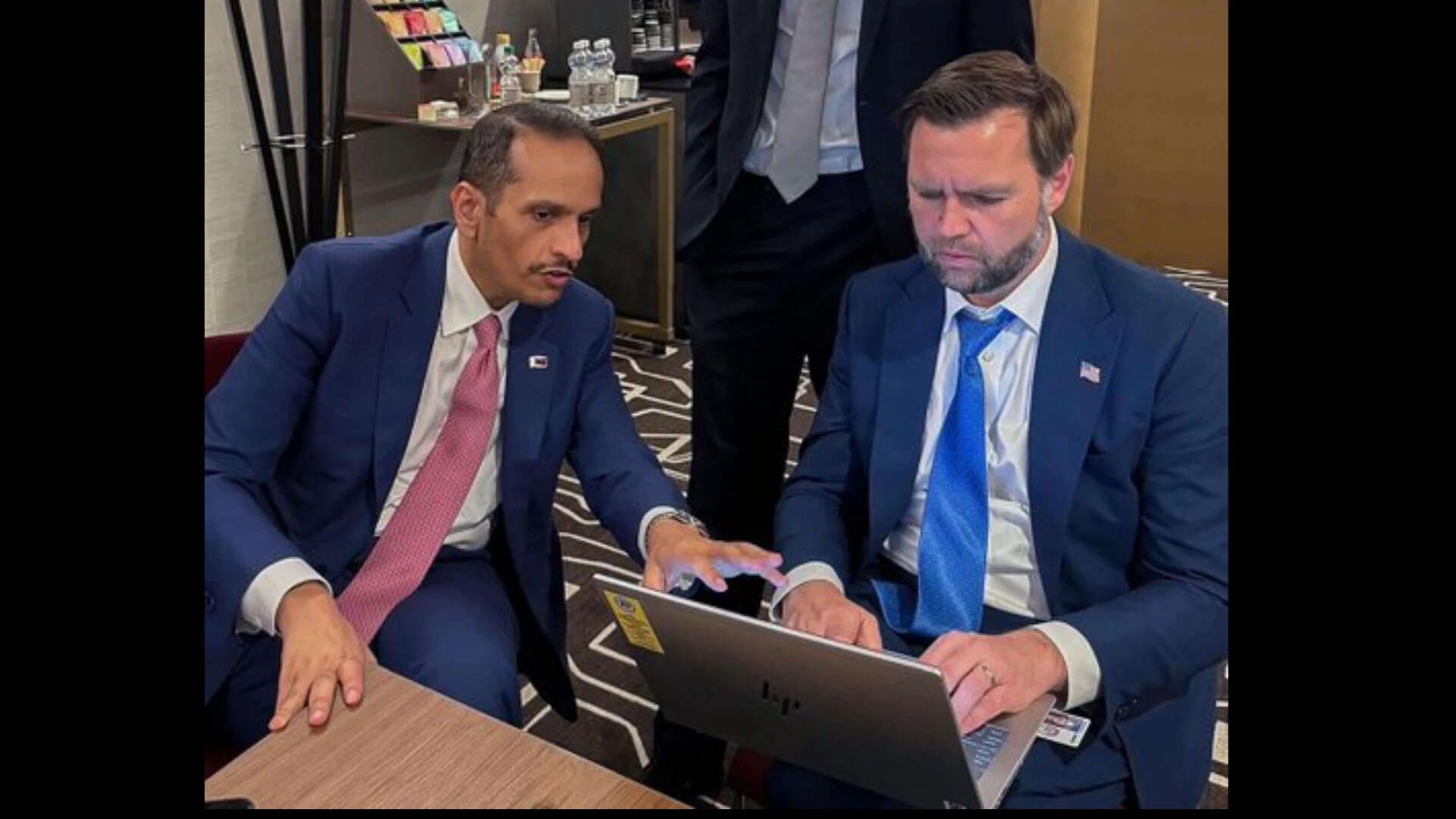
A single photograph can derail days of high-stakes diplomacy. Look no further than the image floating around social media from the recent peace negotiations in Lucerne, Switzerland. Qatari Prime Minister Mohammed bin Abdulrahman bin Jassim Al Thani posted what should have been a routine behind-the-scenes shot of Vice President JD Vance and Jared Kushner reviewing data on a laptop.
Instead, the internet zoomed in. Read more on a connected topic: this related article.
What they found triggered a massive wave of criticism from intelligence experts and cybersecurity professionals. Sticking straight out of the laptop keyboard was a Common Access Card (CAC)—the standard smart card used to log into secure U.S. government systems. The problem? The face printed on that card clearly belongs to a woman, not the Vice President.
Social media immediately erupted with questions about why the Vice President doesn't have his own login credentials. But focusing solely on whose name is on the plastic card misses the much larger, more terrifying operational security nightmare happening in plain sight. Further journalism by NPR highlights similar views on this issue.
The Dual Breach in Lucerne
The outcry started when internet sleuths and national security journalists noticed the identity card discrepancy. Caroline Orr Bueno, a prominent investigative journalist, publicly questioned the read-between-the-lines message sent by Qatar's Prime Minister publishing the photo.
It gets worse when you look at who else is in the frame. Former U.S. intelligence officer Travis Akers blasted the scene as pure incompetence, pointing out that the photo shows the Prime Minister of Qatar with a direct, unhindered line of sight to an active U.S. government screen.
When you break down the actual mechanics of federal IT security, two major failures happened simultaneously.
- Credential Sharing: Utilizing another individual's CAC card violates basic federal identity management protocols. Every single government employee undergoes rigorous training stating that credentials are non-transferable.
- Foreign National Visual Access: Allowing a foreign head of government close proximity to an unclassified or classified federal machine while actively logged in bypasses basic shoulder-surfing defenses.
Some defenders argue that Vance simply needed to look at something quickly and borrowed a staffer's machine. While that happens in corporate offices all the time, the rules are entirely different at the highest levels of global diplomacy.
Why CAC Cards Matter in Federal Security
To understand why national security experts are losing their minds over this, you have to understand how the U.S. government protects its data. A CAC isn't just an ID badge. It's a cryptographic token required for multi-factor authentication.
Without inserting that specific card and typing a unique PIN, the laptop is basically a brick.
By using a staffer's card, any action taken on that laptop is legally tied to the staffer, not the Vice President. It breaks the entire chain of accountability. If sensitive data leaks or unauthorized changes are made during these high-profile Iranian peace talks, the digital audit trail points to a random female aide, not the person actually steering the meeting.
Furthermore, foreign intelligence agencies dream of getting clear, high-resolution photos of active government hardware. Even a glimpse of the desktop layout, background software applications, or the physical structure of the smart card reader provides actionable data for state-sponsored hackers.
The Reality of High Stakes Diplomatic Tech
People who have actually worked logistically in these environments know that mistakes happen under pressure. The delegation in Switzerland was trying to finalize a massive framework regarding the Strait of Hormuz and nuclear inspections. The atmosphere was undoubtedly chaotic.
But chaos doesn’t excuse a total breakdown of basic security protocols.
When a Vice President travels, a dedicated technical team from the White House Communications Agency travels with them. They set up secure workstations, encrypted lines, and verified hardware. If the Vice President needed to check a document, a secure, properly authenticated device should have been prepared for him. Relying on an aide's login while a foreign leader stands over your shoulder signals a casual attitude toward security that adversaries love to exploit.
If you ever find yourself handling sensitive data under intense pressure, don't take shortcuts with identity verification. Never let anyone else use your login tokens, and always clear your workspace before allowing external visitors into your immediate visual bubble. Security protocols exist precisely for the moments when you are too busy to think about them.


