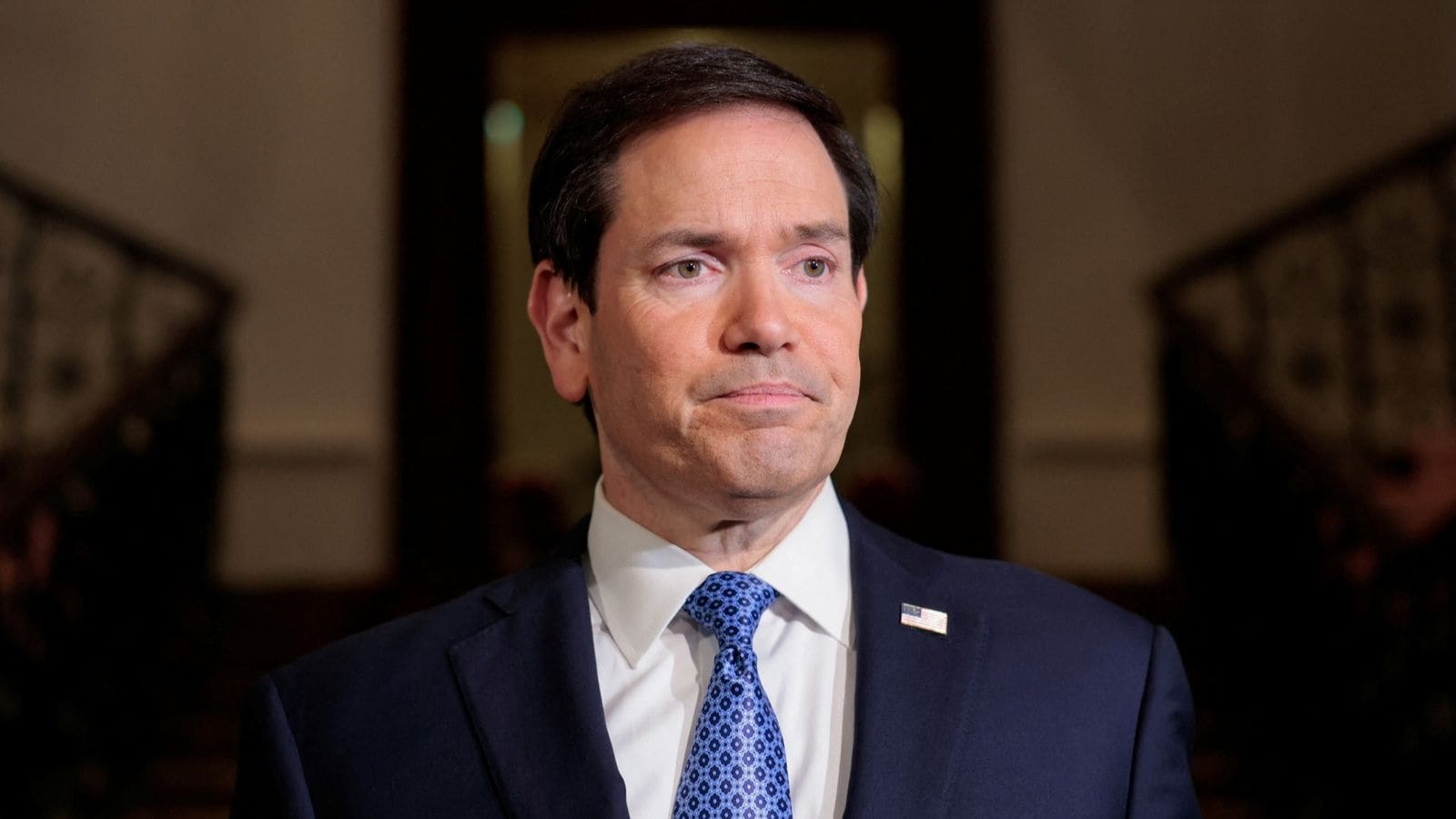
Washington loves a good exit rumor. Almost every week, another anonymous source whispers to a political reporter that a high-profile cabinet member is packing their bags, frustrated by internal turf wars or eyeing a run for higher office. Lately, those whispers have zeroed in on Secretary of State Marco Rubio, sparking waves of speculation about whether he's on his way out of the Trump administration.
Rubio isn't going anywhere. He's publicly and flatly dismissed the reports of leaving the Trump administration, calling them baseless noise from people who don't actually know what happens inside Foggy Bottom or the West Wing. If you look past the clickbait headlines and examine how Washington power dynamics actually work right now, the rumors fall apart pretty fast.
Why the Rumors Started in the First Place
To understand why reporters keep writing about a potential Marco Rubio departure, you have to look at the history of the first Trump term. Between 2017 and 2021, the State Department and the National Security Council became revolving doors. Rex Tillerson lasted barely a year before getting fired via tweet. John Bolton, H.R. McMaster, and several others burned through their political capital in months.
Political journalists got conditioned to expect chaos. When you cover the White House for a living, pattern recognition is your primary survival skill. So when pundits see a former rival like Rubio—someone who traded sharp insults with Donald Trump during the 2016 primaries—taking on the grueling role of America's top diplomat, they immediately start placing bets on when the relationship will fracture.
Add in the 2028 presidential race, and the speculation turns into overdrive. Everyone in D.C. knows Rubio has long harbored White House ambitions. Some political strategists assumed he'd take the Secretary of State job to burnish his foreign policy credentials, stick around for eighteen months, and then bolt to set up a presidential campaign committee before the midterm dust even settles.
That theory sounds plausible on a cable news panel. In reality, it completely misunderstands both Rubio's current leverage and how this specific administration operates.
What Marco Rubio Actually Said About Leaving
When pressed directly on the exit rumors, Rubio didn't give the typical Washington non-denial denial. You know the type—where a politician says they're "focused on doing their job today" while quietly letting their aides leak job-hunting updates to Politico. Instead, he pushed back hard.
He pointed out that the media routinely manufactures palace intrigue whenever there's a lull in legislative news. From his perspective, walking away from the State Department mid-term wouldn't just be premature; it would undermine the very foreign policy priorities he spent over a decade advocating for on the Senate Foreign Relations Committee.
Think about what he gave up to take this seat. Rubio left a safe, powerful, lifelong platform in the United States Senate where he held senior spots on both Foreign Relations and the Intelligence Committee. You don't trade away Senate seniority—arguably the most comfortable gig in American politics—just to bail out at the first sign of bureaucratic friction.
The Policy Reality Keeping Him in Foggy Bottom
If you want to know whether a cabinet secretary is actually preparing to resign, stop listening to anonymous White House aides and start looking at their travel schedule and policy portfolio. People who are checking out stop fighting for turf. Rubio is doing the exact opposite.
His fingerprints are all over the administration's most aggressive foreign policy moves, particularly in the Western Hemisphere and the Indo-Pacific. For years in the Senate, Rubio argued that Washington treated Latin America as an afterthought while Beijing quietly bought up ports, infrastructure, and political influence across the region. Now, he holds the actual levers of American diplomacy to push back.
- Latin America and the Western Hemisphere: Rubio is the first Hispanic Secretary of State in U.S. history, and he's using that platform to overhaul how Washington deals with regimes in Caracas, Havana, and Managua, while pressuring regional partners on migration enforcement and supply chain nearshoring.
- Countering China: Long before it was fashionable in both parties, Rubio warned about Chinese industrial espionage, telecom dominance, and threats to Taiwan. Leaving now would mean handing control of the U.S.-China diplomatic track to someone else right when those policies are taking shape.
- State Department Restructuring: Transforming a massive federal bureaucracy takes years, not months. Anyone who has worked inside federal agencies knows that civil service resistance alone can stall a new initiative for six months. If Rubio walked out early, career officials would simply wait out his successor and let his directives die in committee.
The Trump-Rubio Dynamic Has Evolved
A lot of critics still view Marco Rubio through the lens of 2016. That's a massive analytical mistake. Over the past decade, Rubio deliberately shifted his ideological positioning to align closely with the populist-nationalist wing of the Republican Party, especially on trade, industrial policy, and skepticism toward endless foreign interventions.
Unlike Rex Tillerson, who came from the corporate boardroom at ExxonMobil and never understood Washington's political bloodstream, Rubio is a career political operator. He knows how to manage upward. He understands that in a Trump White House, loyalty isn't just valued—it's the basic currency of survival. By staying disciplined, avoiding off-the-record backstabbing, and publicly backing the president's "America First" framing, Rubio has avoided the public clashes that doomed his predecessors.
How to Spot a Real Cabinet Exit vs. Manufactured Drama
If you follow political news closely, you've probably noticed how exhausting the rumor mill gets. Every month brings a new "bombshell" report citing "three people familiar with the matter" who claim a senior official is on thin ice. Most of it is noise planted by rival factions inside the administration or by external lobbyists trying to weaken an official they dislike.
Having watched D.C. personnel cycles play out over multiple administrations, I look for specific, verifiable signals before taking any resignation rumor seriously. You can use the exact same filter when reading political coverage:
- Check the official's public calendar and foreign travel. When a Secretary of State is truly on the way out, foreign governments stop scheduling major bilateral summits with them. Diplomats in Tokyo, London, and Brussels have their own intelligence networks; they don't waste prime minister face-time on a lame duck.
- Watch who is testifying on Capitol Hill. A cabinet member preparing to exit usually hands off contentious budget hearings and oversight testimony to their Deputy Secretary. As long as Rubio is personally sitting in front of Senate and House committees defending the administration's budget and treaties, he's firmly in command.
- Track senior staff departures. Cabinet secretaries rarely leave alone. Before a principal resigns, their closest loyalists—their chief of staff, policy planning director, and top spokespeople—usually start quietly taking private-sector jobs. No such exodus is happening on Rubio's seventh-floor team at the State Department.
- Look at White House press briefing body language. When Donald Trump actually wants someone gone, he doesn't rely on subtle leaks to mid-tier reporters. He telegraphically signals his displeasure in public remarks or social media posts.
What This Means for 2028 and Beyond
Of course, dismissing exit rumors today doesn't mean Marco Rubio plans to stay at the State Department forever. Politics is a long game, and everyone in Washington keeps one eye on the next election cycle.
If Rubio wants to run for president in 2028, staying in the cabinet through at least the 2026 midterm elections—and likely into early 2027—actually strengthens his hand. Being the sitting Secretary of State gives him constant global media exposure, stature as a statesman, and direct access to Republican donors without having to spend two years begging for cable news hits from a think tank perch.
Quitting early would make him look erratic or unable to handle executive pressure—two labels that would be fatal in a crowded GOP primary against figures like JD Vance or Ron DeSantis. Staying put, delivering tangible diplomatic wins, and leaving on his own terms closer to the primary window is the only move that makes strategic sense.
Ignore the anonymous leaks and follow the actual power metrics instead: check the State Department's official press briefings, watch his upcoming diplomatic summits, and judge his tenure by concrete policy outcomes rather than recycled palace intrigue.