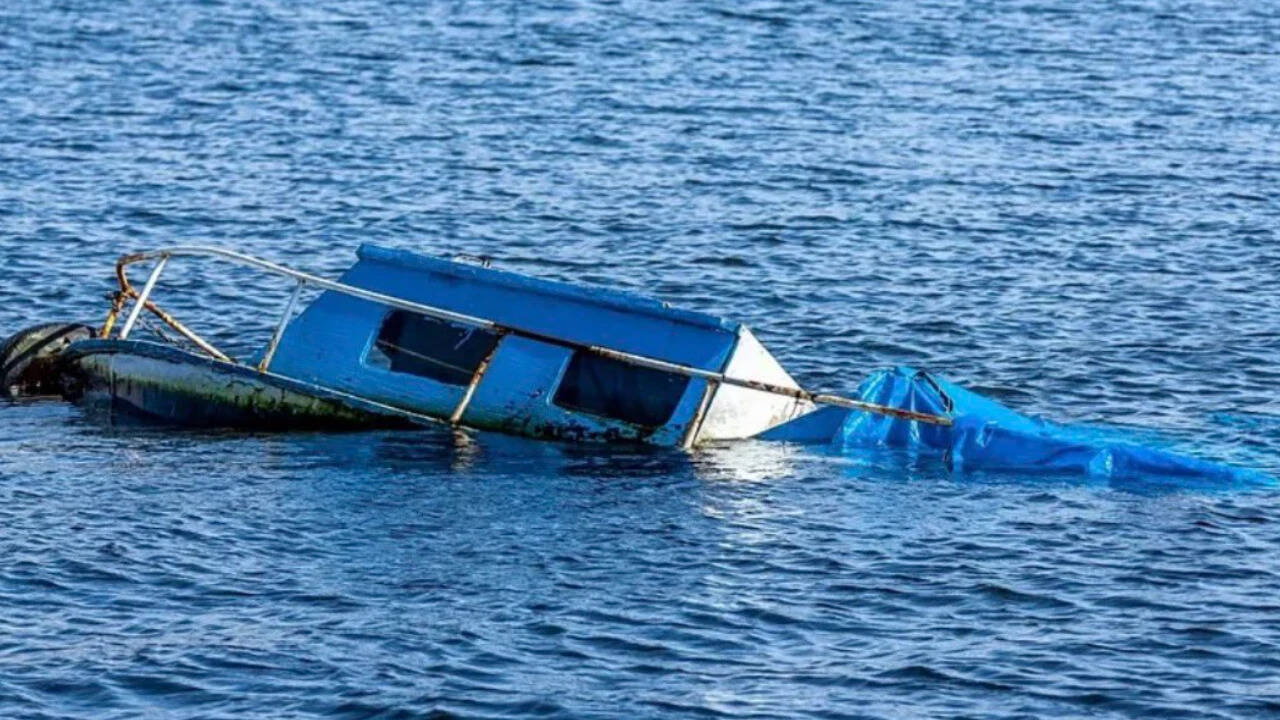
Twenty-one bodies washed ashore first. By Monday morning, the death toll had climbed to 39, and local outlets were soon counting 43. Only a single passenger survived.
When news broke that a migrant boat sank off Senegal's northwestern coast near Kébémer and Thieppe in early November 2026, most coverage treated it like a sudden, isolated maritime accident. It wasn't. Barely ten days later, another overloaded wooden pirogue carrying around 100 people—including five women—slammed into rocks off the fishing community of Yenne around 2 a.m., leaving more dead and dozens missing.
If you only read breaking wire alerts, you're missing the real story behind these sinkings. The initial headlines focused on the terrifying body count off Senegal's northwestern coast, yet they rarely explain why boats are launching from deeper south, why wooden fishing canoes are disintegrating miles from shore, or why enforcement crackdowns are accidentally making the Atlantic crossing deadlier.
The Northwestern Coast Tragedy Was Just the Beginning
Let's look at what actually happened during that first weekend of November 2026. Senegal's Interior Ministry initially confirmed at least 21 deaths after a boat carrying migrants went down off the coast of Kébémer, north of Dakar. Rescue crews kept pulling victims from the surf. Within hours, emergency services updated the count to 34, then 39, with local reports pushing the toll to 43.
One person made it out alive.
Senegal's President Bassirou Diomaye Faye responded on X with a stark message: "No one should set out with the sea as their only horizon. We will relentlessly continue the fight against those who organize these crossings and the work that gives our young people reasons to hope here." Interior ministers visited the site. Human rights groups like ADHA immediately condemned the lack of lasting results to stop deaths at sea.
Then came Yenne. Less than two weeks after the northwestern coast disaster, residents along the beach in Yenne heard screams echoing across the dark water around 2 a.m. When waves pushed the battered wreckage onto the sand, officials found water sachets, mobile phones, eight identity cards, and a high school enrollment paper belonging to a student from Kabrousse in southern Senegal. Even a life jacket inside the ruins had the word "dad" scribbled across it.
These aren't freak weather events. They're the predictable result of a massive structural shift in how West African migration works.
Why the Atlantic Route Is Getting Deadlier
Most people assume migrants take the shortest possible hop across the water to Europe. That used to be true when departures clustered around northern Morocco. Not anymore.
Because Senegal, Mauritania, and Morocco have ramped up coastal patrols around traditional northern launch sites, smuggling networks have pushed departure points further south. Boats are now launching from Senegal, Gambia, Guinea-Bissau, and even Guinea.
Do the math on what that does to survival odds:
- Distance explodes. A boat leaving from Senegal's coast faces roughly 1,300 kilometers (over 800 miles) of open Atlantic Ocean to reach Spain's Canary Islands.
- Navigation fails. Open wooden pirogues don't carry radar, proper compasses, or satellite beacons. Miss the Canary archipelago by a few degrees, and the Atlantic currents sweep the vessel straight toward the middle of the ocean with zero landfall in sight.
- Exposure kills before drowning. Spending seven to ten days exposed to freezing night winds, salt spray, and scorching sun without enough fresh water causes severe hypothermia and dehydration long before a wave capsizes the hull.
Data from the Spanish rights group Walking Borders backs this up. In just the first five months of 2026, at least 635 people died trying to reach the Canary Islands. Think about that ratio: for every 100 migrants who successfully stepped onto Canary Islands soil during that stretch, roughly 21 people died in the water.
Meanwhile, the UN's International Organization for Migration (IOM) recorded at least 454 deaths and disappearances off the West African coast in the months leading up to the November sinkings. Even the IOM admits that number is an undercount because entire pirogues vanish into the Atlantic without a single distress call or washed-up board.
The Anatomy of a Pirogue Disaster
If you've never seen a Senegalese pirogue up close, picture a long, narrow, flat-bottomed wooden fishing canoe. Local craftsmen build them for coastal fishing—casting nets a few miles off the shelf and returning before dark. They aren't ocean-going vessels.
Smugglers buy up aging, dilapidated pirogues, bolt one or two outboard motors onto the stern, and pack between 50 and 200 people onto wooden planks. Take the New Year's Eve 2025 sinking off Gambia—over 200 people were crammed onto a single boat before it went down, leaving 44 recovered bodies and scores missing.
Here's what actually sinks them:
- Top-heavy weight distribution. A hundred adults sitting shoulder-to-shoulder raise the boat's center of gravity dramatically. One sudden shift when people panic—or one beam wave hitting the side—flips the canoe in seconds.
- Fuel drum hazards. To cross 1,300 kilometers, crews strap dozens of plastic jerrycans filled with petrol inside the hull. Leaking fuel mixes with seawater in the bilge, causing severe chemical burns on passengers' skin and creating constant fire hazards.
- Inexperienced pilots. Local officials in Yenne noted that smugglers actively visit coastal fishing villages to recruit local boat pilots. Many captains know local reefs and tides intimately, yet have zero experience navigating deep Atlantic swells at night.
When the boat off Yenne hit rocks at 2 a.m., the hull cracked immediately. Most passengers on these crossings don't know how to swim, and cheap foam life jackets—if they even have them—waterlog within minutes.
What Actually Drives Young People Onto These Boats
It's easy to blame ruthless smugglers. IOM Director General Amy Pope pointed out that traffickers charge desperate passengers for journeys on unseaworthy boats, profiting directly from human misery. That's completely true.
Still, blaming smugglers alone misses half the equation. Smugglers don't manufacture desperation; they monetize it.
Talk to families in coastal towns like Thieppe, Kébémer, or Yenne, and you'll hear the same economic reality over and over. Youth unemployment remains stubbornly high while inflation eats away at basic household budgets. Worse, Senegal's traditional artisanal fishing sector—the exact industry that built those pirogues—has been hammered by overfishing from industrial foreign trawlers and climate-driven shifts in fish stocks.
When a young fisherman can no longer pull enough catch out of the water to feed his parents, that same wooden canoe stops looking like a livelihood and starts looking like a ticket out.
The Social Pressure Nobody Mentions
Economic hardship isn't the only push factor. Intense family and community expectations play a massive role, something IOM researchers have repeatedly flagged.
In many neighborhoods, families pool their life savings—selling land, livestock, or jewelry—to buy one young man a spot on a pirogue. Once he boards that boat, he carries the financial survival of ten or fifteen relatives on his shoulders. Coming back empty-handed isn't just seen as bad luck; it's treated as a crushing personal failure. And seeing neighbors on TikTok or WhatsApp posting photos from Spain creates a powerful illusion that everyone else is making it across safely.
Why Current Crackdowns Keep Falling Short
Every time 30 or 40 bodies wash up on a Senegalese beach, the political script repeats itself. Politicians promise harsher prison sentences for organizers, naval patrols intercept a few boats, and European officials pledge more border-security funding.
Yet record numbers of migrants still reached Spain's Canary Islands in November 2026, forcing local authorities on the island of El Hierro to declare an emergency as reception centers overflowed.
Why aren't patrols stopping the flow? Because policing 500 kilometers of rugged West African coastline with limited naval assets is like squeezing a balloon. Block departures in Saint-Louis or Dakar, and boats simply push off at 2 a.m. from quiet beaches like Yenne or cross the border into Gambia.
More surveillance without legal alternatives doesn't save lives. It forces boats to travel further out into deep water to avoid coastal radar, turning an already dangerous voyage into a suicide run.
How You Can Track Verified Data and Support Real Solutions
If you're following this crisis—whether as a researcher, journalist, donor, or concerned reader—don't rely on sensational social media clips that recycle footage from years ago. Stick to primary organizations tracking verified numbers and funding on-the-ground alternatives:
- Verify casualty and arrival figures through the International Organization for Migration's Missing Migrants Project, which cross-checks survivor testimonies, coastguard logs, and local municipal reports to separate confirmed deaths from unverified rumors.
- Review Atlantic route mortality reports published by Walking Borders (Caminando Fronteras), a human rights organization that maintains direct distress hotlines with families and tracks missing vessels that never appear in official state tallies.
- Support local livelihood and vocational programs in Senegal rather than reactive emergency relief alone. Organizations like the UNHCR and local Senegalese youth associations focus on restoring sustainable coastal fisheries, funding small-business microgrants, and creating legal circular-migration pathways so young people don't have to bet their lives on a wooden canoe.
Until legal visa pathways expand and coastal economies offer real wages again, no naval blockade will stop young West Africans from boarding pirogues in the dark.