You see a headline about a skydiving plane crash and your stomach drops. You immediately think about the jump itself. The parachute failing. The terrifying freefall.
But experienced jumpers know a different reality. The most dangerous part of skydiving isn't stepping out of the open door. It's the plane ride up.
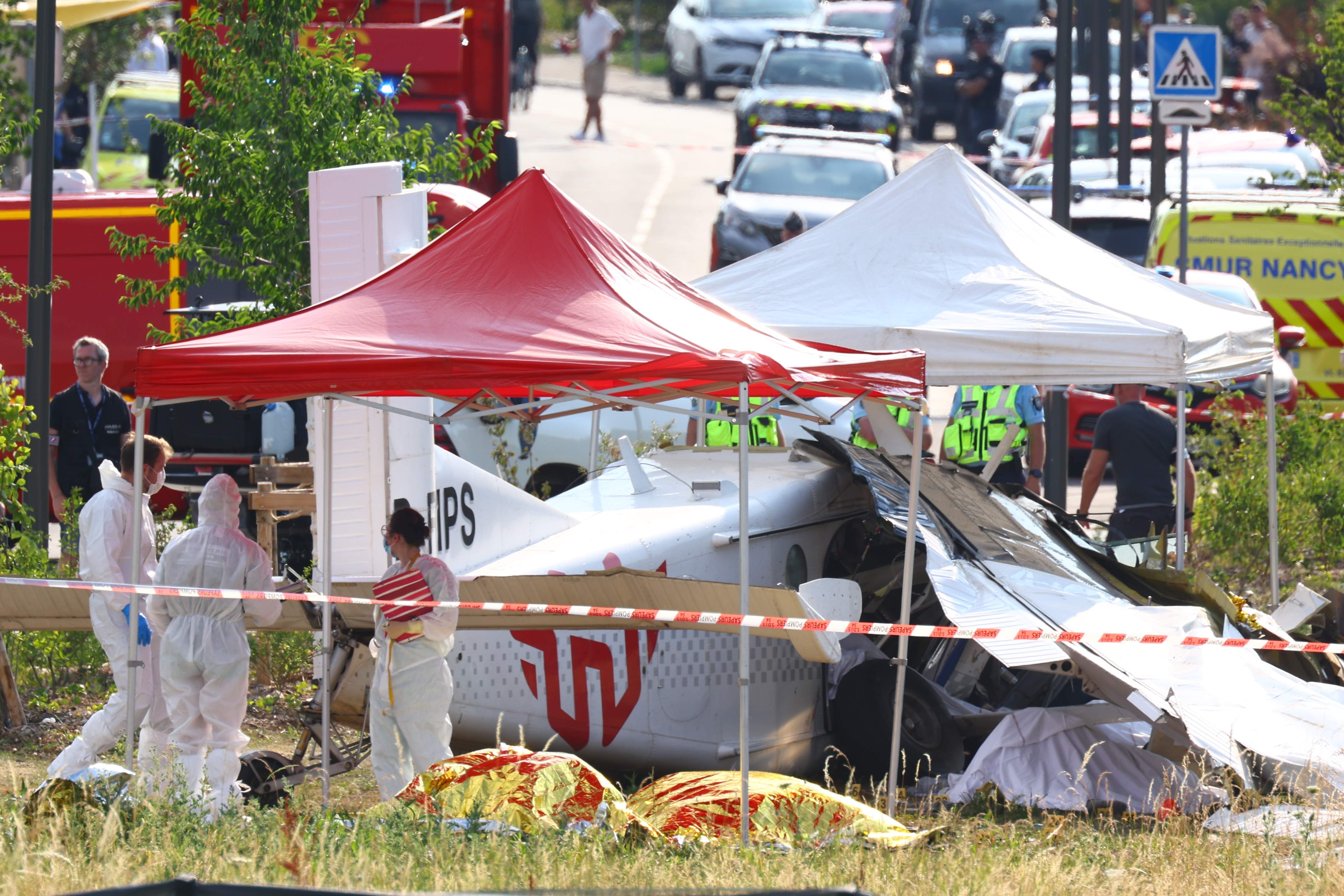
On Sunday, June 28, 2026, that reality hit home in the most brutal way possible. A single-engine Pilatus PC-6 turboprop carrying 11 people crashed moments after taking off from the Nancy-Essey airfield in northeastern France. Everyone on board died. Five skydiving instructors, five first-time students who happened to be local independent nurses, and the pilot. They were all wearing parachutes. None of them could use them.
The tragedy in the small town of Tomblaine wasn't just a freak accident. It stands as France's deadliest skydiving-related aviation disaster in three decades, according to French Transport Minister Philippe Tabarot. It also highlights a critical safety blind spot in the adventure sports industry that most novices completely overlook.
The Illusion of the Safety Net
When news of the Tomblaine crash broke, the internet filled with variations of the same question: Why didn't they just jump out?
It seems logical. You're strapped to a master instructor, you have a massive nylon canopy on your back, and the plane is going down. Why not pull the handle and exit?
Physics and altitude don't care about logic.
Eyewitnesses, including a local resident who heard the engine cut out, reported that the aircraft stalled during its initial ascent. It plummeted nearly vertically into a grassy bike path just 300 meters from the runway. The entire flight lasted less than a minute.
According to flight data and regional prefect Yves Séguy, the aircraft banked hard left and dropped like a stone. In an aviation emergency occurring below 1,000 feet, a parachute is completely useless. You need altitude to exit an aircraft safely without hitting the tail. You need time for the canopy to deploy. And you need speed to clear the falling fuselage.
When a jump plane stalls immediately after takeoff, centrifugal forces can trap passengers inside. The cabin turns into a washing machine of kinetic energy. Even if you made it to the door, deploying a parachute at 500 feet means hitting the ground before the fabric can even catch air.
Why Skydiving Fleets Pose Unique Risks
Aviation safety groups like the United States Parachute Association (USPA) and the French Parachuting Federation keep rigorous data on skydiving fatalities. Year after year, the numbers tell the same story: skydiving gear failures are incredibly rare. The real vulnerability lies in the older, heavily utilized aircraft tasked with hauling jumpers to altitude.
Jump planes live a punishing lifestyle. They don't fly long, smooth routes at cruising altitudes. They undergo rapid, repetitive cycles. They take off at maximum weight, climb aggressively to 10,000 or 14,000 feet, dump the passengers, and dive back down as fast as possible to pick up the next group.
This constant cycle puts massive thermal and mechanical stress on the engines and airframes.
The plane involved in the France crash was a Pilatus PC-6, a legendary Swiss-built workhorse known for its short takeoff and landing capabilities. This specific aircraft was registered in Germany by Classic Wings GmbH and operated by KIAS Airlines, chartered specifically for a busy summer skydiving weekend.
While the exact cause is under official investigation by the Paris prosecutor's office and specialized air transport gendarmerie units, investigators are looking closely at environmental factors. The region was gripping under an intense summer heatwave.
Extreme heat does more than make people uncomfortable. It actively degrades flight performance. Hot air is thin air. It reduces engine efficiency and strips the wings of lift. When a plane is loaded to capacity with 11 people, high ambient temperatures leave a pilot with zero margin for error if an engine sputters on takeoff.
The Hidden Trauma of the Dropzone
The tragedy in Tomblaine was uniquely cruel. The five students were local nurses who had decided to book tandem jumps together as a way to unwind after working grueling shifts during the heatwave.
Because it was a special group outing, their families and friends were waiting at the edge of the airfield. They brought cameras. They were standing by to film what was supposed to be a triumphant afternoon. Instead, Nancy Mayor Mathieu Klein confirmed that these loved ones watched the aircraft drop out of the sky and impact the ground in real time.
This underscores a part of the sport that rarely gets talked about: the tight-knit, hyper-visible nature of dropzone operations. When something goes wrong in commercial aviation, it happens miles above the clouds. When a jump plane goes down, it often happens right in front of the spectator packing mat.
How to Evaluate Your Risk Before a Jump
If you're thinking about making a jump, don't focus all your anxiety on the parachute. You need to look at the operation as an aviation entity. You have a right to evaluate the risks before you sign the liability waiver.
First, look at the weather. High-altitude dropzones operating in temperatures above 95 degrees Fahrenheit face significantly degraded performance characteristics. If it's boiling hot and the plane is packed to maximum capacity, the safety margins shrink.
Second, understand the aircraft. Smaller Cessna 182s carry four jumpers; larger turboprops like the Pilatus PC-6 or Cessna Caravan carry more. Turboprops are generally incredibly reliable, but they demand rigorous, expensive maintenance schedules. Ask who operates the aircraft and whether the dropzone owns the fleet or charters them out for weekend rushes.
The investigation in Nancy will take months to parse through the mechanical wreckage of the German-registered aircraft. But the lesson for the adventure community is already clear. Respect the aviation side of the sport just as much as the freefall. The sky is rarely the problem; it's the first few hundred feet of the climb that demand your utmost respect.