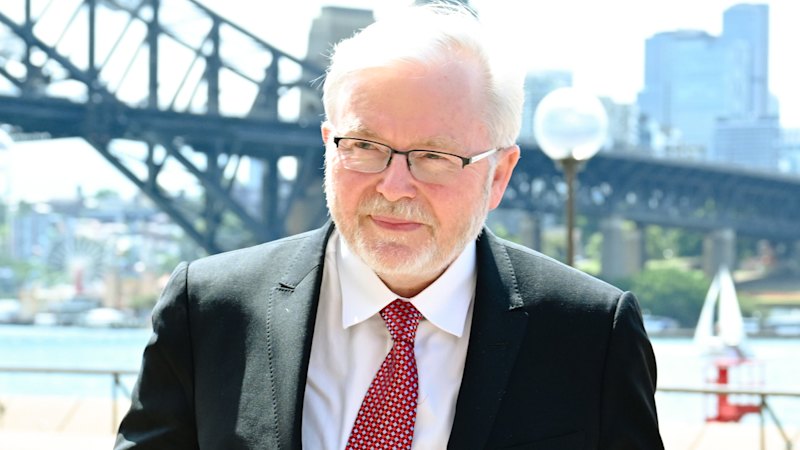
Political theater is rarely this blunt. When Donald Trump locked eyes with Australian Ambassador Kevin Rudd across the White House cabinet table and said, "I don't like you either, and I probably never will," the room erupted in laughter. The internet went wild. On the surface, it looked like a devastating, career-ending humiliation for Rudd, the former Australian Prime Minister who had spent years bashing Trump on social media.
But if you think that public dressing-down was the end of the story, you're missing the real diplomacy happening under the table. Recently making news in this space: The Anatomy of a Shout on Golders Green Road.
Behind the viral clips, something far more calculated played out. Minutes after the cameras left the room, the dynamic shifted completely. This wasn't just a petty grudge match; it was a carefully choreographed lesson in political survival, ego management, and high-stakes alliance building.
The Setup That Caught Everyone by Surprise
The interaction happened during a White House bilateral meeting between Trump and Australian Prime Minister Anthony Albanese. The mood was actually warm. The leaders were celebrating progress on the AUKUS security pact, a massive defense deal involving nuclear-powered submarines. Everything was running smoothly until an Australian journalist decided to throw a hand grenade into the room. Further insights regarding the matter are detailed by NPR.
The reporter asked Trump if he harbored any lingering resentment over Rudd's past comments.
Before taking the ambassador gig in Washington, Rudd hadn't held back. He'd publicly labeled Trump "the most destructive president in history," a "village idiot," and "a traitor to the West." Once he landed the diplomatic role, Rudd scrambled to delete those tweets, but the internet keeps receipts. Trump’s team certainly hadn't forgotten.
When the reporter brought it up, Trump feigned ignorance at first. "Did an ambassador say something?" he asked, looking around. Then he turned to Albanese and asked if the guy was still working for him.
Albanese, caught in a classic diplomatic squeeze, smiled awkwardly and pointed right across the table. Sitting just two meters away, unmistakable with his shock of white hair, was Kevin Rudd.
What Actually Happened When the Cameras Stopped Rolling
Rudd tried to defuse the tension. He began to speak, offering a defense: "Before I took this position, Mr. President..."
Trump didn't let him finish. He delivered the punchline: "I don't like you either, and I probably never will."
It was classic Trump. It was performative, funny, and served as an immediate dominance display. The room broke into nervous laughter, Albanese chuckled along, and the press pool was quickly ushered out.
But what happened next didn't make the evening news broadcast.
As journalists filed out of the Cabinet Room, Rudd didn't slink away or pout. Instead, he leaned across the table directly toward Trump. Multiple sources in the room confirmed that Rudd delivered a direct, personal apology to the president for his past rhetoric.
Instead of escalating, Trump accepted the gesture. According to reports following the meeting, Trump signaled that "all is forgiven." The public slap was the tax Rudd had to pay to enter the room. Once the tax was paid, business resumed.
Why This Wasn't a Diplomatic Disaster
To understand why this didn't implode the US-Australia alliance, you have to understand how Donald Trump operates. He values loyalty, but he values submission and strength just as much. By taking the hit publicly, letting the room laugh, and then offering a direct apology, Rudd gave Trump the ultimate prize: total public capitulation.
Australian Foreign Minister Penny Wong later shrugged off the comments as "tongue-in-cheek," pointing out the laughter in the room. She wasn't just spinning. In the upside-down world of modern diplomacy, a humorous insult from Trump is actually a green light. If he truly wanted Rudd gone, he wouldn't have joked about it; he would have refused to sit in the room with him at all.
Consider the context of what was at stake during that meeting:
- The AUKUS Pact: A multibillion-dollar defense agreement vital to both nations.
- Critical Minerals: Australia is a key supplier for US tech and defense supply chains.
- China Strategy: Rudd is a fluent Mandarin speaker and a leading global expert on Beijing, an asset the Trump administration secretly values despite the personal friction.
By letting Trump have his moment of theatrical dominance, Rudd secured the actual policy goals Australia needed. It was a masterclass in swallowing your pride for the national interest.
How to Manage Toxic Work Relationships Without Losing Your Mind
You don't need to be an ambassador at a White House summit to deal with a powerful figure who openly dislikes you. Whether it’s a hostile boss, a vindictive client, or a corporate executive, the rules of survival remain exactly the same as what played out in the Cabinet Room.
Separate the Persona from the Goal
Rudd didn't get defensive or argue his past points. He knew his personal feelings about Trump mattered far less than securing the submarine deal for his country. When dealing with a difficult superior, lock your ego in a drawer. Focus entirely on the objective output.
Give Them the Win
Some people need to feel like they are the biggest dog in the room. If a difficult boss wants to make a sharp remark or take credit for your work in a meeting, sometimes the smartest move is to let them have it. Defending yourself aggressively in public often forces them into a corner where they have to destroy you to save face.
Address the Friction Behind Closed Doors
The magic happened after the cameras left. Rudd made his move when the public theater ended. If you have tension with a key player in your professional life, don't litigate it over a group email thread or during a staff meeting. Wait for a quiet, one-on-one moment to clear the air. A simple, direct conversation can neutralize months of built-up resentment.
The Reality of Power Politics
Shortly after this encounter, the Australian political landscape shifted anyway, with announcements that defense chief Greg Moriarty would eventually succeed Rudd in Washington. But Rudd’s survival of that specific, highly anticipated face-to-face meeting proved something vital about modern power dynamics.
Public insults are often just currency. What matters is whether you can deliver value when the doors close and the real work begins. Rudd paid the price, took the punch, and kept his seat at the table.
Donald Trump Rows With Australian Ambassador this video shows the exact moment Trump confronts Kevin Rudd at the White House cabinet table, capturing the tension and the reaction of the officials in the room.


