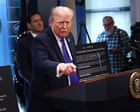
President Donald Trump walked up to a White House podium on November 20, 2026, and dropped a policy bombshell on the tech sector without running it by his own economic team first. His message was blunt. American tech companies that build artificial intelligence data centers in foreign countries will face "tremendous penalties" and "a tremendous tax".
Wall Street flinched immediately, and tech executives started scrambling to figure out what the announcement actually means for billions of dollars in global infrastructure spending. Recently making news lately: What Most People Get Wrong About the Chip War’s Next Battleground.
Here is the truth that most headlines miss. Right now, there is no actual law, no tax rate, no list of targeted countries, and no legal definition of what qualifies as a covered data center. Yet the threat alone is already reshaping how cloud giants calculate risk. If you want to understand where AI infrastructure is heading next, you have to look past the podium rhetoric and examine the collision between national security, domestic power grids, and basic physics.
Why Trump Wants to Punish Foreign Data Center Builds
To understand the November 20 press conference, you have to look at what the Commerce Department did just days earlier. Throughout 2026, the administration tightened export controls on advanced semiconductors to stop Chinese companies from acquiring top-tier AI hardware. More details on this are explored by Engadget.
Tech companies found a workaround. Instead of shipping physical Nvidia chips into China, foreign data centers bought the chips legally and rented out remote computing power to Chinese firms. No hardware crossed the border, yet the computing capacity did.
The Commerce Department responded with a licensing rule requiring data centers to get federal approval before selling remote compute access to companies headquartered in China. Then Trump went a step further at the press conference. He argued that if American firms build massive server farms abroad, foreign nations—specifically China—could eventually seize or exploit them. His stated goal is to keep capital investment inside American borders, forcing hyperscalers to build on U.S. soil rather than exporting infrastructure.
The Massive Policy Gap Nobody Has Solved
Anyone who has ever managed enterprise infrastructure or tracked federal trade enforcement knows that taxing a physical building overseas is nothing like slapping a tariff on an imported car.
A chip can be tracked through a serial number and a customs manifest. A data center is a sprawling campus anchored to local real estate, wired into a foreign utility grid, staffed by local engineers, and running software that updates every hour.
Because Trump announced the penalty threat before his administration drafted any regulatory framework, corporate legal teams are staring at massive blind spots:
- Undefined thresholds: Does a penalty apply to a 500-megawatt AI training cluster, or does it also hit a regional edge facility handling routine web traffic? Nobody in Washington has written that distinction down.
- Allied exemptions: Will the White House carve out exceptions for close security partners like the United Kingdom, Japan, or Germany, or treat every foreign jurisdiction the same? That work hasn't even started.
- Enforcement mechanisms: Without new legislation from Congress, the executive branch would have to rely on creative interpretations of existing tax codes, export controls, or national security statutes to levy a "tremendous tax" on overseas capital expenditures.
This ambiguity creates an immediate risk premium. You don't build a hyperscale campus overnight. Acquiring land takes months, environmental permitting takes longer, and construction stretches well over a year. A company halfway through pouring concrete in Singapore or Frankfurt can't simply hit pause because of an unscripted press conference remark, yet committing fresh capital has suddenly become much harder to justify to a board of directors.
Why Tech Giants Build Abroad in the First Place
Critics of the tech industry often assume companies build overseas just to dodge U.S. taxes or chase cheap labor. In reality, data centers employ relatively few permanent workers once construction wraps up. Tech firms build abroad because of three non-negotiable realities: physics, law, and electricity.
Latency and the Speed of Light
Data doesn't teleport. If an enterprise customer in Tokyo or Berlin runs real-time AI inference on servers located in Virginia, the round-trip signal delay degrades performance. Local latency matters for everything from autonomous logistics to financial trading. You have to put compute close to the end user.
Data Sovereignty Laws
Even if American cloud providers wanted to serve the entire planet from data centers in Iowa and Texas, foreign governments won't let them. Strict data residency regulations in the European Union and across Southeast Asia legally require certain types of citizen, healthcare, and financial data to remain on servers physically located within local borders. If U.S. firms are penalized out of building local facilities, they don't bring that business back to America. They simply hand those enterprise contracts over to European or Asian competitors.
The American Power Bottleneck
Here is the irony sitting right at the center of Trump's demand to "build it here". Even when tech companies want to build in the United States, they are running into a brick wall of local opposition and grid congestion.
During the November 2026 midterm elections, data center expansion became a bipartisan political flashpoint in battleground states like Ohio. An NBC exit poll revealed that 76% of voters oppose building data centers in their residential areas. Residents complain about soaring electricity bills, strain on local water supplies, and massive industrial warehouses popping up next to neighborhoods.
Trump acknowledged that local pushback during his November 20 remarks, urging American communities not to shut projects down, but instead to extract financial concessions from developers. "Make them pay you, make them pay your community, but don't shut them off," he said. That might sound simple from the White House briefing room, yet getting a multi-gigawatt substation approved by local zoning boards and state utility commissions still takes years.
Who Wins and Who Loses If Penalties Materialize
While cloud architects and international trade lawyers are losing sleep over this, a clear set of domestic winners stands ready to benefit if the administration turns this threat into enforceable policy.
Domestic data center developers, industrial construction contractors, regional utilities, and power-equipment manufacturers stand directly in line for a windfall. If hyperscalers are forced to redirect even a fraction of their foreign capital budgets back into North America, demand for domestic transformers, backup generators, cooling systems, and grid interconnects will spike even higher than it already is.
On the losing side, U.S. cloud providers—Amazon Web Services, Microsoft Azure, and Google Cloud—face a strategic vise. If they obey a strict domestic-only mandate, they forfeit sovereign cloud markets in Europe and Asia. If they keep expanding overseas to satisfy foreign regulators and local latency demands, they risk punitive tax treatment back home.
Chipmakers like Nvidia sit in an equally tricky spot. Export controls have already squeezed their direct sales to China, and the new Commerce Department compute-licensing rules complicate how foreign cloud operators monetize American GPUs. Adding a penalty on U.S.-backed overseas facilities shrinks the total addressable market for top-end AI hardware outside the United States.
How Tech Leaders and Investors Should Respond Right Now
Waiting around for Washington to clarify vague policy threats is a losing strategy. Whether you run infrastructure procurement, manage enterprise cloud budgets, or hold tech equities, you need to adjust how you evaluate global capacity right now.
- Audit your vendor footprint for sovereign exposure. If your business relies on U.S. cloud providers for operations in Europe or Asia, ask your account teams directly how their 2027 and 2028 capacity expansions are structured. Find out whether your regional workloads sit on wholly owned U.S. hyperscaler campuses or joint-venture facilities with local telecom operators, which might be structured differently under future trade rules.
- Lock in domestic compute capacity early. If federal policy pushes more AI training workloads back onto the U.S. power grid, domestic colocation space and energized land will get even tighter. Secure multi-year power and space commitments now before capital reallocation drives up domestic leasing rates.
- Watch the Commerce Department, not just the podium. Speeches move stock prices for a day, while federal rulemaking changes operations for a decade. Track formal notices from the Bureau of Industry and Security and the Treasury Department for actual definitions of covered infrastructure and allied country carve-outs before making irreversible capital cuts.
Trump's warning has permanently changed the baseline assumption of global tech expansion: building AI infrastructure abroad is no longer treated as a routine business decision, it's now a national security gamble.
For full context on the White House press conference and the administration's remarks regarding overseas data centers, watch Trump vows 'tremendous penalties' for US firms building data centers abroad.



