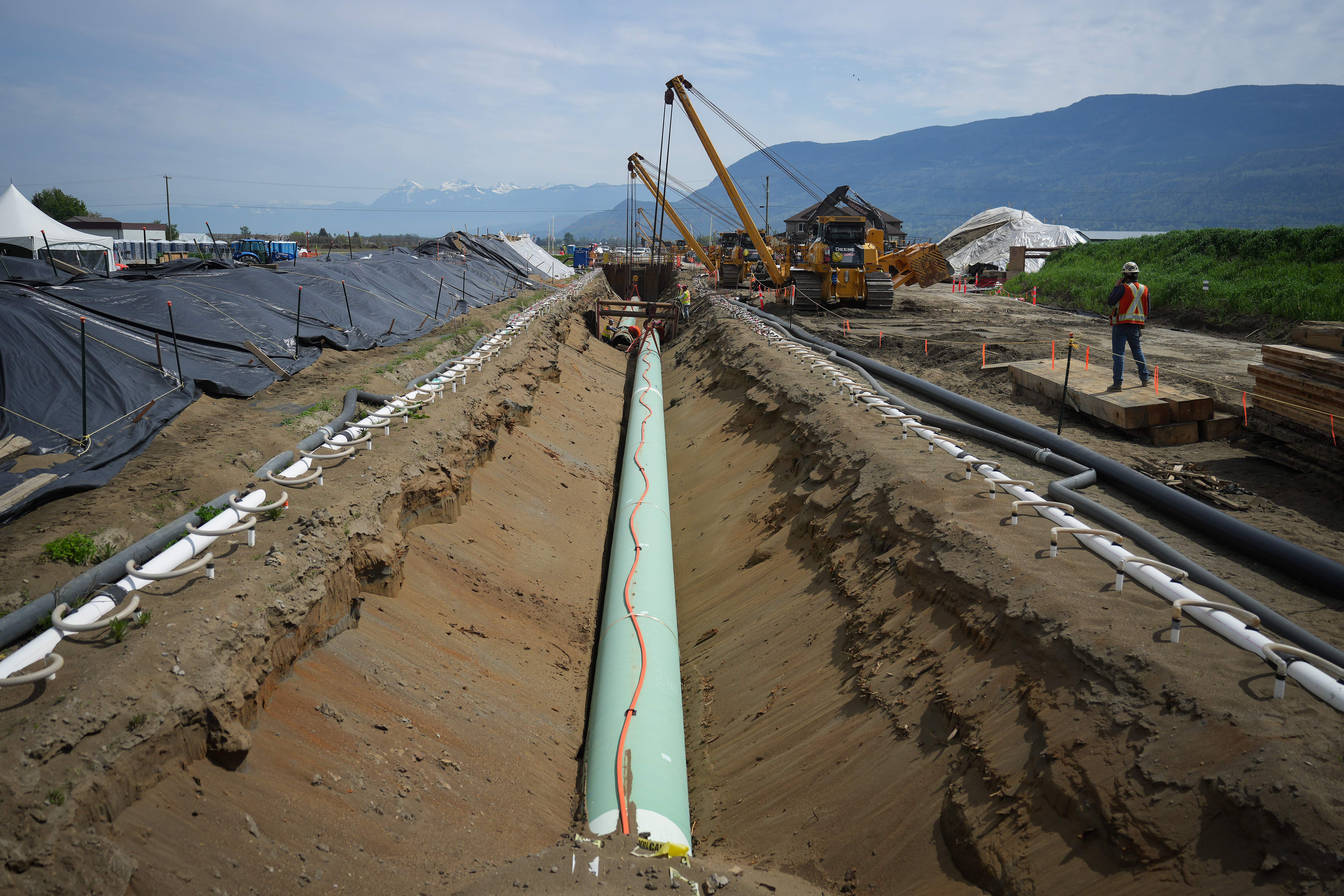
The Canadian government’s long-standing promise to offload the Trans Mountain pipeline to the private sector is quietly shifting into a narrative of permanent state ownership. What was once framed as a temporary rescue mission in 2018—a $4.5 billion emergency purchase to save a project from a fleeing Kinder Morgan—has transformed into a $34 billion "sovereign asset" that federal officials now argue is too strategically vital to let go.
The logic is simple. Now that the expansion is operational and the oil is flowing to the Pacific, the project has transitioned from a political liability into a massive cash generator. Mark Maki, CEO of Trans Mountain Corp., and Elizabeth Wademan, head of the Canada Development Investment Corp. (CDEV), are no longer speaking in terms of "when" a sale happens, but "if" it should happen at all. They see a world where energy security and long-term tolls offer more value to the taxpayer than a fire-sale to a private operator.
The Sovereign Shield Argument
For years, the federal government maintained that it was not the business of Ottawa to own and operate oil infrastructure. That stance has softened. The current geopolitical climate, defined by instability in the Middle East and a desperate global hunt for non-Russian energy, has recast Trans Mountain as a tool of national security rather than just a commercial venture.
By keeping the pipeline under the federal umbrella, Ottawa maintains direct control over a critical artery that connects the Alberta oilsands to Asian markets. This isn't just about moving barrels. It’s about having a seat at the table in global energy diplomacy. If the pipeline were purely private, its priorities would be dictated by quarterly dividends and shareholder pressure. Under CDEV, it serves a broader, state-level agenda that prioritizes market diversification and "sovereign" interests.
The $34 Billion Math Problem
The elephant in the room is the price tag. The construction of the expansion project (TMX) was plagued by delays, regulatory hurdles, and extreme weather, driving the total cost to more than seven times the original estimate. Selling the asset today would likely force the government to accept a massive "haircut" on its investment.
- Initial Purchase (2018): $4.5 billion
- Expansion Cost: $30+ billion
- Total Taxpayer Exposure: Approximately $34.2 billion
Private buyers, including major pension funds or infrastructure giants, are unlikely to pay a premium that covers the full $34 billion construction cost. They would price the asset based on its future cash flows and the current regulatory environment. This creates a political trap for the Liberal government: sell now and crystallize a multi-billion dollar loss for the public, or hold the asset and wait for the tolls to slowly pay down the debt.
The strategy is clear. By holding the asset indefinitely, the government avoids the "bad look" of a massive write-down on its books while reaping the benefits of a monopoly-style cash flow.
The Indigenous Partnership Puzzle
While the talk of "owning it for good" grows louder, the government is still dangling the carrot of Indigenous equity. Over 120 First Nations and Métis communities are located along the pipeline’s path. Negotiating a stake for these groups is a logistical nightmare that has stalled for years.
The current administration has proposed the Indigenous Loan Guarantee Program to help these communities buy in, but the complexity of the deal remains a major hurdle. If the government decides to keep the majority of the pipeline, it could still offer minority equity stakes to Indigenous groups. This "partnership" model provides a convenient political shield. It allows Ottawa to claim it is advancing reconciliation while retaining ultimate control over the asset.
Toll Wars and Revenue Realities
The financial viability of Trans Mountain depends entirely on the tolls charged to oil producers. This is currently a primary point of friction. Many of the companies using the pipeline, such as Canadian Natural Resources Ltd. and Suncor, are fighting the proposed toll increases in front of the Canada Energy Regulator (CER).
"It is a sovereign pipeline. It starts in Canada. It really ends in Canada. This is an incredibly strategic asset." — Mark Maki, CEO of Trans Mountain Corp.
If the government remains the owner, it has more leverage to navigate these disputes without the immediate threat of bankruptcy or shareholder revolt. A private owner would be far more aggressive in pushing for higher tolls to recoup costs, potentially alienating the very industry the pipeline was built to serve.
A New Era of State Capitalism
Canada is witnessing a rare experiment in state capitalism. In the past, the country was quick to privatize crown corporations like Petro-Canada or Air Canada. Trans Mountain represents a reversal of that trend. By rebranding a troubled construction project as a "strategic sovereign asset," the government is setting the stage for a long-term presence in the energy sector.
The risk is that the pipeline becomes a permanent ward of the state, shielded from market discipline and subject to the whims of whoever holds power in Ottawa. For now, the narrative is shifting from "exit strategy" to "long-term holding."
The government has realized that it is easier to keep a $34 billion secret on the books than it is to explain why it sold a national treasure for cents on the dollar.