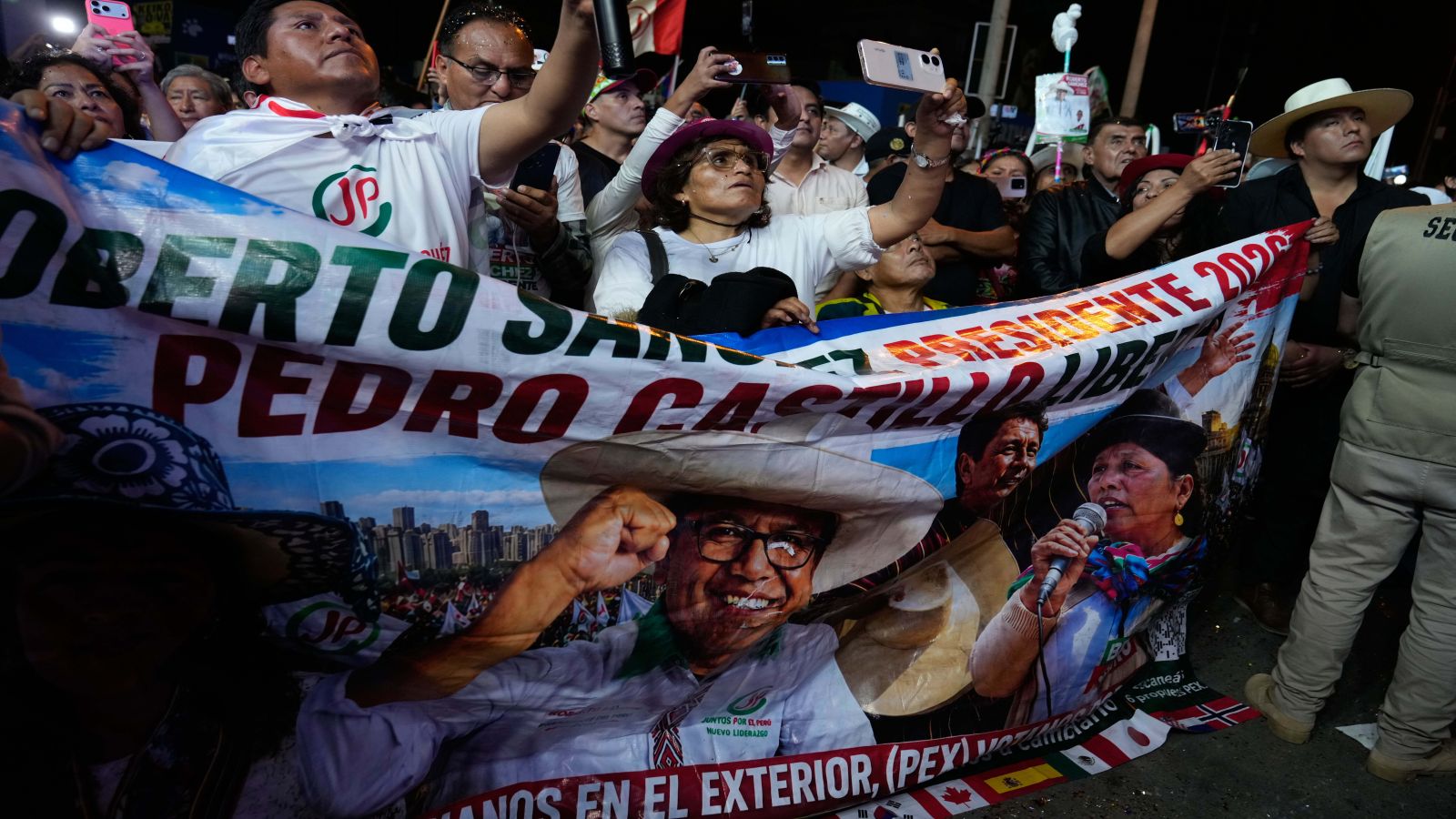
On June 7, Peruvians go to the polls to elect their ninth president in a single decade. This dizzying rotation of leadership is not a sign of vibrant political renewal, but the symptom of a deeply fractured state. The vote pits conservative Keiko Fujimori against leftist Roberto Sánchez. While international observers focus on the ideological clash, the reality on the ground in Lima and across the provinces is defined by pervasive fear. Extortion, violent killings, and organized crime have escalated dramatically, fundamentally altering the nature of the democratic process.
The central issue is straightforward. Peru's institutional framework is collapsing under the weight of systemic corruption and congressional warfare, allowing transnational criminal syndicates to fill the vacuum. Voters are not searching for policy nuances; they are demanding basic survival. Learn more on a related topic: this related article.
The Presidential Carrousel
To understand how Peru arrived at this point, one must look at the mechanics of its political instability. Since 2016, the country has cycled through leaders at a rate that undermines the continuity of governance. Presidents are routinely impeached, forced to resign, or arrested. The primary mechanism for this instability is a constitutional clause allowing Congress to remove a president for "permanent moral incapacity" via a two-thirds majority.
Originally intended as a rare measure for extreme circumstances, this clause has been weaponized by a highly fragmented and predatory legislature. When former President Dina Boluarte was ousted in October 2025 amid the "Rolexgate" bribery scandal and a surge in public insecurity, she became just another casualty in a long line of executive executions. Her successor, José Jerí, lasted mere months before facing his own corruption allegations, leading to the brief interim tenure of Americo Balcázar. Additional journalism by Al Jazeera explores similar views on the subject.
This constant churn at the top means that long-term strategies for national security and economic development are impossible to execute. A new administration averages less than fifteen months in office, barely enough time to appoint a cabinet, let alone dismantle sophisticated criminal networks.
The Criminal Takeover
While politicians in Lima fought over congressional majorities, criminal organizations consolidated their power. The security situation has deteriorated rapidly, with murder rates in the capital tripling over the last five years.
This is no longer a matter of localized street crime. Transnational syndicates, including Venezuela’s Tren de Aragua and various Ecuadorian gangs, have established operations deep within Peruvian territory. These groups control lucrative illicit industries, such as illegal gold mining in the Amazon basin, human trafficking, and cross-border drug smuggling.
For the average citizen, the crisis is experienced through widespread extortion. Small business owners, mototaxi drivers, and public transit operators face daily demands for protection money. Those who refuse to pay are routinely assassinated. This has triggered more than 400 mass protests since 2024, paralyzing cities and signaling a profound loss of faith in the state's ability to protect its population.
Laws That Shield the Lawless
The rise in violence is directly linked to legislative decisions. Experts point out that the Fujimorist-led Congress has passed multiple laws that deliberately weaken the justice system. These legislative rollbacks include:
- The elimination of preliminary detention for specific white-collar and organized crime offenses, allowing suspects to remain free during investigations.
- Higher legal thresholds for seizing assets tied to criminal activities, making it significantly harder to disrupt the financial networks of syndicates.
- Restructuring definitions of criminal organizations to exempt certain political and business networks from prosecution.
The result is an environment of impunity where the line between organized crime and legislative power is increasingly blurred.
The Runoff Dilemma
The two candidates remaining in the race offer starkly different, yet problematic, approaches to the crisis.
Keiko Fujimori and the Authoritarian Legacy
Making her fourth attempt at the presidency, Keiko Fujimori is running on a hardline platform heavily influenced by the legacy of her late father, Alberto Fujimori. Her campaign promises a swift, uncompromising response to the security crisis.
| Policy Proposal | Target Mechanism |
|---|---|
| Military Deployment | Utilizing the armed forces to patrol high-crime urban sectors. |
| Anonymous Judges | Concealing the identities of magistrates to protect them from cartel retaliation. |
| Forced Prison Labor | Requiring inmates to work to pay for their own food and upkeep. |
While these proposals appeal to a terrified electorate, critics note the hypocrisy of her platform. Her party, Popular Force, was instrumental in passing the very laws that weakened prosecutors' ability to fight organized crime. Furthermore, her family name carries deep historical baggage, evoking memories of human rights abuses and systemic corruption from the 1990s.
Roberto Sánchez and the Populist Risk
On the left, Roberto Sánchez presents himself as the candidate of the disenfranchised, promising a radical break from the traditional political elite. His security strategy focuses on purging corruption from the national police force and boosting technical investigative capacities.
However, Sánchez carries his own liabilities. He served as Trade and Tourism Minister under Pedro Castillo, the leftist president who attempted an unconstitutional self-coup in 2022. For many middle-class and conservative voters, Sánchez represents a potential return to the economic mismanagement and institutional chaos of the Castillo era.
His campaign faced a severe blow when the public prosecutor sought a five-year prison term against him for alleged financial irregularities during past campaigns. Sánchez claims the charges are politically motivated, orchestrated by an elite congressional coalition desperate to block his path to the government palace.
The Economic Paradox
While Peru's political institutions collapse, its economy shows an unusual resilience. The nation remains the world’s second-largest copper producer, benefiting from steady global demand.
Despite a revolving door of presidents and continuous social unrest, Peru registered economic growth above 3% in 2024 and 2025. This creates a bizarre disconnect. Macroeconomic indicators remain stable, yet the domestic reality for citizens is marked by fear, extortion, and institutional decay.
The macroeconomy functions on autopilot, insulated by a fiercely independent central bank and robust mining exports, while the microeconomy is systematically devoured by local and transnational extortion rings.
This economic insulation removes an important incentive for the political class to reform. As long as copper exports flow and tax revenues enter the treasury, the legislature can afford to treat the presidency like a game of musical chairs.
The Governance Trap
Whoever takes office after the June 7 vote will immediately face a fragmented and hostile Congress. For the first time in three decades, Peru is returning to a bicameral legislative system, adding another layer of complexity to passing laws.
Neither Fujimori nor Sánchez possesses a clear majority in either chamber. This guarantees that the historical pattern of executive-legislative gridlock will continue. If the past ten years offer any lesson, it is that a president without a solid congressional majority is highly vulnerable to swift impeachment.
The next leader will enter office with a weak mandate, a terrified population, a predatory legislature, and entrenched criminal syndicates that operate with structural impunity. Changing the name on the presidential sash will not alter this underlying reality. Peru’s crisis is not one of leadership, but of a state machinery that has ceased to function for its people.



:max_bytes(150000):strip_icc()/how-many-types-of-dwarfism-are-there-2860725-v1-8dae2c531b4b47d9ae36ae404d3308a0.png)