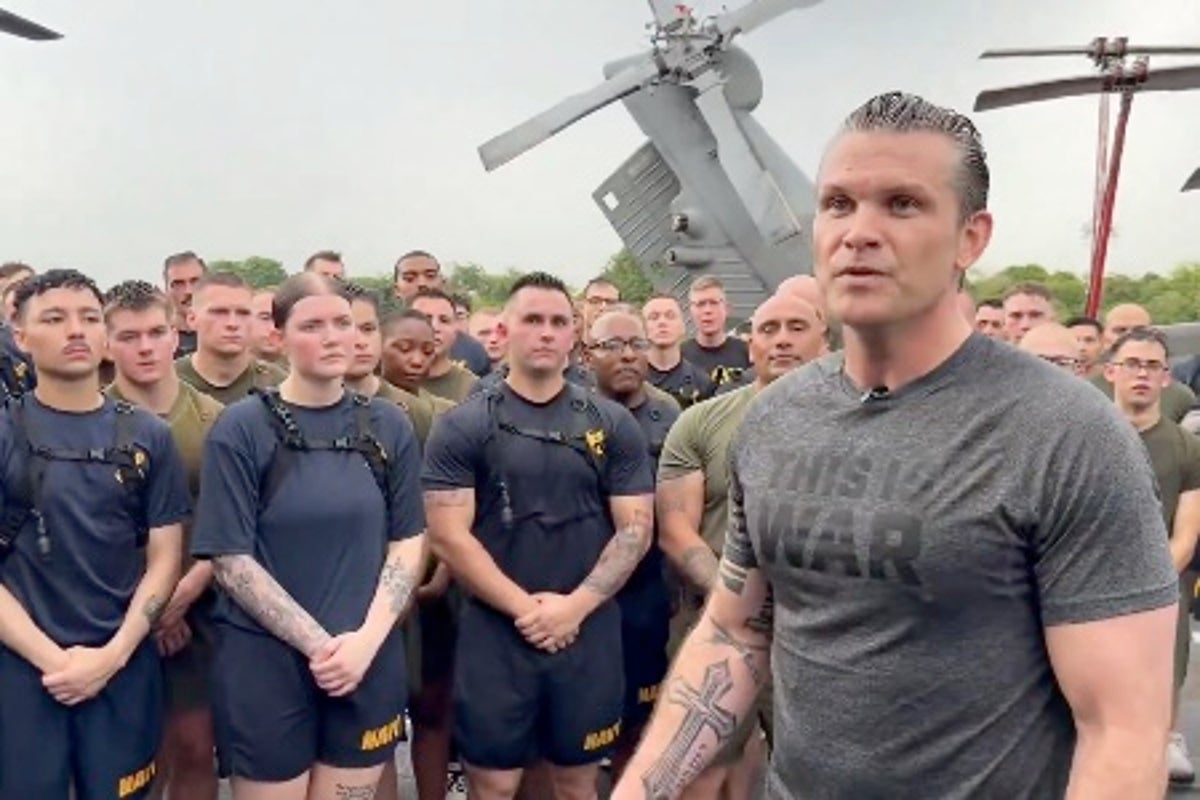
The modern military cannot survive on Hollywood rhetoric. When Pete Hegseth, the Fox News host turned Pentagon chief nominee, delivered a widely criticized address to Navy personnel regarding a potential conflict with Iran, the public backlash focused heavily on the optics. Critics labeled the speech cringe-worthy and compared his demeanor to that of a cartoon villain. However, the real crisis here is not one of personal style or public relations. The true danger lies in the fundamental disconnect between romanticized, twentieth-century notions of warfare and the complex, asymmetric realities facing today's service members. Hegseth’s rhetoric exposes a broader, systemic vulnerability in how leadership visualizes modern combat.
Military readiness relies on precise strategy, technical mastery, and strict adherence to international law. When leadership replaces these pillars with ideological bravado, operational capability suffers. The viral reaction to Hegseth's address highlights a growing divide between ideological commentators and the professional military class.
The Mechanics of Modern Deterrence
Deterrence is an exercise in stability. In the Persian Gulf and the Strait of Hormuz, maintaining peace requires a delicate balance of naval presence, diplomatic backchannels, and strict adherence to rules of engagement. It is a game of millimeters.
When a high-ranking official or key nominee addresses troops deployed to these regions, their words carry strategic weight. Adversaries monitor these speeches for signs of shifting policy or tactical intent. Standard military briefings focus heavily on operational discipline, situational awareness, and the precise legal frameworks governing the use of force.
Hegseth’s approach departed radically from this template. By framing a highly volatile geopolitical standoff through the lens of an inevitable, cinematic clash, the rhetoric risks miscalculating an adversary's response. Iran’s military strategy relies heavily on unconventional warfare, including swarm tactics using fast attack craft, sea mines, and proxy militias. Countering these threats demands quiet, analytical precision, not public provocation.
The Psychology of Command
Troops do not need to be entertained. They need clear objectives and the assurance that their leadership understands the tactical environment.
"An undisciplined tongue at the top creates chaos at the bottom."
This ancient military maxim remains true. When rhetoric strips away the bureaucratic and legal gravity of warfare, it creates a dangerous environment. Junior officers and enlisted personnel rely on senior leadership to set the ethical and operational tone. If that tone implies that war is a black-and-white ideological crusade, the strict discipline required to prevent accidental escalation can begin to erode.
The Illusion of the Pure Warrior
There is a persistent myth that the military has been weakened by intellectualism and administrative oversight. This narrative suggests that returning to a raw, aggressive posture will solve complex geopolitical challenges. It is a seductive idea, particularly for audiences distant from the actual front lines, but it collapses under scrutiny.
The modern sailor is not a Viking. A contemporary Arleigh Burke-class destroyer is an incredibly complex floating computer network. Operating the Aegis Combat System requires advanced technical knowledge, deep analytical skills, and hours of monotonous, highly focused monitoring.
[Strategic Policy] -> [Operational Command] -> [Technical Execution]
The chain of command functions best when each link operates with cool professionalism. Hyper-masculine rhetoric and simplified wartime narratives ignore the actual day-to-day reality of military service. They treat highly skilled technicians and strategists as raw shock troops, discounting the intellectual capital required to run a 21st-century global superpower's defense apparatus.
The Cost of Rhetorical Escalation
Words have material consequences in international relations. When a nation's defense leadership uses inflammatory language, it complicates diplomatic efforts and alters the risk calculus of both allies and adversaries.
- Allied Hesitation: Traditional partners become reluctant to share intelligence or participate in joint operations if they believe American leadership is unpredictable or eager for conflict.
- Adversary Miscalculation: Opponents may interpret aggressive rhetoric as an indicator of an imminent strike, potentially triggering a preemptive response.
- Operational Strain: Heightened rhetorical tensions force forces into prolonged states of high alert, accelerating personnel burnout and equipment degradation.
The Structural Divide in Defense Leadership
The friction surrounding Hegseth’s nomination and public statements points to a deeper, institutional conflict within the American defense establishment. On one side stands the traditional, meritocratic officer corps, raised on a diet of logistics, doctrine, and international coalitions. On the other side is a political faction that views the Pentagon as an ideological battleground.
This is not a simple disagreement over policy. It is a clash over the definition of military effectiveness. The traditional view holds that effectiveness is measurable through readiness metrics, deployment capacity, and deterrence success. The ideological view prizes public loyalty, cultural alignment, and a willingness to challenge established institutional norms.
This divide creates significant friction. Institutional knowledge is difficult to build but incredibly easy to destroy. When veteran commanders see theatrical communication prioritized over strategic substance, morale drops. The best strategic minds do not stay in an environment that values performance art over professional competence.
Redefining Readiness for the Future
The nature of conflict is changing rapidly. The next major confrontation will likely involve cyber warfare, autonomous systems, and economic sabotage long before a single shot is fired.
In this environment, a pep talk about traditional combat is outdated. True readiness involves hardening supply chains, securing digital infrastructure, and mastering electromagnetic spectrum operations. These are quiet, unglamorous tasks that do not make for compelling television segments or viral social media clips. They require steady, sober leadership that understands the unvarnished reality of modern defense.
The focus must shift back to institutional stability. The military is an instrument of national power, not a venue for cultural grievances or political theater. Leaders who fail to grasp this distinction imperil the very forces they seek to command, leaving the nation vulnerable to adversaries who prefer quiet preparation to loud declarations.