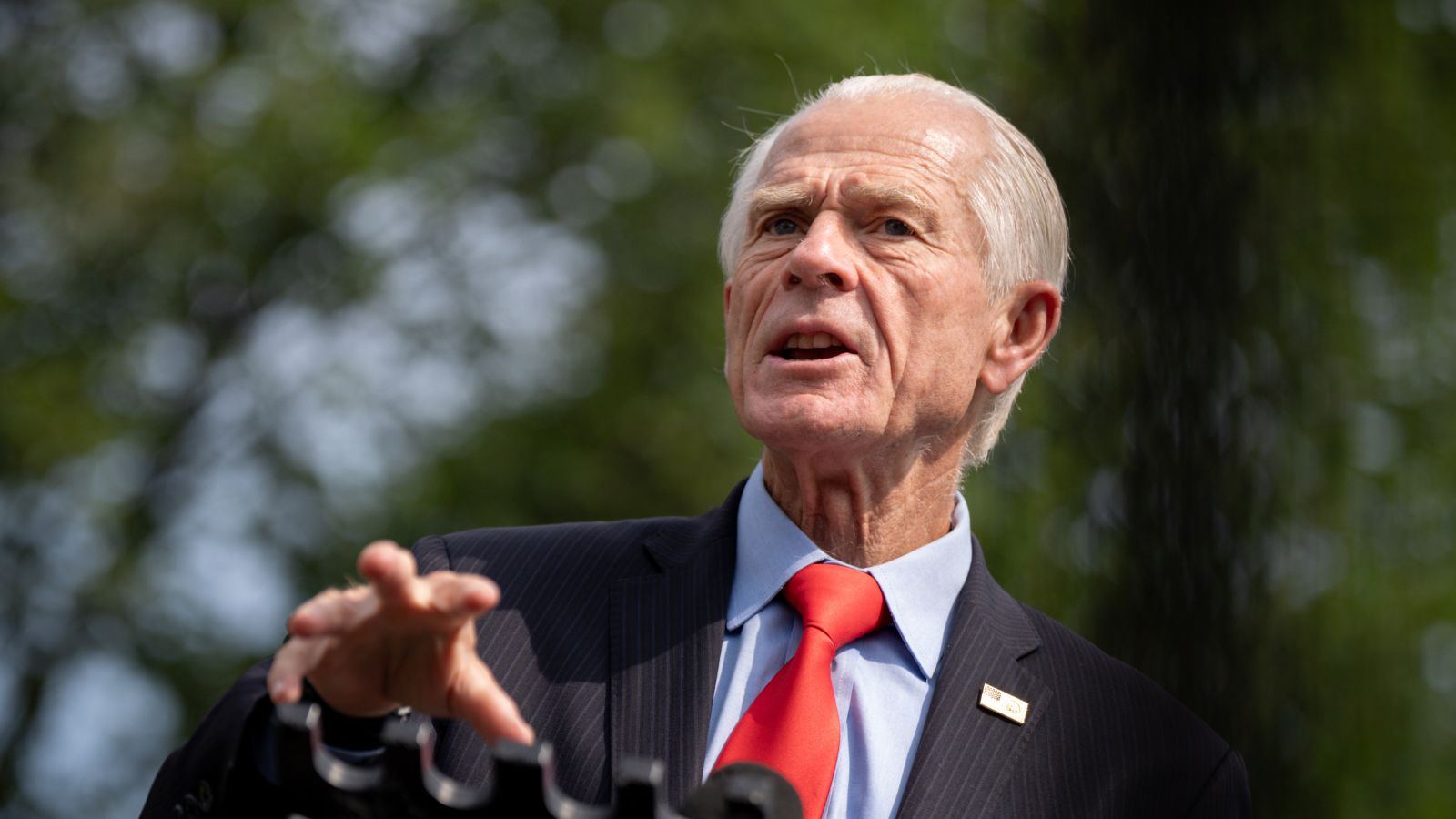
Peter Navarro loves a good megaphone. For years, the architect of Trump-era trade hawks has peddled a simple, seductive narrative: Washington can bully, cajole, and tariff its way into rewriting global supply chains. The lazy consensus in Washington and media boardrooms treats trade policy like an old-school mob shakedown. Put the squeeze on New Delhi for buying discounted Russian crude, wave the tariff stick at Narendra Modi, and watch India fall in line behind American geopolitical objectives.
It is a comforting fantasy for protectionist purists. It is also entirely detached from economic reality.
I have spent decades watching trade bureaucrats confuse bluster for leverage. I have seen administrations blow billions in diplomatic capital trying to command markets that operate entirely outside their jurisdiction. Navarro and his peers look at India importing Russian oil and see a betrayal of Western sanctions or a reckless defiance of the rules-based order. They think a few sharp warnings from a podium or the threat of retaliatory duties will force New Delhi to pivot back toward traditional Middle Eastern suppliers.
They are asking the wrong question entirely. The issue is never whether India can be bullied into submission. The real question is why Washington continues to believe sovereign nations with billion-plus populations will mortgage their energy security to satisfy an election-cycle talking point.
The Arithmetic of Refined Reality
Let us break down the mechanical error at the heart of the Navarro doctrine. When Western nations slapped sweeping embargoes on Russian crude following the invasion of Ukraine, they committed a classic administrative blunder. They tried to blockade a commodity without accounting for liquidity. Oil is not a static widget; it is a global, fungible fluid that seeks the path of least resistance.
Washington told Moscow it could no longer sell to Europe. Moscow simply discounted the barrels, loaded them onto a sprawling shadow fleet of aging tankers, and shipped them east. India did not break international law by snapping up those barrels; they simply exploited a massive market inefficiency created by heavy-handed Western sanctions.
Navarro frames this as an act of bad faith by Modi. But look at the balance sheets. India imports over eighty percent of its crude requirements. Refiners like Reliance Industries and Nayara Energy operate on razor-thin margins in a hyper-competitive domestic fuel market. If New Delhi refuses discounted Russian crude, domestic inflation spikes, industrial production stalls, and political stability at home evaporates. Expecting an Indian prime minister to sacrifice domestic economic health to appease a Washington think tank is not just arrogant; it is economically illiterate.
Industry Reality Check: Energy arbitrage does not care about geopolitical posturing. When crude trades at a twenty-dollar discount per barrel, no amount of moralizing from Western trade reps will convince a refinery manager to buy expensive Brent crude instead of Urals.
To understand why the tariff threats fall flat, you have to look at how modern trade actually functions. Navarro assumes that access to the American consumer market is the only card on the table. He believes the United States can threaten secondary sanctions or steep tariffs and compel India to abandon its strategic autonomy.
This view ignores the structural evolution of multipolarity. India is not a satellite state; it is an economic behemoth that actively courts strategic independence. New Delhi buys oil from Russia, defense hardware from France, technology from the United States, and agricultural goods from South America. This isn't hypocrisy. This is statecraft.
When Washington threatens tariffs over Russian energy imports, New Delhi hears an unmistakable subtext: American domestic politics matter more to us than your national survival. That message builds immediate, enduring resistance rather than compliance.
Dismantling the Tariff Fallacy
Tariffs are a tax paid by domestic importers and consumers, not a magic wand that forces foreign governments to alter their domestic energy policies. If the White House slaps punitive duties on Indian exports to punish Modi for refining Russian oil, the immediate victims are American businesses relying on Indian software, textiles, and pharmaceutical ingredients.
The collateral damage hits American supply chains long before it makes a dent in Moscow's export revenues. Meanwhile, Indian refiners continue processing the crude, selling the finished diesel and jet fuel to Europe and Africa, legally laundering the molecule through third-party jurisdictions. The sanctions leak like a sieve because the global market refuses to hemorrhage supply just to satisfy a clean ideological narrative.
Navarro’s camp treats trade policy as a zero-sum game. If India wins a discount, America loses face. That framework blinds them to actual leverage.
If Washington actually wanted to reduce India's reliance on Russian oil, the strategy would look nothing like a tariff war. It would require underwriting secure, alternative supplies from the Western Hemisphere, offering deep energy-sharing partnerships, and recognizing that India's immediate security threats stem from its land borders with China and Pakistan, not from Moscow.
Instead, Washington reaches for the tariff hammer because hammers make loud noises and play well on evening cable news.
The Myth of Compliance
People frequently ask: Can secondary sanctions force India to back down?
The answer is a flat no, and the reasoning is rooted in simple math and historical precedent. India weathered decades of economic isolation following its 1998 nuclear tests. It survived the balance of payments crisis of 1991. A government that survived those structural shocks will not panic because an American trade hawk issues a warning about discounted Urals.
Furthermore, pushing India away through punitive tariffs achieves the exact opposite of its stated goal. It drives New Delhi deeper into alternative economic blocs like BRICS, accelerating the de-dollarization trend that American policymakers claim they want to halt. Every time Washington uses the financial system or tariff codes as a cudgel against non-aligned democracies, it hands those nations a powerful incentive to build parallel financial architectures that bypass Wall Street entirely.
The irony is thick enough to choke on. The architects of economic nationalism are actively destroying the unipolar leverage they claim to defend.
The Uncomfortable Truth About Energy Flows
Let us admit the major downside of the non-interventionist view: it means Washington has to accept a diminished ability to micromanage global trade. It requires acknowledging that American power has hard limits. That is a bitter pill for interventionists of both parties to swallow.
But accepting reality beats chasing ghosts. Russia continues to export oil because the world demands hydrocarbons, and efficiency dictates that energy finds a buyer regardless of flags or borders. India secures its population's energy needs, stabilizes global price shocks by keeping those barrels on the market, and modernizes its refining capacity.
Navarro wants a world where American decrees shape every barrel of oil pumped from the earth. That world does not exist. It never did.
Stop pretending that bullying our democratic partners over Russian oil transactions is a strategic victory. It is an expensive, counter-productive distraction that weakens Western alliances while changing zero fundamentals on the ground in Moscow or New Delhi.
The next time you hear a politician threaten trade war over energy arbitrage, remember what is actually happening behind the rhetoric.
They are selling you noise because they are terrified of the silence that follows admitting they have lost control.