The Caribbean is never truly dark. Even on a moonless night, the water hums with a faint, ghostly luminescence. If you trail your hand over the side of a boat, the disturbed plankton ignites in a trail of neon green. It is beautiful. It is also a curse for those who wish to remain unseen.
Far above the white-capped swells, eyes that never blink were watching that glow. You might also find this related article insightful: The Hollow Pillar and the Ghost of Global Trade.
The Pentagon calls it a maritime interdiction. The news tickers call it a strike. But for the men on the "go-fast" vessel—a long, narrow fiberglass hull designed for nothing but speed and stealth—it was likely a sudden, blinding transition from the rhythmic thrum of outboard engines to a cacophony of fire and salt. According to official reports, two people died when a U.S. military asset engaged the craft in the international waters of the Caribbean Basin.
The facts are lean, stripped of the sweat and the terror that defines such moments. The boat was suspected of "narco-trafficking." It was moving fast. It refused to stop. Now, two lives are gone, and a cargo that might have fueled a thousand heartbreaks sits at the bottom of the abyss. As highlighted in recent reports by NBC News, the implications are widespread.
The Invisible War of Attrition
To understand why a billion-dollar military apparatus is playing cat-and-mouse with fiberglass boats, you have to look at the geometry of the sea. The Caribbean is a vast, porous frontier. It is the primary artery for a shadow economy that ignores borders and defies traditional warfare.
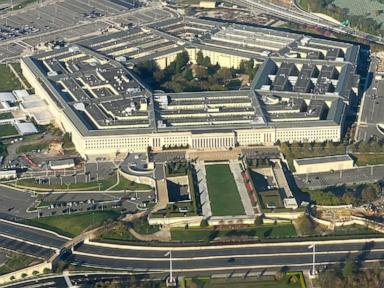
Consider the "go-fast" boat. These aren't the sleek yachts of the billionaire class. They are utilitarian shells, often packed with extra fuel drums and wrapped in blue tarps to blend into the ocean’s hue. They are piloted by men who are often the most expendable gear in a global machine. To the commanders in the Pentagon, these boats are blips on a radar screen, tactical problems to be solved with precision and force.
But the "narco-trafficking" label, while legally accurate, often obscures a darker human reality.
Behind every interdiction is a chain of desperation. There is the kingpin in a mountain villa who will never see the inside of a jail cell. There is the distributor in a suburban American cul-de-sac. And then there are the men on the boat. Often, they are fishermen from coastal villages where the nets come up empty and the local economy has collapsed. They are offered a sum of money that sounds like a fortune, a one-way ticket out of poverty, provided they can outrun the ghosts in the sky.
They rarely do.
The Anatomy of a Strike
When the Pentagon engages a vessel in the dead of night, it isn't a chaotic shootout from a Hollywood film. It is a clinical application of technology.
High-altitude surveillance drones or P-8 Poseidon aircraft track the thermal signature of the engines. They watch the wake. They coordinate with Coast Guard cutters or Navy destroyers positioned hundreds of miles away. The decision to use force is governed by "Rules of Engagement"—a dry phrase for the moral and legal calculus of taking a life at sea.
In this specific strike, the details remain shrouded in the linguistic fog of military briefings. We know the boat was engaged. We know it ended in fatalities. What we don't see is the moment the pilot of the intercepting craft—perhaps a helicopter marksman or a remote operator—realized that the "target" was no longer a moving point on a screen, but a sinking wreck.
There is a profound silence that follows an explosion at sea. The ocean has a way of erasing evidence. It swallows the smoke, the debris, and the bodies with a terrifying indifference.
The Cost of the Invisible Border
We often talk about the "War on Drugs" as if it were a board game played with statistics and seizures. We celebrate the tons of cocaine intercepted and the millions of dollars "denied" to cartels. But these metrics fail to capture the sheer, grinding futility of the cycle.
For every boat that is intercepted and every two lives that are lost, three more vessels are likely slipping through the darkness elsewhere. The Caribbean is too big to be fully policed, and the demand on the other side of the border is too high to be ignored. It is a market that treats human life as a rounding error.
The Pentagon's involvement highlights a shift in how we view the region. It is no longer just a law enforcement issue; it is a theater of national security. The line between a police action and a military strike has thinned to the point of transparency. When we use the tools of war to combat the trade of substances, the casualties are a predictable, if tragic, byproduct.
Imagine the families of those two men. They are likely in a coastal town in South or Central America, watching the horizon. They won't get a formal notification from the Pentagon. They won't see their loved ones' names in a headline. They will simply realize, as the weeks turn into months, that the boat isn't coming back.
A Sea of Ghosts
The phosphorus continues to bloom in the wake of the passing ships.
The Caribbean remains an idyllic postcard for some and a graveyard for others. The strike reported by the Pentagon is a single heartbeat in a long, agonizing struggle that shows no sign of relenting. It is a story of high-tech sensors versus low-tech hulls, of global policy versus local desperation.
As the sun rises over the Caribbean Basin, the water is a perfect, tranquil turquoise. The wreckage has settled into the silt, miles below the surface, joining a century’s worth of secrets. The "narco-trafficking" boat is gone. The two men are gone.
The machine, however, is already looking for the next blip on the screen.