Tabloid journalism loves a good aviation horror story. The formula is painfully predictable: take a standard mechanical anomaly, mix in some screaming passengers, and slap on a headline screaming that someone was "sucked out of a window up to their shoulders."
It makes for great clickbait. It also happens to defy the laws of basic physics and modern aerospace engineering.
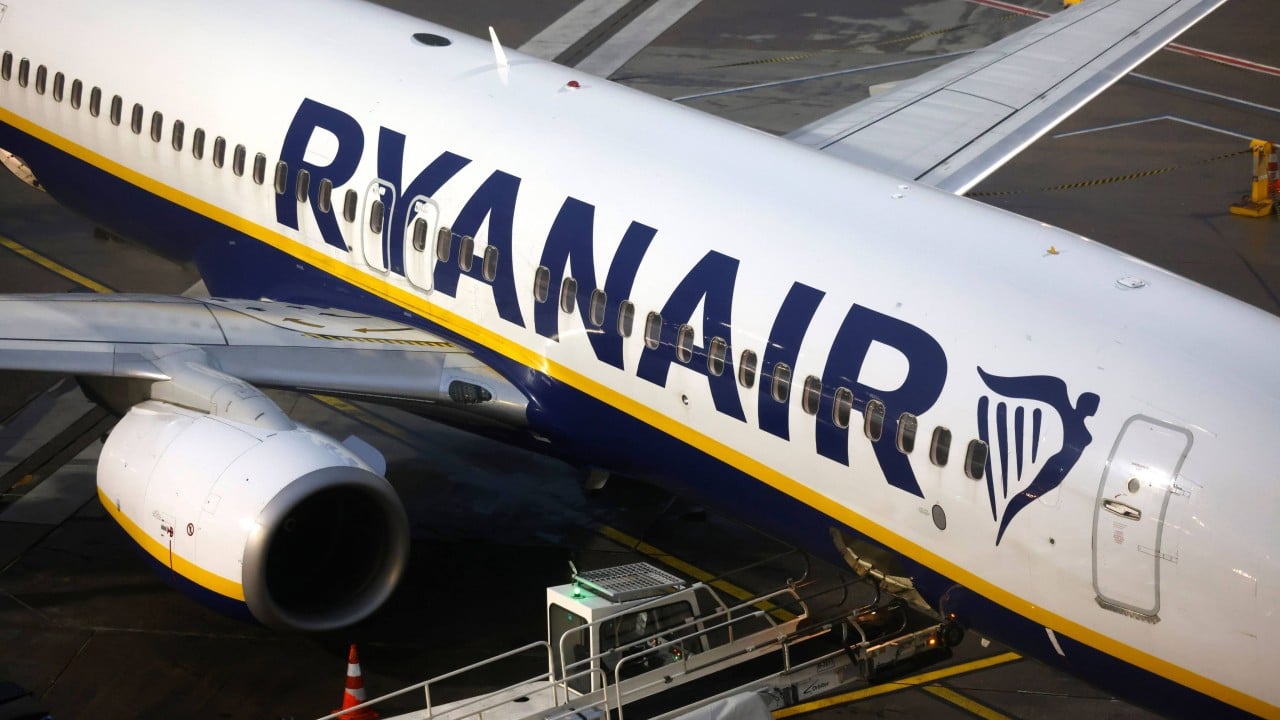
The recent hysteria surrounding a Ryanair flight is the perfect case study in collective ignorance. We are told a passenger was nearly pulled into the stratosphere through a cracked window pane. The internet collectively gasped, slammed the airline's budget model, and booked their next flight with an irrational new phobia.
Let's stop pretending this is how commercial aviation works. You cannot be sucked out of a modern cabin window. The sensationalized narrative sold by mainstream outlets isn't just exaggerated; it is physically impossible based on the structural realities of the aircraft you fly on every single day.
The Illusion of the Vacuum Cleaners
The foundational myth of airplane window terror relies on a fundamental misunderstanding of differential pressure. People treat a cabin breach like a sci-fi movie trope where a tiny hole instantly vaporizes a human body into the void.
It does not work that way.
Commercial airliners cruise between 30,000 and 40,000 feet. At that altitude, the atmospheric pressure outside is brutally low, while the cabin is artificially pressurized to mimic an altitude of about 6,000 to 8,000 feet. This creates a pressure differential. If a hull breach occurs, air escapes until the pressure inside equals the pressure outside.
But a window on a Boeing 737 or an Airbus A320 is not a gaping stargate.
First, let's dissect the anatomy of the window itself. You are looking at a multi-layered assembly.
- The scratch pane (the one you touch and smudge with your fingers) is just a piece of cheap plastic meant to protect the real structural elements.
- The middle pane features that tiny breather hole you have probably stared at while bored.
- The outer pane is the heavy lifter, engineered to withstand structural loads far exceeding anything encountered during standard operations.
When an outer pane cracks, it looks terrifying. It might even web like a shattered smartphone screen. But a crack is not a failure. The multi-layered design ensures that even if one layer fails, the remaining structure holds the pressure. The air pressure inside actually forces the window outward against the fuselage frame, effectively sealing it into place like a cork in a champagne bottle.
Dismantling the "Shoulder Deep" Myth
To believe that a passenger was pulled up to their shoulders through a standard cabin window requires you to suspend your belief in geometry.
The structural opening of a commercial aircraft window is roughly 10 inches by 14 inches. Unless the passenger in question is a highly flexible toddler or an elite contortionist, an adult shoulder matrix physically cannot pass through that space under standard pressure conditions.
What actually happens during a localized decompression event is a violent rush of air toward the opening. It can pull loose items—smartphones, papers, blankets—out of the cabin. It can create a localized force that pins an object or a limb against the opening.
But "sucked out"? No.
When Aloha Airlines Flight 243 suffered an explosive decompression in 1988, an entire massive section of the upper fuselage unzipped. That is a structural failure of cataclysmic proportions, not a window crack. When an engine fan blade broke and shattered a window on Southwest Flight 1380 in 2018, the resulting force did tragically pull a passenger partially into the opening because the entire window assembly was completely obliterated by heavy metal shrapnel at high velocity.
A standard crack on a Ryanair flight does not generate the explosive kinetic energy required to dismantle a human skeleton and wedge it through a 10-inch gap. The passenger felt a sudden rush of cold air, experienced a rapid drop in temperature, and understandably panicked. The rest is theatrical embellishment by terrified onlookers who do not know the difference between airflow and a black hole.
Why the Budget Airline Narrative is Flawed
The subtext of every Ryanair panic piece is always the same: This is what you get for buying a twenty-dollar ticket.
It is a lazy critique that ignores how aviation regulation actually functions. European Aviation Safety Agency (EASA) and Federal Aviation Administration (FAA) mandates do not scale down their structural integrity requirements because a ticket costs less than a pub lunch. A Boeing 737-800 operated by a legacy carrier undergoes the exact same rigorous C-checks and D-checks as one operated by an ultra-low-cost carrier.
If anything, the punishing utilization rates of budget airlines mean their fleets are often younger on average than those of legacy carriers. They fly newer hulls with fresher structural components. The idea that Ryanair windows are somehow held together by duct tape and hope is a comforting myth for elitist travelers, but it completely falls apart under regulatory scrutiny.
The Reality of Cabin Decompression
If you want to worry about something during a decompression event, stop looking at the windows. Worry about your oxygen saturation.
If a cabin genuinely loses pressure rapidly, your primary enemy is hypoxia, not being ejected into the sky. At 35,000 feet, your Time of Useful Consciousness—the window you have to act before your brain starves of oxygen and you pass out—is roughly 30 to 60 seconds.
This is why the yellow masks drop instantly. The system is automated, triggered by barometric sensors that don't care about passenger drama. Your only job is to put the mask on. Yet, in every single viral photo of a cabin incident, what do we see? Half the passengers have the mask covering only their mouths, while others are busy filming a video for social media instead of securing their own life support.
The aviation industry has spent decades engineering out single points of failure. Windows are over-engineered by factors of three or four times the maximum expected pressure load. They do not just give up because a flight is turbulent or because the airline doesn't serve free peanuts.
Next time you see a headline about a passenger nearly flying through a window pane, remember the math. Remember the structural frame. Put your mask on, sit back, and let the engineers do the thinking for you.