The radiator in a modest apartment in Berlin hums with a quiet, dependable warmth. Outside, the winter air is sharp enough to bite, but inside, a young mother brews tea while her toddler plays on the rug. It is a scene of utter domestic peace. She pays her utility bill every month on autopilot, a routine transaction flashing through a banking app. She hates the war. She marched against it in the town square, carrying a blue and yellow flag, weeping for families displaced half a continent away.
She does not know that the heat warming her hands is tethered by an invisible, multi-billion-euro umbilical cord straight to the Kremlin.
This is the uncomfortable truth of a continent caught in a geopolitical trap of its own making. For over two years, Western leaders have stood before microphones, delivering fiery speeches about economic strangulation, sweeping sanctions, and the moral imperative to cut off Vladimir Putin’s war chest. The public headline is always about defiance. The private reality is written in the liquid cargo sloshing inside massive tanker ships docking at European ports.
We are told the energy dependence is over. It is a comforting illusion.
The Gas That Changed Names
When the tanks rolled across the Ukrainian border, Europe panicked. Pipeline gas from Russia—the cheap bedrock upon which heavy German industry and continental comfort had been built for decades—was suddenly toxic. Politicians scrambled. Pipes were shut down, and some were mysteriously sabotaged at the bottom of the Baltic Sea. The message was clear: Europe was breaking up with Russian fossil fuels.
But a breakup on paper is vastly different from a breakup in practice.
To replace the missing pipeline volume, Europe turned heavily to Liquified Natural Gas (LNG). LNG is supercooled to minus 160 degrees Celsius, shrinking it into a liquid that can be pumped onto specialized ships and sent anywhere in the world. It was marketed as the ultimate freedom fuel, a way to source energy from friendly allies like the United States or Qatar.
Here is the catch. Russian gas companies also know how to freeze gas.
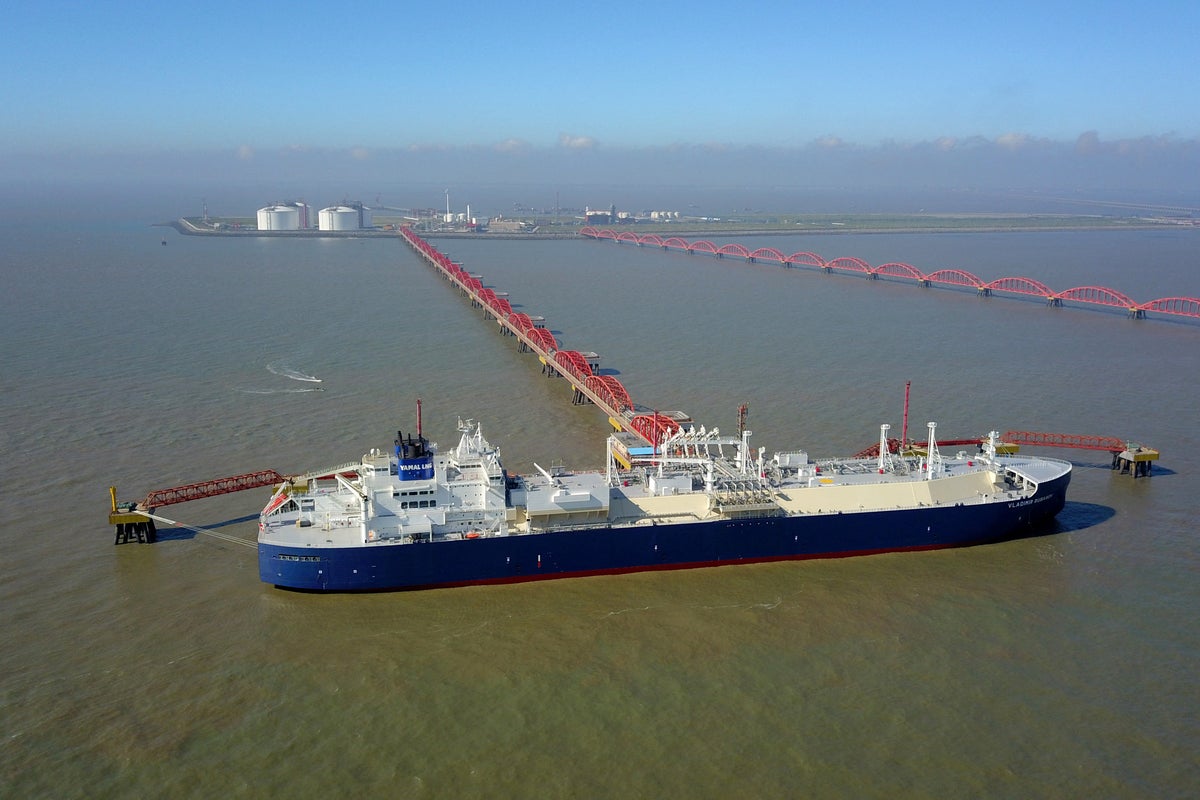
Consider how the global shipping market operates. Once a molecule of gas is liquified and loaded onto a tanker, it becomes part of a fluid, global shell game. Russia’s Yamal LNG project, located high in the Arctic Circle, has continued to pump out millions of tons of gas throughout the conflict. Where does it go? A staggering amount of it sails straight into European waters.
Ports in Spain, France, and Belgium have become the continent's new, back-door energy hubs. Because LNG does not travel through a fixed pipeline, it arrives with far less fanfare, quietly unloading at coastal terminals before being vaporized back into gas and mixed directly into the European grid.
Once it is in the grid, it has no nationality. It is just energy. It flows into the French stove, the Spanish factory, and that Berlin radiator.
The Chemistry of Complicity
Standing on the docks of a port like Zeebrugge in Belgium, you can smell the salt air and hear the rhythmic clanking of heavy machinery. It feels like standard commerce. But look closer at the shipping manifests, and the numbers reveal a staggering contradiction.
Since the outbreak of the war, European imports of Russian LNG have actually surged. While pipeline imports plummeted by over eighty percent, the continent compensated by buying record amounts of the supercooled version. In some months, European nations spent billions of euros collectively on Russian gas, effectively canceling out a significant portion of the financial pain the sanctions were supposed to inflict.
Imagine trying to empty a bathtub while keeping the faucet running at half-speed.
The money flows along a well-worn path. European buyers pay European banks, which transfer funds to energy consortiums, which ultimately fill the coffers of the Russian state. This cash directly stabilizes the ruble, funds the manufacturing of cruise missiles, and pays the salaries of soldiers on the front lines. Every time a citizen turns on a light switch in certain parts of the continent, a fraction of a cent drifts eastward to finance the very destruction they watch with horror on the evening news.
Why does this paradox persist? The answer lies in the terrifying mathematics of a cold winter.
European policymakers found themselves staring into an abyss. Completely cutting off all Russian gas overnight would have meant systemic economic collapse. It would have meant darkened factories, skyrocketing inflation, and political instability that could have broken Western unity entirely. They chose a compromise: public condemnation and private accommodation. They banned Russian coal, banned most Russian oil arriving by sea, but left the gas flowing under the radar.
The Transshipment Shell Game
The mechanics of this trade are designed to be as boring and opaque as possible, shielding it from public scrutiny. A crucial part of the operation relies on a process called transshipment.
During the harsh Arctic winter, specialized Russian icebreaker tankers carry the LNG away from the frozen northern fields. But these icebreakers are expensive to run and ill-suited for long ocean voyages. Therefore, they sail to European ports like Montoir-de-Bretagne in France or Zeebrugge.
There, the Russian gas is pumped directly from the icebreaker into a standard commercial tanker. This second ship then sets sail for Asia or another global market.
European ports are acting as logistics managers for the Kremlin’s most lucrative export. Even if the gas itself doesn't end up in a European furnace, European infrastructure is actively optimizing Putin's supply chain, ensuring he gets top dollar for his resources on the global stage. It is a highly profitable arrangement for the port operators, the shipping companies, and the trading houses.
But the moral cost is catastrophic.
French and Spanish officials often point out that these shipments are bound by long-term contracts signed years before the war. Breaking them, they argue, would trigger massive legal penalties and lawsuits in international courts. It is a defense rooted in bureaucracy. It suggests that a contract signed in a glass boardroom years ago holds more weight than the current reality of a continent under siege.
The Fractured Front
This dependency has created a deep, bitter rift within Europe itself.
Nations close to the eastern border—countries like Estonia, Latvia, and Lithuania—know the visceral terror of Russian aggression. They moved instantly and aggressively to cut every single tie. They built their own LNG terminals, paid premium prices to secure non-Russian energy, and accepted the economic pain as the necessary price of freedom. To them, watching Western European nations continue to buy Russian gas is a betrayal.
It exposes a fundamental truth about human nature and politics: danger feels less real the further you live from it.
To a family in Madrid, the war is a tragic event on television. The priority is ensuring that electricity bills do not double. To a family in Warsaw or Vilnius, the war is an existential threat looming just across the forest. They understand that economic pain is temporary, but a loss of sovereignty is permanent.
The argument that Europe has no choice is beginning to fray. Experts and analysts have shown that the global LNG market has shifted. With increased production from the United States and a massive push toward renewable energy, Europe could, theoretically, survive a total ban on Russian gas. It would require sacrifice. It would mean higher prices for a few seasons and a coordinated, wartime-style effort to reduce consumption.
The obstacle is not capacity. It is political will.
The Price of Comfort
We live in an era that demands comfort above all else. We want cheap goods, warm homes, and moral purity all at the same time. The pipeline paradox proves that we cannot have all three.
Every country that continues to import this gas is making a calculated trade. They are trading a bit of moral consistency for a bit of economic stability. They are banking on the idea that the public will not look too closely at where the gas comes from, as long as the lights stay on and the factories keep running.
But the reality has a way of breaking through the most sophisticated corporate spin.
The true cost of that gas is not measured in euros per megawatt-hour. It is measured in the lives of people who will never see another winter. It is measured in the shattered concrete of apartment buildings in Kharkiv and the flooded fields of the Donbas.
The young mother in Berlin finishes her tea. She turns off the stove. The blue flame dies instantly, silencing the hiss of the gas. The room remains warm, insulated against the freezing night. Deep underground, through thousands of miles of steel and across heavily fortified borders, the cash keeps flowing eastward, silent and unstoppable, waiting for the next flip of a switch.