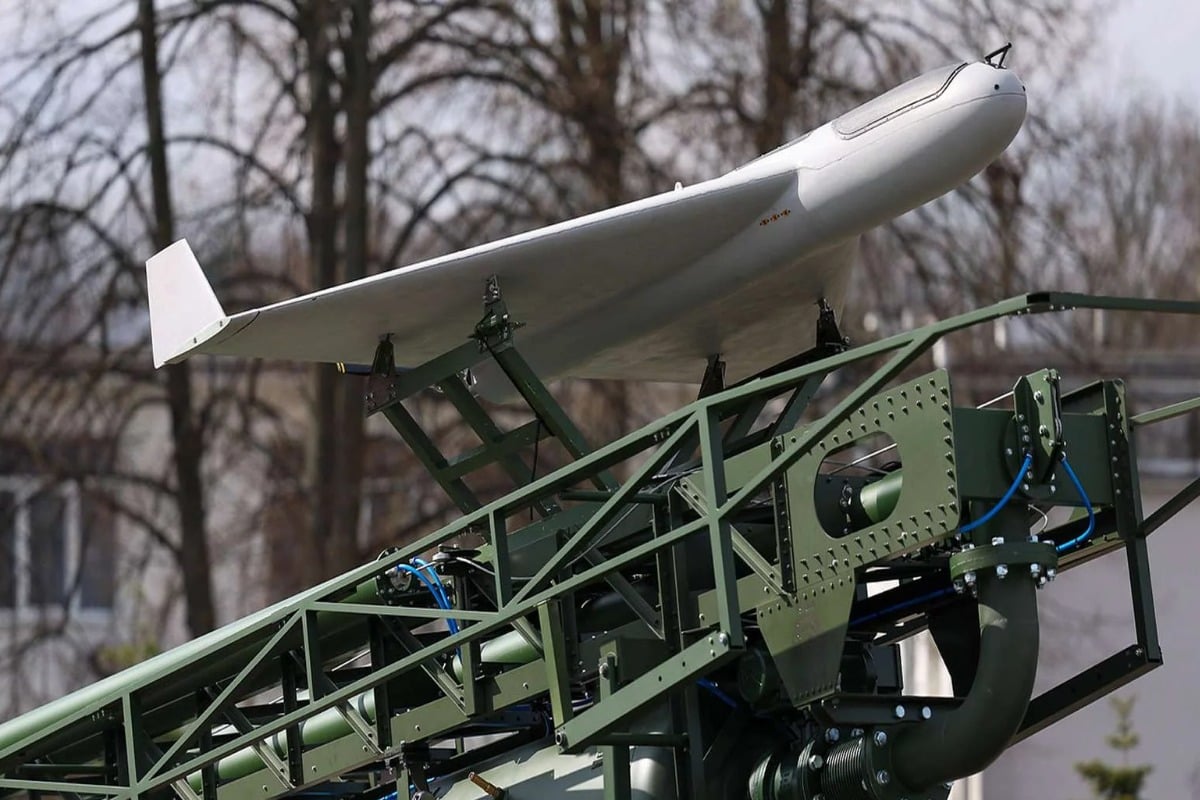
The headlines are screaming about Poland's defense procurement. Media outlets are marveling at a 260-fold increase in drone spending, painting a picture of a sudden, hyper-modernized military machine ready to dominate the eastern flank with a swarm of robotic wings.
It makes for great clickbait. It is also an incredibly shallow reading of military procurement. Also making news in related news: The Stars Shared by Two Oceans.
When you start from a baseline of practically zero, a 260-fold increase sounds like a revolution. In reality, it is a desperate, late-stage catching-up exercise disguised as strategic genius. Throwing billions of zlotys at uncrewed aerial vehicles (UAVs) without fixing the underlying systemic bottlenecks is not a modernization strategy. It is panic-buying.
The Base Effect Fallacy
Let us dismantle the math before we look at the hardware. A 260-fold increase tells you absolutely nothing about actual capability if the starting point was negligible. If a military spends $10,000 on a handful of commercial quadcopters one year, and then spends $2.6 million the next year, that is a 260-fold increase. Does it change the strategic balance of power in Europe? Not even close. Additional details on this are explored by The Verge.
I have watched defense ministries across NATO blow massive budgets on hardware impulses just to show the public they are "doing something." Poland's massive ramp-up in spending across the board—aiming for over 4% of GDP—includes huge contracts for Bayraktar TB2s, local FlyEye systems, and loitering munitions. But the raw dollar percentage increase is a vanity metric.
True defense capability is not measured by the size of the check you write. It is measured by your capacity to absorb, maintain, and integrate that technology into a cohesive doctrine.
The True Cost of Absorption
- Logistics Trains: Every new drone fleet requires specialized maintenance, proprietary spare parts, and dedicated secure transport.
- Frequency Management: Operating thousands of UAVs simultaneously requires massive, hardened electronic spectrum management. Without it, you jam your own troops.
- Pilot Pipelines: You cannot scale your qualified operator pool 260-fold overnight unless you plan on crashing half your fleet due to user error.
The Ukraine War Misconception
The lazy consensus among defense analysts is simple: Ukraine is using thousands of cheap drones to stop tanks, therefore, buying thousands of drones makes you invincible.
This completely misunderstands the operational reality of the conflict. The hyper-effective use of small, first-person view (FPV) drones in Ukraine exists because both sides have successfully denied each other airspace using traditional ground-based air defense systems. It is an adaptation born of mutual paralysis, not a permanent blueprint for the future of Western warfare.
Furthermore, commercial off-the-shelf drones are burning out at catastrophic rates. Electronic warfare (EW) environments on modern battlefields are brutal. The moment a competent adversary turns on high-output GPS jamming and directional spoofing, your unhardened, mass-purchased drone fleet becomes a collection of expensive plastic bricks.
If Poland is buying massive quantities of current-generation tech, they are essentially purchasing inventory that will be obsolete by the time the crates are unpacked.
The Bureaucracy vs. Innovation Trap
Military procurement is structurally incapable of keeping pace with commercial drone innovation cycles. A commercial drone generation lasts roughly 18 months. A standard NATO-aligned procurement cycle takes years of requirements writing, testing, tendering, and political horse-trading.
"By the time a state defense ministry signs a contract for ten thousand micro-UAVs, the software stack running those drones is already two generations behind what hackers are building in garages."
Poland’s domestic defense champion, WB Group, has done impressive work with the FlyEye and Warmate systems. They are combat-proven and highly capable. But the state apparatus surrounding broader procurement remains slow and top-heavy. Buying in bulk feels safe to bureaucrats because it looks good on an Excel spreadsheet presented to Parliament. It ignores the fact that software-defined warfare requires continuous, iterative updates, not static hardware drops.
What the Defense Establishment Gets Wrong About Autonomy
When people ask, "How can armies defend against mass drone swarms?" the traditional answer is to build more anti-drone lasers or jammer guns. That is a losing financial game. Forcing an army to fire a $100,000 missile to down a $500 hobby drone with a pipe bomb taped to it is asymmetric warfare at its worst.
The real solution is not just buying defensive countermeasures; it is changing how you fight. Poland should not be focused on becoming a mass buyer of hardware. It should be positioning itself as a hub for automated, decentralized electronic warfare and AI-driven sensor fusion.
If you do not own the software stack and the silicon pipeline, you do not own the capability. Buying thousands of foreign-built platforms just leaves you dependent on external supply chains during a prolonged crisis.
The Real Cost of the Drone Obsession
Every zloty spent on an unproven, rapidly depreciating drone fleet is a zloty stripped away from boring, unsexy essentials. Artillery ammunition stockpiles, secure digital encrypted radios, heavy bridge-laying equipment, and basic infantry logistics do not get flashy press releases. But they win wars.
Drones are an attrition layer. They are excellent sensors and highly effective precision strike tools when the environment permits. But they cannot hold ground. They cannot clear a trench line on their own. They cannot survive a sustained, high-intensity electronic assault without massive, expensive hardening.
Stop celebrating the 260-fold surge in spending as an automatic victory. Start asking how much of that capital is being wasted on dead-end hardware that will be functionally useless against next-year's electronic countermeasures. The metric of success is not how much money you leave on the table; it is how much lethal, adaptable capability you can field under fire. Right now, the ledger is far from balanced.