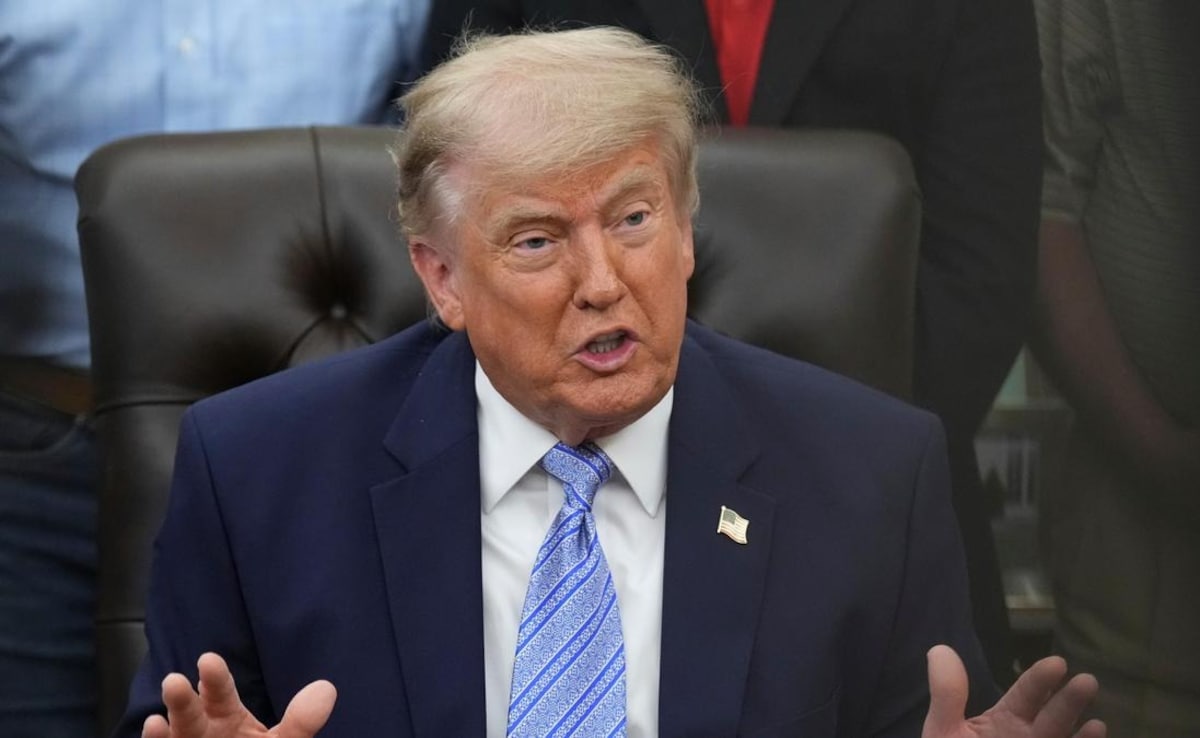
The cancellation of headlining musical acts from the upcoming Great American State Fair on the National Mall exposes a fundamental flaw in contemporary cultural engineering. When Freedom 250, the public-private partnership coordinating the United States’ 250th anniversary festivities, announced a 16-day exhibition from June 25 to July 10, the strategic intent was clear: leverage a nostalgic, state-fair framework to build a broad-based national celebration. However, the subsequent withdrawal of prominent artists—including Bret Michaels, Martina McBride, and the Commodores—demonstrates how political polarization can compromise public-private cultural ventures.
The immediate substitution of these musical acts with a proposed presidential address or a unified political rally changes the underlying economic and strategic calculus of the event. Rather than representing a mere logistical pivot, this shift reveals a predictable breakdown in cross-sector alignment. The failure to manage stakeholder risk within highly charged political environments converts a planned neutral civic celebration into a starkly partisan activation.
The Tri-Partite Asset Vulnerability Framework
Evaluating the viability of large-scale civic celebrations requires analyzing the intersection of three distinct asset classes:
                  [ Political Capital ]
                           / \
                          /   \
                         /     \
                        /       \
                       /         \
[ Cultural Capital ] ----------- [ Operational Assets ]
- Political Capital: The executive vision and institutional backing driving the project. For Freedom 250, this originates directly from the executive branch, managed by former state officials.
- Cultural Capital: The distributed network of creative talent, brands, and public figures required to attract broad, non-aligned demographics.
- Operational Assets: The logistical, security, and infrastructural capabilities needed to execute a 16-day event spanning from the US Capitol to the Washington Monument.
The structural vulnerability of Freedom 250 lies in the asymmetrical dependency between political capital and cultural capital. Political entities often operate under the assumption that cultural assets can be integrated into civic frameworks without altering the value of those cultural brands. In reality, modern commercial talent operates within strict risk boundaries.
The primary cause of the current artist attrition is an information asymmetry regarding the governance structure of the event. Artists like Martina McBride and Bret Michaels entered agreements under a nonpartisan paradigm, expecting a low-risk, corporate-style civic engagement. When the operational reality exposed the event's deep ties to a specific political apparatus, the perceived risk profile for these artists shifted rapidly. The resulting wave of cancellations serves as a rational mechanism for brand defense, where talent chooses to forfeit performance fees rather than absorb the long-term cost of brand dilution or audience alienation.
The Talent Valuation and Cost Function
To understand why a substitution occurs—replacing a diverse multi-genre musical lineup with a singular political figure—one must look at the mathematical optimization of public attention.
A standard multi-day festival relies on a diverse array of mid-tier and legacy talent to aggregate disparate audience segments. This can be expressed as a simple production function where total utility ($U$) is a function of talent diversity ($D$) and brand neutrality ($N$):
$$U = f(D, N)$$
When brand neutrality drops toward zero due to hyper-partisan associations, the marginal utility of adding mainstream musical artists turns negative for the organizers. Mainstream artists either demand an unsustainable premium to offset the reputational hazard, or they cancel outright to protect their broader commercial ecosystem.
This creates a structural bottleneck. The organizers cannot easily replace the departing talent with equivalent mainstream figures because the market perceives the venue as a politicized space. Therefore, the strategic response is to pivot from a diversified talent model to a highly concentrated, single-source attention model.
By substituting the musical lineup with a dedicated political address or rally, the event alters its core economic objective. It shifts from an aggregation strategy (drawing a broad, politically diverse crowd through varied programming) to an intensification strategy (drawing an highly motivated, specific demographic to maximize per-capita engagement). The political figure represents a zero-cost talent acquisition for the organizing entity, operating with an entirely different incentive structure focused on ideological mobilization rather than commercial ticket sales or cross-over appeal.
Structural Bottlenecks in Public-Private Cultural Execution
The friction surrounding the Great American State Fair highlights three distinct structural bottlenecks inherent in modern public-private partnerships attempting cultural programming:
- The Neutrality Illusion: Public-private entities often claim nonpartisan status based on structural components, such as a 501(c)(3) designation or an inclusive mission statement. However, external stakeholders evaluate neutrality based on leadership composition and funding origins. When an organization is launched by executive mandate and staffed by former administration personnel, the market rejects the nonpartisan designation.
- The Information Cascades of Attrition: Talent withdrawals rarely occur in isolation. They follow an information cascade model. Once a foundational anchor act (such as a prominent country or rock performer) publicly withdraws citing political misalignment, it recalibrates the baseline risk assessment for all remaining participants. The act of canceling validates the safety concerns of other talent, accelerating subsequent exits.
- The Security and Liability Escalation: Transitioning an event from a standard cultural exhibition to a highly charged political gathering changes the operational environment. Outdoor venues on the National Mall require extensive perimeter security, crowd density management, and multi-agency coordination. Introducing a high-profile political figure as the primary anchor increases the structural overhead for security and insurance, squeezing the operational budget of the remaining state pavilions and exhibitions.
Strategic Realignment Options
Organizers of large-scale civic events facing sudden talent attrition and political polarization generally have three paths forward, each carrying distinct operational trade-offs.
| Strategic Option | Operational Requirements | Primary Benefit | Core Strategic Risk |
|---|---|---|---|
| The Ideological Pivot | Replace mainstream talent with a dedicated political rally or speech. | Guarantees high attendance from a core demographic; eliminates talent acquisition costs. | Permanently alienates non-aligned corporate sponsors and moderate attendees. |
| The Counter-Cyclical Booking Strategy | Recruit hyper-specific legacy or niche acts explicitly aligned with or indifferent to the political context. | Preserves the structural format of a musical festival without requiring a full ideological pivot. | Limits the total addressable audience and reduces mainstream media coverage value. |
| The Pure Infrastructure Shift | De-emphasize the mainstage programming entirely and focus resources on state pavilions and technology exhibits. | Re-centers the event on its original "World's Fair" design, lowering the overall political temperature. | Risks low initial attendance due to the lack of a high-profile, crowd-drawing anchor act. |
The current trajectory of Freedom 250 indicates a preference for the Ideological Pivot. While this approach solves the immediate logistical vacancy created by departing artists, it fundamentally changes the event's return on investment (ROI). The success metric shifts from national unity and broad cultural engagement to base optimization and media narrative dominance.
The long-term implication for corporate sponsors and state-level exhibitors is complex. Entities that agreed to participate in a traditional "State Fair" model find themselves embedded in a high-visibility political rally. This mismatch between initial contract expectations and actual event execution can lead to a secondary wave of departures—not from individual artists, but from corporate donors, logistical vendors, and state-level delegations who cannot legally or commercially support partisan activity.
The ultimate viability of the Great American State Fair depends on how effectively the organization manages this secondary risk. If the infrastructure of the fair—the state pavilions, innovation showcases, and family attractions—can be decoupled operationally from the political rhetoric of the main stage, the event may still function as a fragmented civic celebration. If separation is impossible, the event will inevitably contract into a singular political event, setting a precedent for how national milestones are celebrated in a deeply divided media environment.

