Winning an election is the easy part. Keeping the public's trust while actually trying to govern is where modern center-left parties go to die.
Look at the United Kingdom. Just two years after Keir Starmer led British Labour to a massive landslide victory, the party found itself in an absolute electoral tailspin, crashing to a disastrous 17% in the polls while Nigel Farage’s Reform UK surged. The subsequent internal revolt that propelled former Greater Manchester Mayor Andy Burnham into 10 Downing Street wasn't just a British political drama. It was a flashing red light for Anthony Albanese and the Australian Labor Party (ALP).
The parallel is impossible to ignore. While the ALP isn't facing an immediate leadership coup, it is staring down the exact same structural rot that destroyed Starmer. Voters are completely exhausted by the cost of living, housing is a pipe dream for a generation, and minor populist parties like Pauline Hanson's One Nation are aggressively eating into traditional working-class bases.
If Labor in Canberra wants to avoid the fate of the early-period UK Labour government, they need to stop looking at the political center as a safe haven and start looking at how the "King of the North" just reshaped British politics.
The Fatal Flaw of Radical Centralism
When Anthony Albanese won office in 2022, his strategy mirrored Starmer's early playbook: play it incredibly safe, don't spook the corporate sector, and run on a platform of competent management rather than structural overhaul.
It works as a campaign tactic when voters are desperate to kick out a tired conservative government. But as a governing strategy? It's poison.
Starmer’s obsession with marginalizing his party’s progressive wing and clinging to rigid fiscal orthodoxy left voters feeling like nothing had fundamentally changed. When inflation hit and utility bills skyrocketed, the government looked completely paralyzed by its own self-imposed rules.
In Australia, the exact same cracks are showing. The Albanese government has frequently chosen incrementalism over real reform on housing and tax, terrified of repeating the electoral defeats of the Shorten era. But this ultra-cautious positioning leaves a massive vacuum. When center-left governments refuse to pull major policy levers to ease economic pain, voters don't think, “Wow, how fiscally responsible.” They think, “You don't care about me.”
Burnham recognized this early on during his time as mayor. He openly hammered the idea that centralized political control and the economic status quo are broken. His successful jump back to parliament via the Makerfield by-election wasn't achieved by mimicking the right; it was won by promising a hard "circuit breaker" from 40 years of privatization and economic neglect.
Reconnecting with the Three Faiths
The structural similarities between Anthony Albanese and Andy Burnham go deep into their political DNA. Both men are defined by what Albanese famously called his "three great faiths": the Catholic Church, the Labor Party, and his rugby league club (the South Sydney Rabbitohs). Burnham relies on an almost identical holy trinity: the Catholic Church, the Labour Party, and Everton Football Club.
Political Foundations Comparison
-----------------------------------------------------------------
Leader           Faith 1           Faith 2          Faith 3
-----------------------------------------------------------------
A. Albanese      Catholic Church   Labor Party      South Sydney Rabbitohs
A. Burnham       Catholic Church   Labour Party     Everton FC
-----------------------------------------------------------------
This isn't just trivia. It represents an organic, working-class rootedness that modern technocratic politicians completely lack. Starmer felt like a lawyer reading a brief because, fundamentally, he was. Albanese and Burnham actually sound like the communities they represent.
However, authenticity only gets you so far if your policies don't match your background. Burnham’s rapid ascent to Prime Minister happened because he married his personal story with an aggressive, unapologetic defense of public goods. He didn't shy away from expanding public control over transport, pushing for social housing, or taking a sledgehammer to the privatized status quo.
Albanese needs to lean back into that same raw instinct. The ALP cannot afford to let the Greens own the narrative on housing affordability, nor can it let right-wing populists monopolize working-class anger over the cost of living.
Stop Managing the System and Start Changing It
The biggest lesson Australian Labor must take from Burnham’s takeover is the rejection of point-scoring management in favor of collaborative problem-solving. In his very first speech on the steps of Downing Street, Burnham explicitly apologized for the failures of his own political generation, stating bluntly that the political class simply hasn't been good enough.
That level of candor is terrifying to political strategists, but it is exactly what disaffected voters want to hear.
Instead of trying to out-maneuver opponents with daily media cycles and clever spin, the federal government in Canberra needs to focus on highly visible, immediate interventions that people actually feel in their wallets. Burnham immediately moved to tackle immediate pressures like energy bills, bus fares, and unsheltered homelessness. He didn't wait for a five-year productivity review.
For the ALP, this means taking real, courageous risks on the biggest structural bottlenecks in Australian life:
- Ditch the Fear of Big Upfront Investments: Stop letting strict fiscal orthodoxy block critical infrastructure and housing builds that pay off socially over decades.
- Reclaim the Public Narrative: Frame public control of essential services and strong worker protections not as outdated socialist ideals, but as fundamental tools for national stability and fairness.
- Address the Structural Pain Points Directly: Tackle the root causes of the housing crisis and cost of living rather than offering minor rebates that get swallowed up by inflation immediately.
The rise of the populist right in both hemispheres is driven by a deep conviction that the political center is entirely hollow. If Australian Labor continues to govern with its head down, terrified of making a mistake, they will find out the hard way that the middle of the road is the fastest place to get run over. Burnham showed that a center-left party can reclaim its soul and its base, but only if it has the courage to stop playing defense.
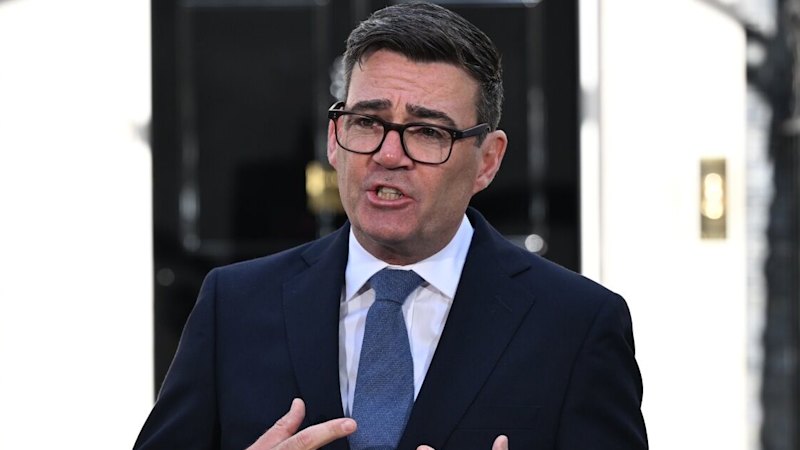
New Labour leader Andy Burnham prepares to become Prime Minister provides an immediate broadcast look at the political shift in the UK and how the new leader framed his promise to restore hope to the electorate.