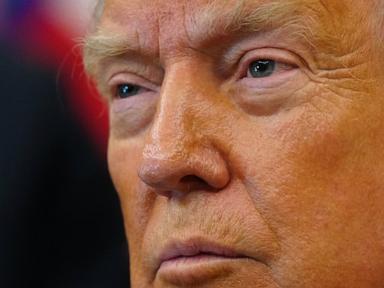
The physical currency of a sovereign nation serves as both a medium of exchange and a highly guarded instrument of state branding. The Treasury Department's decision to initiate production of a new $1 coin featuring President Donald Trump for America’s 250th birthday—announced by Treasury Secretary Scott Bessent—represents a fundamental break from modern American monetary tradition. By placing a living president on legal tender for the first time in a century, the administration is testing the boundaries of statutory interpretation, numismatic economics, and institutional norms.
To understand the implications of this development, one must dissect the statutory collision behind its authorization, the metallurgical realities of the coin's production, and the strategic brand positioning of federal currency.
The Statutory Collision: 31 U.S.C. § 5114 vs. The 2020 Redesign Act
The primary friction surrounding the new coin is legal. Since the Civil War era, United States monetary policy has maintained a strict prohibition against depicting living individuals on federal currency. This restriction was formalized to distance the republic from monarchical traditions where reigning sovereigns stamped their own likenesses onto the national treasury.
Two primary statutes govern this issue, creating a direct legal bottleneck:
- The Living Person Prohibition (31 U.S.C. § 5114(b)): This statute explicitly states that only the portrait of a deceased individual may appear on United States currency and securities.
- The Presidential $1 Coin Act of 2005: This law mandates that for any president to be featured on a dollar coin, they must have been deceased for at least two years prior to minting.
To bypass these long-standing restrictions, the Treasury Department is leveraging a specific legislative carve-out within the Circulating Collectible Coin Redesign Act of 2020 (Public Law 116-330). This Act grants the Treasury Secretary broad authority to issue $1 coins during 2026 featuring designs "emblematic of the United States semiquincentennial."
The administration’s legal defense rests on the premise that the serving president is, by definition, emblematic of the nation during its milestone anniversary. This interpretation exploits a hierarchical gap in statutory specificity: while general currency laws prohibit living portraits, the 2020 Act grants the Treasury Secretary unilateral design authority for this specific commemorative window. The historical precedent cited by the Treasury—the 1926 Oregon Trail Memorial half dollar featuring Calvin Coolidge—demonstrates that while rare, executive authority has previously carved out temporary exemptions for living figures on commemorative coinage.
Metallurgical Composition and Seigniorage Economics
Initial proposals for the Trump coin contemplated a 24-karat solid gold coin intended exclusively for high-end collectors. The finalized coin, however, is a circulating-quality $1 coin struck in Philadelphia, composed of a manganese brass alloy over a copper core—frequently referred to as a "golden-dollar" composition.
This shift in material composition fundamentally changes the economic mechanics of the release:
The Seigniorage Profit Engine
Seigniorage is the difference between the face value of money and the cost to physically produce it. By utilizing a base-metal composition rather than precious metals, the United States Mint maximizes its profit margin.
[Face Value: $1.00]
       │
       ├───► Production Cost (Metal, Minting, Labor): ~$0.12 to $0.15
       │
       └───► Net Seigniorage Profit: ~$0.85 to $0.88 per coin
A manganese brass $1 coin costs approximately 12 to 15 cents to manufacture. When the Mint sells or distributes these coins at their $1 face value, it captures an 85% to 88% profit margin. Because commemorative coins are widely hoarded by collectors rather than circulated, they rarely return to the banking system to be redeemed. This effectively renders the program a highly profitable, low-velocity debt-free funding mechanism for the government.
Numismatic Price Premiums
While the circulating version carries a $1 legal tender value, the Mint's business model relies heavily on proof sets, uncirculated finishes, and special packaging marketed directly to collectors at steep markups. A manganese brass coin packaged in a commemorative display often commands retail prices of $15 to $30. This creates an exponential increase in return on investment (ROI) for the Mint, transforming a standard circulating coin program into a high-margin consumer product line.
Design Evolution and Aesthetic Risk Management
The aesthetic details of currency are highly calculated, serving to project national stability. The journey from the initial draft designs to the finalized obverse and reverse plates shows a deliberate effort to temper highly partisan imagery in favor of traditional state symbols.
| Design Stage | Obverse (Heads) | Reverse (Tails) | Key Inscriptions |
|---|---|---|---|
| Initial Drafts (2025) | Trump with clenched fist, Pennsylvania rally stance | Trump standing in front of American flag | "Fight, Fight, Fight", "LIBERTY", "1776-2026" |
| Commission Review (Jan 2026) | Trump face in profile, classic bust style | Stylized modern eagle | "LIBERTY", "IN GOD WE TRUST" |
| Final Production (July 2026) | Trump face direct forward, suit and tie, stern expression | Traditional bald eagle from the Great Seal | "LIBERTY", "IN GOD WE TRUST", "E PLURIBUS UNUM" |
The removal of the "Fight, Fight, Fight" motif and the clenched-fist posture represents a calculated pivot. While the initial concepts targeted highly specific political messaging, the final design leans on the visual vocabulary of classical Roman state portraiture—direct gaze, formal attire, and stern expressions—to mimic the gravity of traditional currency.
The reverse side further buffers this political imagery by maintaining the bald eagle and the Great Seal. This classic heraldry balances the unprecedented nature of the obverse, ensuring the coin remains recognizable as official United States tender.
The Strategic Playbook for Collectors and Investors
From a market perspective, the introduction of this coin creates a unique set of dynamics within the numismatic secondary market. For collectors and market participants looking to capitalize on this release, the optimal strategic play involves targeting specific product tiers.
The high-volume, standard circulating coins are unlikely to appreciate significantly due to mass production. The real market upside lies in the high-relief proof finishes and early-strike certification labels graded by third-party services like PCGS or NGC. Because this is the first instance of a living president on a $1 coin under modern federal law, these specific, limited-run numismatic packages will hold structural scarcity value, independent of the political sentiment surrounding the subject matter. Investors should bypass raw circulating rolls and focus capital allocation exclusively on certified, proof-state specimens within the first thirty days of the autumn release.