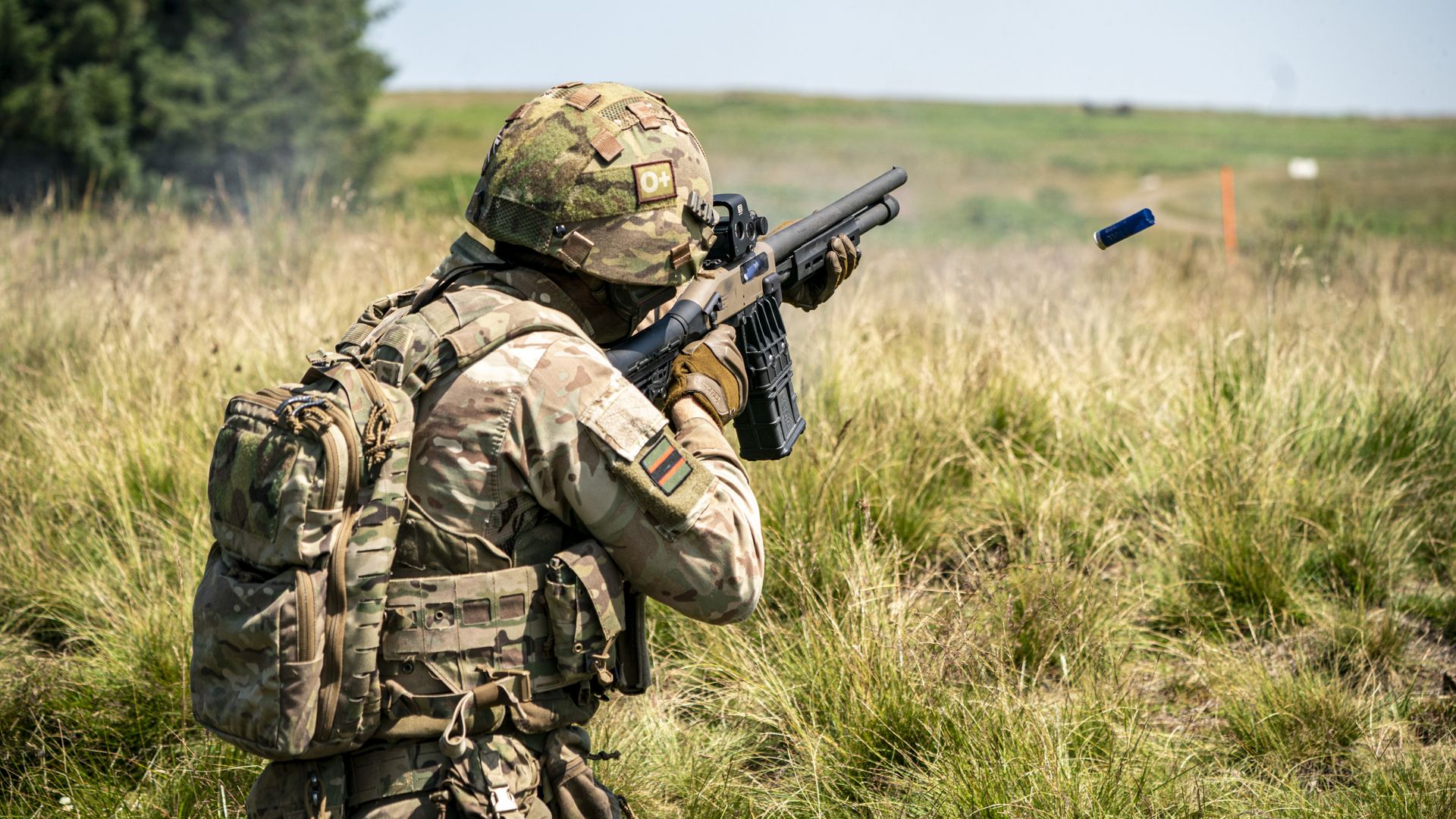
Half of adults would not go to war for the UK. Cue the pearl-clutching. Cue the nostalgic columns about Blitz spirit, collapsing civic duty, and soft modern youth.
It makes for a tidy Sunday headline. It is also lazy analysis.
When a survey tells you half of Britons say they would not fight for their country, it is not handing you a readout of cowardice. It is handing you a receipt on broken social contracts, vague war aims, and polling questions that confuse peacetime posture with wartime behavior. Anyone treating a hypothetical click on a survey screen as a binding battlefield prediction is reading the wrong instrument.
The Lazy Consensus Around "Willingness to Fight"
Standard coverage of polls like the Ipsos survey follows a predictable script. Headline the refusal rate. Treat patriotism as a binary switch—on or off. Lament that the country has lost its backbone.
That consensus misses almost everything that actually happens when states mobilize or citizens face coercion.
First, survey respondents answer the question in their head, not the narrow phrase on the screen. When a pollster asks whether you would go to war for the UK, a twenty-four-year-old renting a damp room in Manchester does not picture defending the white cliffs against an invading fleet. They picture being shipped ten thousand miles away to die over an ambiguous geopolitical quarrel managed by politicians they distrust. Refusing an open-ended blank check is not treason. Often, it is basic pattern recognition.
Second, commentators routinely conflate volunteering in peace with mobilization in crisis. Historically, mass armies have rarely been built purely on warm feelings during calm Tuesdays. Conscription, economic pressure, peer dynamics, survival instincts, and clear existential threats change calculations overnight. Conversely, peacetime surveys have long captured skepticism toward foreign entanglements—including in the late 1930s—long before reality forced harder choices.
I have spent years watching analysts misread public sentiment by treating stated preferences as revealed preferences. In defense policy, strategic communications, and crisis planning, I have seen institutions blow millions chasing "morale campaigns" built on flawed survey metrics while ignoring structural bottlenecks like recruitment pipelines, industrial capacity, and housing affordability. If a young adult feels locked out of homeownership and basic stability, lecturing them about national pride does not magically create infantry platoons or cyber specialists.
You Are Asking the Wrong Question
Ask whether half of adults would go to war for the UK, and you get moral outrage. Ask the sharper question—what kind of conflict, under what legal and strategic mandate, and doing what specific job—and the picture splits wide open.
Modern conflict is not a single uniform with a rifle strapped to it. A citizen who refuses to deploy into an overseas ground war may still be willing to work in medical logistics, keep municipal power grids running, counter disinformation, or defend local infrastructure during a national emergency. Lumping every non-combat refusal into "would not go to war" flattens real distinctions into a single scary percentage.
Consider how people answer when scenarios get concrete rather than abstract:
- Homeland defense vs. expeditionary intervention: People draw a sharp line between an attack on British soil and distant interventions whose strategic payoff is murky.
- Combat vs. civilian resilience: Many adults recognize physical, family, or caregiving limits that rule out front-line combat without ruling out essential support roles.
- Trust in leadership: Willingness to sacrifice rises when citizens believe leaders are competent, honest, and sharing risk—and drops when trust in institutions is thin.
Imagine a scenario where a pollster asks two groups the same core question, but one hears "would you fight in a war involving the UK" while the other hears "would you serve in a national defense crisis if Britain's critical infrastructure or allies were directly attacked." The percentages shift immediately because perceived stakes and legitimacy shift. Treating a single headline figure as settled destiny is bad social science.
What "People Also Ask" Gets Wrong
"Does this mean Britain couldn't defend itself?"
No. Modern military power is not a headcount of every adult in the country. Even in World War II—the very benchmark commentators reach for when complaining about modern apathy—only a minority of the total population served in the armed forces at any one time, while millions more sustained war production, agriculture, transport, and civil defense. Contemporary deterrence leans heavily on professional forces, alliance commitments, air and naval power, intelligence, logistics, and industrial depth rather than sheer massed numbers.
"Are younger generations uniquely unpatriotic?"
Not uniquely. Younger cohorts are often more skeptical of blank-check military intervention and more vocal about economic grievances, which makes them easy scapegoats for older commentators. Yet skepticism toward war—especially unpopular or poorly explained wars—has appeared across generations in Britain, from anti-war movements before 1939 to fierce opposition during the Iraq War in 2003. Calling skepticism "unpatriotic" confuses blind obedience with civic loyalty.
"Should the UK bring back conscription to fix this?"
Bringing back a draft to cure low survey enthusiasm is like forcing someone to sign a contract because they looked hesitant at the door. Conscription creates massive administrative, training, and morale headaches if the public sees it as unfair or disconnected from real security needs. A smaller, better-equipped, well-retained force—backed by resilient supply chains and credible allies—solves actual military problems far better than dragging reluctant civilians into barracks.
Where Heavy Hitters and Real Mechanics Point
Strategic thinkers and military historians—from Sir Lawrence Freedman on modern coercion and deterrence to Hew Strachan on war, society, and mobilization—have long emphasized that a state's war-fighting capacity depends on the bargain between government and society. Wars are not fought in a vacuum; they rest on fiscal health, industrial readiness, alliance credibility, and public legitimacy.
Look at how modern defense actually works:
| Dimension | Lazy Headline Framing | Sharp Strategic Reality |
|---|---|---|
| Survey answer | Proof of national cowardice | Snapshot of trust, perceived stakes, and war aims |
| Military strength | Raw population willing to enlist | Trained professionals, alliances, munitions, logistics, and tech |
| Civic contribution | Rifle in hand or nothing | Broad spectrum from specialized skills to home-front resilience |
| Policy lever | Scold citizens or float a draft | Fix retention, industrial capacity, and political credibility |
Notice the blind spot in standard commentary: politicians love talking about "willingness to fight" because it costs nothing and shifts responsibility onto the public. Fixing munitions stockpiles, recruiting and retaining skilled personnel, hardening undersea cables and energy networks, and repairing public trust take real money, time, and political discipline.
The Catch in Going Contrarian
Let's be honest about the downside of pushing back against poll panic.
Downplaying low stated willingness to fight can cross into complacency. If half of adults say they will not go to war for the UK, ignoring that signal completely is a mistake. Even allowing for survey noise, soft refusals, and conditional answers, a deep reservoir of cynicism toward the state is a genuine strategic vulnerability. Adversaries watch public cohesion, alliance resolve, and societal resilience—not just hardware brochures. A country whose citizens feel alienated from its institutions is harder to rally quickly in a sudden shock.
So the smart move is neither panic nor denial. Treat the poll as a warning light on trust and policy clarity, not a verdict on national character.
What Actually Works Instead
If policymakers and leaders want a country that can deter aggression and handle crises without tearing itself apart, stop lecturing citizens about abstract duty and start doing the unglamorous work:
- Define clear, credible defense objectives. Tell the public plainly what British forces exist to deter and defend, and under what conditions force is justified. Vague missions breed predictable pushback.
- Fix the basics of the social contract. Housing, cost of living, public services, and fair opportunity shape whether young adults feel they have a stake worth defending.
- Invest in reserves, skills, and resilience. Build practical pathways for specialists—cyber, engineering, medical, logistics—to contribute without pretending every crisis requires mass infantry mobilization.
- Prioritize hard capability over tough talk. Fund real readiness, maintenance, stockpiles, and industrial output rather than substituting rhetorical chest-thumping for capability.
Polls measure opinions in the quiet. Real crises test incentives, leadership, and survival. Stop mistaking one for the other.