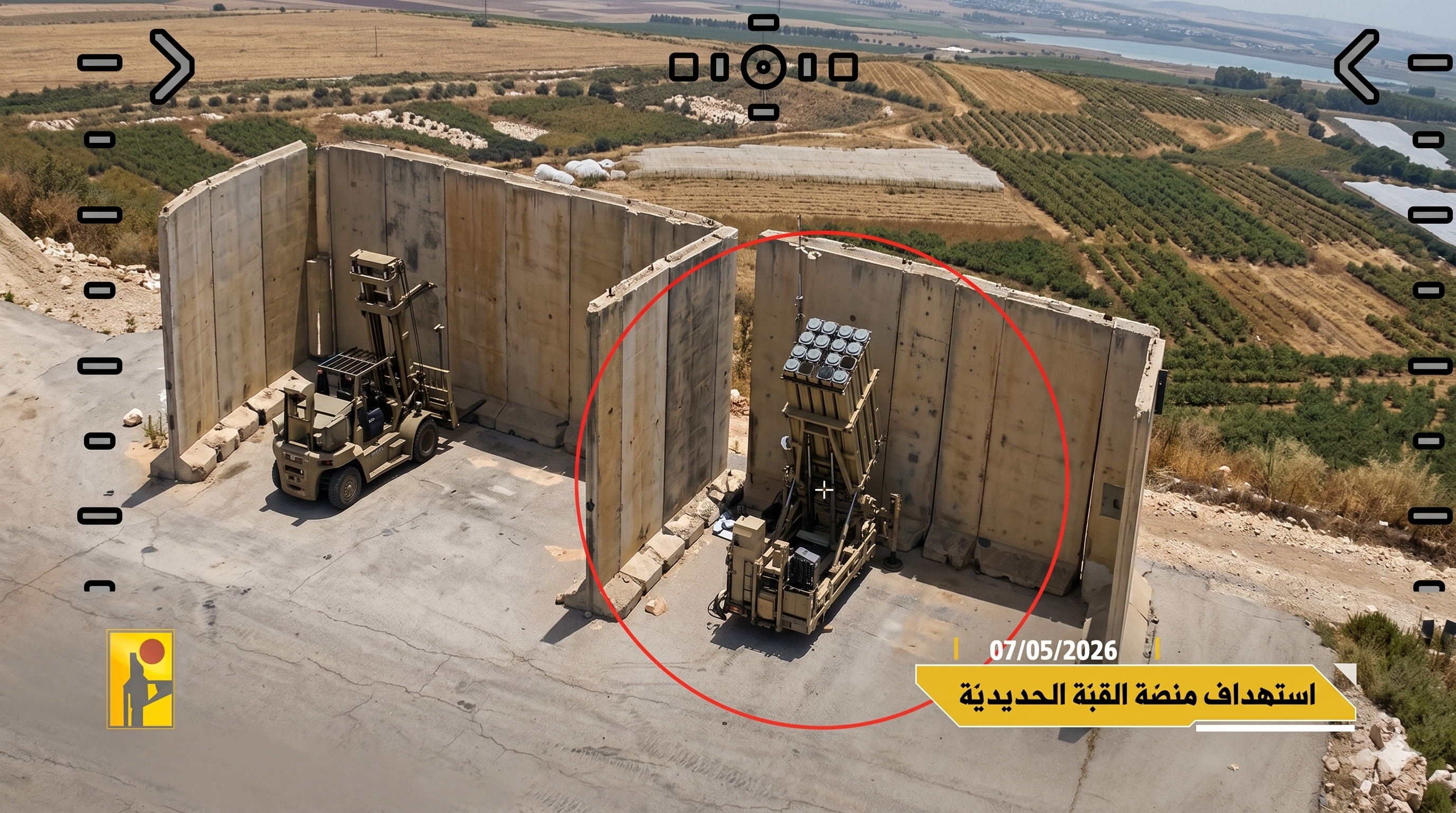
The successful engagement of an Iron Dome battery by a First-Person View (FPV) drone marks a fundamental shift in the cost-exchange ratio of modern kinetic warfare. This event is not a localized tactical anomaly; it represents the convergence of high-end semiconductor proliferation and low-signature aerial delivery systems. To understand the gravity of this strike, one must move past the headline and analyze the structural vulnerabilities of Integrated Air Defense Systems (IADS) when confronted with "attritable" precision munitions.
The Physics of Detection and the Radar Cross-Section Gap
The primary failure point in this engagement rests on the physical limitations of Doppler radar systems designed to intercept ballistic trajectories. An Iron Dome unit operates on the principle of detecting high-velocity projectiles—specifically rockets, artillery, and mortars (RAM). These targets possess predictable parabolic paths and significant heat signatures. Discover more on a similar topic: this related article.
An FPV drone operates in a different physical envelope. By utilizing small, carbon-fiber frames and plastic propellers, these craft maintain an exceptionally low Radar Cross-Section (RCS). When these drones fly at low altitudes, they utilize "ground clutter"—radar reflections from terrain, vegetation, and buildings—to mask their approach. The signal-to-noise ratio becomes so degraded that the automated logic of the battery’s Battle Management & Weapon Control (BMC) system often filters the drone out as a non-threatening environmental factor, such as a bird or wind-blown debris.
The Economic Asymmetry of the Interceptor Loop
The strategic crisis revealed here is best defined as the Negative Cost-Exchange Ratio. In traditional surface-to-air missile (SAM) logic, the defender accepts a high cost to protect a high-value asset. However, the Iron Dome’s Tamir interceptor costs approximately $40,000 to $50,000 per unit. An FPV drone, assembled from off-the-shelf hobbyist components and armed with a repurposed RPG-7 warhead, costs between $500 and $1,000. Further reporting by The Next Web highlights comparable views on the subject.
This creates a systemic bottleneck:
- Depletion of Depth: If the defender uses high-cost interceptors against low-cost drones, they exhaust their inventory, leaving the site vulnerable to a follow-on volley of heavy rockets.
- Target Saturation: The processing power required to track and engage dozens of slow-moving, low-altitude targets can overwhelm the BMC, leading to "target fixation" where the system ignores a lethal threat while focusing on a decoy.
- The Sensor-to-Shooter Lag: FPV drones are piloted via low-latency radio links. Unlike a pre-programmed cruise missile, a human operator can adjust the flight path in real-time to exploit blind spots in the radar's 360-degree coverage or utilize topographical features for a "pop-up" attack.
Structural Vulnerabilities of the ELM-2084 Radar
The ELM-2084 Active Electronically Scanned Array (AESA) radar is the "brain" of the Iron Dome. While it is a marvel of multi-mission tracking, it has a defined Vertical Aperture Limit. Modern FPV tactics involve "loitering" at high altitudes directly above the radar's zenith—a conical blind spot where the array cannot transmit or receive effectively—before diving at terminal velocity.
Once the radar is neutralized, the entire battery becomes a collection of inert hardware. The launcher units (MFUs) have no independent targeting capability. By hitting the radar or the BMC unit, a $500 drone effectively "kills" a system worth $50 million. This is the definition of Force Multiplication through Asymmetric Precision.
The Three Pillars of Electronic Warfare Failure
Why did electronic jamming fail to prevent this strike? The answer lies in the rapid evolution of Electronic Counter-Countermeasures (ECCM) in the non-state sector.
- Frequency Hopping and Spread Spectrum: Advanced FPV systems now utilize ELRS (ExpressLRS) or Crossfire protocols that hop across frequencies hundreds of times per second. Standard wide-band jammers often lack the surgical precision to disrupt these signals without also blinding the defender's own communication networks.
- Optical Terminal Guidance: There is a transition toward "fire-and-forget" drones. Once a pilot identifies the radar unit, they can engage an AI-assisted optical lock. Even if the radio link is severed by jamming, the onboard processor uses computer vision to guide the drone to the target coordinates autonomously.
- The Proximity Problem: To jam a drone effectively, the signal must be stronger than the pilot's transmitter. As a drone nears its target, the "inverse square law" of radio propagation works in the drone's favor. The signal from the drone’s transmitter becomes exponentially harder to drown out as it closes the distance to the battery.
The Kinetic Hardening Deficit
For decades, air defense development focused on the "Soft Shield" (interceptors and jamming). This engagement highlights a lack of "Hard Shield" or physical point-defense. The Iron Dome battery is a "soft" target. Its components are unarmored to ensure mobility. Shrapnel from a small drone strike can puncture the cooling systems of the radar or the delicate phase-shifters within the antenna array, rendering the unit non-operational.
The absence of Close-In Weapon Systems (CIWS), such as high-cyclic-rate cannons (e.g., Phalanx or Oerlikon Skyranger), creates a fatal gap in the defense layers. While a missile is optimized for a rocket 10 kilometers away, it is physically incapable of hitting a drone 50 meters away.
Strategic Implications for Tier-1 Militaries
This event forces a re-evaluation of the Layered Defense Framework. The current reliance on multi-million dollar missile systems to defend against sub-thousand dollar threats is a mathematical path to defeat in a sustained conflict.
To regain the tactical advantage, the following structural shifts are required:
- Distributed Sensor Networks: Moving away from a single, high-value radar unit toward a mesh of low-cost acoustic and optical sensors that can "triangulate" low-signature drones without relying on Doppler signatures.
- Directed Energy Integration: The deployment of High-Energy Lasers (HEL) is the only viable solution to the cost-exchange crisis. A laser shot costs roughly the price of the electricity used, eliminating the inventory depletion problem.
- Kinetic Point-Defense Restoration: Re-integrating mobile, programmable airburst ammunition (AHEAD technology) into the immediate perimeter of high-value assets to provide a "last-meter" physical barrier that is immune to electronic jamming.
The neutralization of an Iron Dome component by an FPV drone is the definitive proof that the era of "impenetrable" missile shields is over. Survival in the new age of precision attrition requires a transition from centralized, high-cost defense architectures to decentralized, multi-modal systems that prioritize the physical destruction of small-scale threats over the mere interception of large-scale ones. The strategic priority must now shift toward creating an "Active Skin" of defense that treats the drone as a swarm-based environmental hazard rather than a traditional aerial target.