The silence in northern Israel is heavy, brittle, and deceptive. For months, the orchards near the Lebanese border have grown wild, apples rotting on branches because it is too dangerous to harvest them. The air carries the sharp scent of scorched earth and the faint, rhythmic rumble of artillery echoing from the hills.
Miriam knows this silence well. She is a mother of three who used to run a boutique guesthouse in Metula. Today, she lives out of a cramped hotel room in Tel Aviv, funded by government stipends, watching her children grow increasingly restless. Her life is packed into four suitcases. Every time the news mentions a ceasefire, her heart leaps. Then, it sinks. She wants to go home, but she is terrified of what is waiting for her there. Meanwhile, you can find related stories here: The Steel Prisons of the Strait.
Across the border, a Lebanese family in a southern village peers out from a damaged living room, wondering if the next drone strike will claim what remains of their ancestral home.
Diplomats in elegant suits meet in air-conditioned rooms in Washington, Paris, and Beirut. They hold pens, draft agreements, and speak of "buffers" and "demilitarized zones." They believe they are drawing the blueprints for peace. But in Jerusalem, a powerful faction of politicians is looking at the exact same map and seeing something entirely different. They see an unfinished war. And they are demanding a return to the battlefield. To see the complete picture, we recommend the excellent article by The New York Times.
The Friction of Paper Promises
The logic of a ceasefire is always neat on paper. It dictates that forces withdraw to a certain line, international peacekeepers monitor the gap, and civilians return to their beds.
But paper does not bleed.
Within the Israeli cabinet, far-right ministers look at the proposed diplomatic solutions not as a relief, but as a trap. To understand their perspective, you have to understand a deeply ingrained psychological scar. For nearly two decades, Israel operated under the assumption that deterrence was enough. The belief was that if you build a high enough wall and possess enough technological superiority, your enemies will simply choose not to strike.
October 7 shattered that illusion forever.
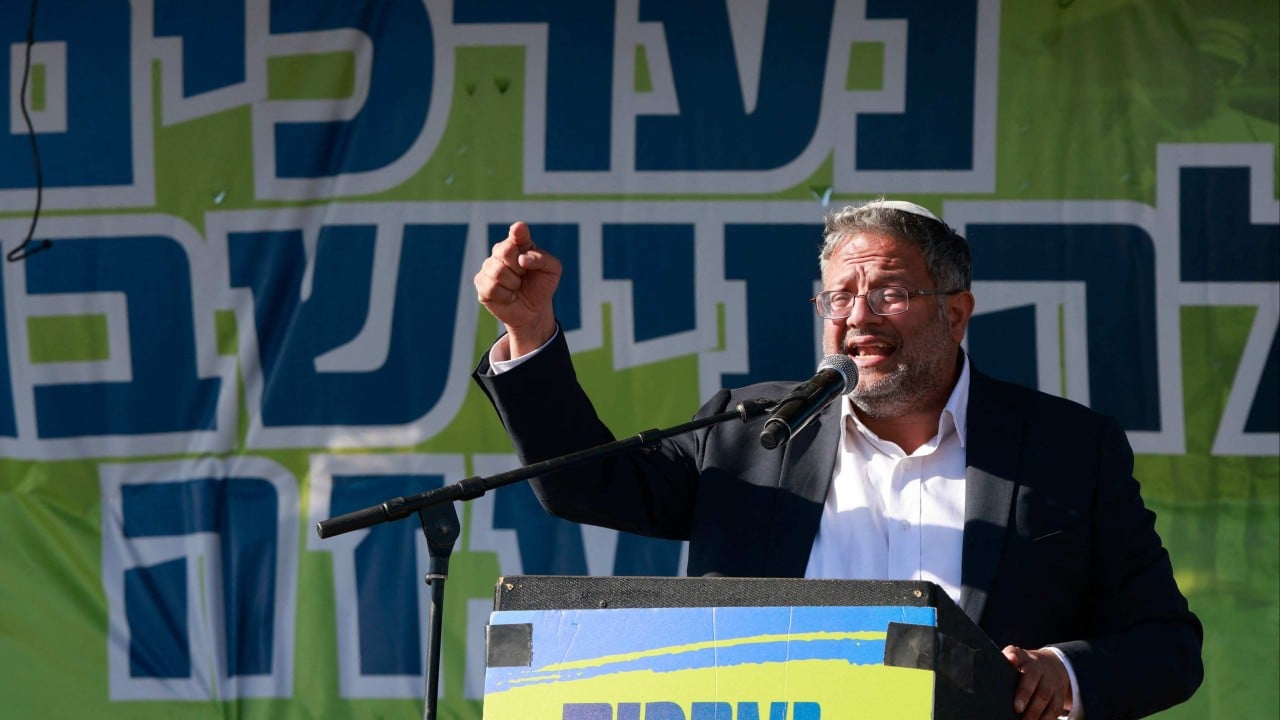
For politicians like Itamar Ben-Gvir and Bezalel Smotrich, a ceasefire with Hezbollah is not a victory; it is a stay of execution. They argue that leaving Hezbollah’s infrastructure intact north of the Litani River ensures that the horrors of the south will eventually be repeated in the north. Their stance is unyielding. They do not want a pause. They want a decisive, crushing conclusion.
This creates a terrifying paradox. The very mechanism designed to save lives—diplomacy—is viewed by a segment of the leadership as the ultimate threat to national security. They believe that by stopping now, Israel is merely resetting the clock for a larger, deadlier conflict in the future.
The Human Geometry of the Border
Consider the math of displacement. More than 60,000 Israelis have been forced from their homes in the north. In Lebanon, the number of displaced people tops 100,000. These are not just statistics; they are shattered routines. It is the school year interrupted, the family business bankrupt, the elderly grandmother dying in an unfamiliar hospital bed far from the garden she tended for fifty years.
The far-right ministers are leveraging this immense civilian pain. Their argument is simple, visceral, and highly persuasive to a traumatized public: How can we ask Miriam to take her children back to Metula while Hezbollah can still look down on her home through a sniper rifle scope?
It is a powerful question. It taps into the primal human need for absolute safety.
But the solution they propose—a full-scale, sustained military campaign to reshape the geography of southern Lebanon—carries a price tag that is rarely spoken aloud in the Knesset. A return to war means more than just soldiers crossing a border. It means a prolonged war of attrition. It means rockets raining down on Haifa and Tel Aviv. It means the complete destruction of Lebanese civilian infrastructure, driving an already collapsing nation into absolute chaos.
The hawks believe this price is necessary. They view war as a surgical tool that can carve out security. History, however, suggests otherwise. War is rarely a scalpel; it is almost always a sledgehammer.
The Ghost of 2006
The conflict in Lebanon is haunted by ghosts. Anyone who remembers the summer of 2006 knows how quickly a military operation can swallow its own objectives.
Back then, the goal was similar: eliminate the threat of Hezbollah, push them back, and secure the northern border. Thirty-four days later, hundreds of civilians were dead, billions of dollars of infrastructure lay in ruins, and Hezbollah emerged politically stronger, adapting its tactics to become the most heavily armed non-state actor in the world.
The current demands from the far-right ignore this historical weight. They operate on the assumption that total victory is achievable through sheer military might. They want the Israeli Defense Forces to keep pushing, to disregard the pressure from the White House, and to reject any deal that relies on the Lebanese army or United Nations peacekeepers to maintain order.
"We cannot trust them," is the constant refrain. And to be fair, the skepticism is not entirely unfounded. UN Resolution 1701, which ended the 2006 war, was supposed to keep Hezbollah out of southern Lebanon. It failed. The weapons kept flowing. The tunnels kept being dug.
This is where the trust breaks down entirely. When diplomacy has a track record of failure, war becomes the only language people believe in.
The Invisible Stakes
The debate inside Israel's government is not just about border lines; it is about the soul and direction of the state.
On one side stand the pragmatists, the military establishment, and international allies who recognize that Israel cannot fight a multi-front war indefinitely without exhausting its economy, its military reserves, and its global legitimacy. They see a ceasefire as a strategic necessity—a chance to rebuild, regroup, and address the catastrophic situation in Gaza.
On the other side are the ideological hardliners. For them, this is a moment of existential destiny. They see the international community's calls for restraint as weakness. They view the Western world's obsession with stability as a fundamental misunderstanding of the Middle East.
While the politicians argue, the people on the ground are left suspended in a agonizing limbo.
Miriam checks her phone every ten minutes in the hotel lobby. She reads quotes from ministers calling for fire and fury, followed by statements from foreign diplomats claiming a deal is close. Her life is being bartered in a high-stakes game of political chicken. If the hardliners win the debate, her hotel stay will become permanent, and her husband, a reservist, will be sent back into the valley of the shadow of death.
If the diplomats win, she will be told it is safe to go home, but she will sleep with one eye open, listening for the sound of a motorcycle across the border, wondering if the paper promise she was sold will hold when the wind changes.
The sun sets over the Mediterranean, casting long, bloody shadows across the ancient hills of Galilee and southern Lebanon. The politicians will make their choices in the days ahead. They will deliver speeches filled with resolve and righteousness. But the cost of those choices will not be paid in the halls of parliament. It will be paid in the quiet rooms of displaced families, in the mud of the border outposts, and in the permanent emptiness of towns that used to be filled with life.