Paper remembers. Even when the presses fall silent, the ink stays put, clinging to the grain like carbon dust on a mechanic's thumb.
Years ago, the newsroom smelled of cheap roast coffee, wet wool, and the frantic, rhythmic clatter of keyboards under flickering fluorescent tubes. Nobody talked about the courts then. They talked about the next edition. They talked about the source who whispered through a burner phone at midnight. They believed that tomorrow's front page could bend the spine of history just enough to let the light in. Don't forget to check out our previous coverage on this related article.
Then the lights went out.
The printing plates were hauled away. The newsroom chairs rolled back into empty desks, abandoned mid-sentence. You might think a dead institution stays quiet, neatly tucked away in the archives of history. But paper has a long memory. And the law, slow and heavy-footed, keeps marching down corridors long after the editors have packed their cardboard boxes. To read more about the background here, The Guardian offers an excellent breakdown.
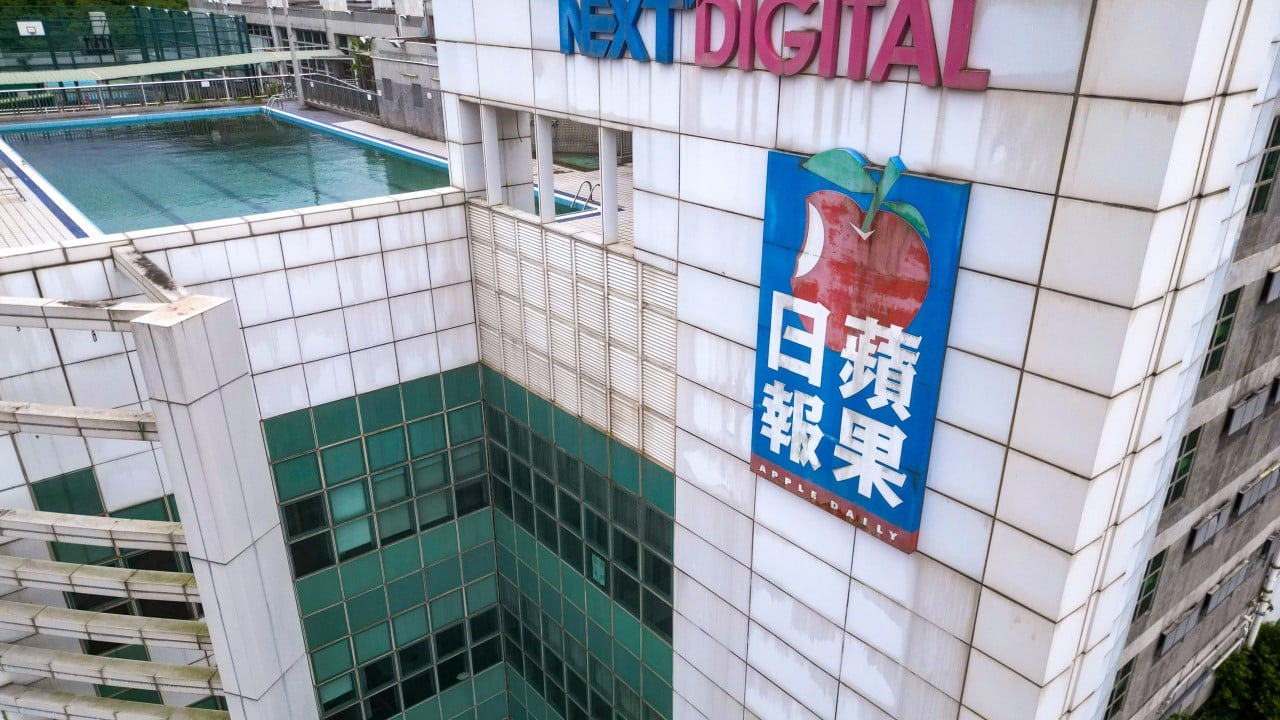
Recently, a Hong Kong court handed down a bill that felt less like a financial transaction and more like an echo from a ghost. The defunct Apple Daily was ordered to pay HK$1.5 million. Not for a new offense. Not for a headline written this morning. This was a settlement over old words, old articles, old grievances categorized as defamatory.
One point five million dollars.
To a functioning enterprise, that figure is a line item. To a corporate corpse, it is a gravestone marker. It represents a legal reckoning for stories published years ago, targeting an entity that no longer exists in any recognizable form.
Consider what happens to a story once it is printed. It leaves the author's hands. It takes on a life of its own, wandering through the public square, shaping opinions, breaking hearts, or building reputations. Sometimes, it destroys them. Defamation law exists precisely for that wreckage. It is society's admission that words are not mere breath; they carry mass. They possess velocity. When a false claim strikes a target, the impact leaves a dent that an apology on page four rarely fixes.
Yet, watching a liquidated publication face multi-million dollar judgments feels like watching a ghost stand trial. Who pays? Where does the money come from when the coffers are locked and the staff has scattered to the four winds of exile or new careers?
The mechanics of justice are rigid. A court does not care about the poetry of a closed newsroom. It cares about liability. It cares about precedent. When an organization publishes material that a court later deems defamatory, the legal debt remains attached to the corporate shell, waiting for creditors, liquidators, or remaining assets to settle the ledger. It is cold. It is procedural.
And it is entirely detached from the romanticism of the reporter running down a dark alley with a notebook in their pocket.
We often romanticize the journalist as a solitary hero against the machine. We picture the trench coat, the late-night train, the crumpled pack of cigarettes. The reality is far more mundane, and far more bureaucratic. Journalism is a business of daily production, driven by deadlines, advertising revenue, editorial oversight, and legal exposure. Every single word pushed out into the ether carries a hidden risk factor. Editors weigh the public interest against the threat of a writ. They balance the desire to expose a wrong against the cold reality of a libel suit that could bankrupt the publisher overnight.
When that risk materializes years later, the distance between the writing of the sentence and the paying of the penalty creates a strange, surreal temporal gap. The reporter who typed the words might now live three time zones away, pouring coffee in a quiet suburb, looking at rain streaks on a window. The subject of the article may have moved on, aged, or faded from public view. Yet the legal machinery grinds forward, indifferent to the passage of time.
This recent judgment is not just about a specific sum of money or a specific set of old articles. It is a reminder of the permanence of digital and print archives in an age where everything is supposedly fleeting. We live in a culture that treats information like water—flowing, disposable, easily wiped clean with a server reboot or a domain cancellation. But the legal architecture of defamation treats the written word as stone. Carve an insult, a false accusation, or an actionable claim into the public record, and the chisel will find you, even if it takes a decade.
We have to ask ourselves what accountability looks like when the accused is gone. Does punishing a defunct entity serve as a warning to those who remain? Does it mend the reputation of those who were wronged?
For the plaintiffs who walk out of the courtroom with a favorable ruling, the victory is often hollow. You cannot squeeze water from a stone, and you can rarely recover full restitution from a liquidated shell. The number—HK$1.5 million—sits on a legal document like an unpayable debt of honor. It closes a file, but it rarely heals a wound.
At the same time, for those who watched the rise and sudden fall of Hong Kong's once-vibrant media landscape, every court order feels like another layer of soil packed over a coffin. It solidifies an ending. It draws a definitive, ink-black line under an era of journalism that pushed boundaries until the boundaries pushed back with the full weight of the state.
I remember talking to an old copy editor years ago, a man who wore green eyeshades long after they went out of style. He used to tap his finger against a fresh broadsheet and say, "Every word you put down here is a contract with the future. You are signing your name to a version of reality. Make sure you can live in the house you're building."
Most days, writers don't think about the house. They think about the deadline. They think about the word count. They think about whether the coffee is hot enough to keep the eyelids propped open until midnight. They rarely think about the courtroom waiting at the end of the road, decades away, tallying up the cost of a sentence written in haste.
The presses are silent now in that old building. The windows are dark. But the bills keep arriving, slipped under the door like final notices for a tenant who has already checked out.
The ink dries. The paper yellows. The debt remains.