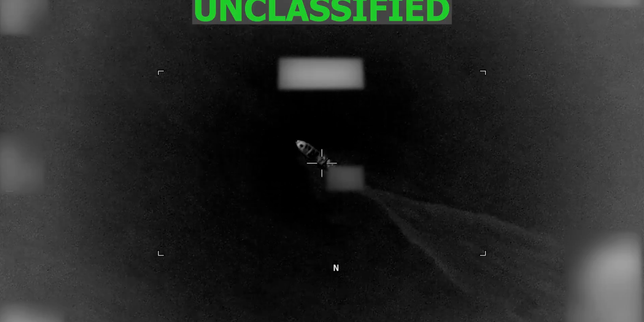
The Pacific Ocean does not care about borders, laws, or the desperate cargo moving across its surface. At night, it turns into a vast, undulating inkwell, swallowing light and sound. For those who operate in the margins of this void, the silence is both a shield and a trap.
A low-profile vessel slices through the swells, thousands of miles from any coastline. It sits mere inches above the waterline, disguised to look like nothing more than a trick of the waves. Inside, the air is thick with the stench of diesel fumes, sweat, and cheap tobacco. The men on board are not cartel kingpins. They do not wear gold chains or live in palatial estates. They are ghosts, hired hands from coastal villages in Central or South America, risking everything for a fraction of a percentage of a shipment they cannot afford to understand. Learn more on a connected issue: this related article.
Then comes the roar. It starts as a distant hum, vibrating through the fiberglass hull before it registers in the ears. Within seconds, the sky fractures. High-intensity searchlights pierce the darkness, turning the black water into a blinding, clinical white. A voice booms over a loudspeaker, drowned out by the thrashed air of military rotors and the churning wake of a U.S. Navy hull.
Stop. Further journalism by The Guardian highlights related views on the subject.
In the high-stakes game of maritime drug interdiction, that single word is the dividing line between life and a sudden, violent end. For three people aboard a suspected smuggling vessel in the remote Pacific, that line vanished in a flash of gunfire.
The Anatomy of an Interdiction
Behind the clinical language of official military press releases lies a chaotic, terrifying reality. When the U.S. military deploys its assets into the Pacific transit zones, it is targeting a massive, invisible pipeline. This isn’t a cinematic car chase. It is a slow, tense hunt across millions of square miles of open water, where finding a twenty-foot boat is harder than finding a needle in a burning haystack.
The operation follows a strict, escalation-of-force protocol designed to minimize casualties. But out here, mistakes are absolute.
Consider the sequence of events that triggers a lethal engagement:
Maritime patrol aircraft, operating on intelligence coordinates, spot an unidentified radar blip. They track it from thousands of feet in the air, monitoring its speed and trajectory. If the vessel matches the profile of a narco-sub or a low-profile boat—running without navigation lights, ignoring international hailing frequencies—a surface asset is dispatched. Usually, this is a U.S. Navy vessel operating with a U.S. Coast Guard Law Enforcement Detachment on board to provide legal authority in international waters.
The intercept happens fast. Helicopters hover overhead, deploying marksmen trained to disable a boat’s engines with precision fire. On the water, rigid-hull inflatable boats streak toward the target, carrying heavily armed boarding teams.
But what happens when the vessel refuses to stop? What happens when a crew, terrified of spending the next thirty years in a federal penitentiary, makes a sudden, aggressive maneuver toward the boarding team?
The calculus changes in a heartbeat. Deployed forces operate under the inherent right of self-defense. When a suspected smuggling boat is perceived as a weapon or its crew displays hostile intent, the response is immediate and devastating.
The Ghosts of the Supply Chain
To understand why three men died on a nameless patch of ocean, we have to look past the bricks of contraband seized. We have to look at the economic desperation that fuels the engine of transnational organized crime.
The people who navigate these boats are entirely disposable to the organizations that employ them. They are given a compass, a rudimentary GPS, a handful of rations, and enough fuel to reach a drop point. If they sink, they are forgotten. If they are captured, they are replaced before the paperwork is even filed.
For a young man in a struggling fishing community along the Pacific coast, the choice feels binary. The local fishing stocks are depleted, ravaged by industrial trawlers and changing climates. A legitimate month of backbreaking labor might net a few hundred dollars—barely enough to buy formula and pay protection money to the local gang. A single successful run across the ocean offers a payday that could build a concrete house for his mother and secure his family's survival for years.
The cartels exploit this vulnerability with mathematical precision. They don’t send their best. They send the desperate.
When the American spotlights hit that vessel, the three men on board weren't just facing the barrel of a U.S. military rifle. They were trapped between two terrifying realities. Turning back meant execution by the cartel for losing millions of dollars in product. Forging ahead meant running directly into a wall of military steel.
The Hidden Friction of the Drug War
The public often views maritime drug interdictions through a lens of clean efficiency—high-tech drones, stealth ships, and flawless execution. The reality is messy, dangerous, and deeply unpredictable.
The Pacific transit zone is too large to police effectively. Even with satellite surveillance, advanced radar, and international cooperation, the sheer volume of water means that the vast majority of smuggling vessels slip through the net entirely. The ones that are caught are often the result of lucky breaks or highly specific intelligence.
Because the stakes are so high, smugglers have evolved. They no longer rely solely on fast "go-fast" boats. They build semi-submersibles in the depths of the jungle, using specialized mechanics to create vessels that sit completely submerged except for a tiny cockpit and exhaust pipe. These craft are unstable, prone to sinking, and incredibly difficult to detect on radar.
When an encounter turns lethal, it sends a ripple effect through the entire security apparatus. Every shooting is investigated. Every loss of life requires a mountain of legal justification, diplomatic coordination, and internal review. For the military personnel involved, pulling the trigger is a heavy burden that lingers long after the deployment ends. They are trained for war against nation-states, yet they find themselves acting as heavily armed police officers in a lawless expanse, dealing with desperate men who have nothing left to lose.
The Silent Echoes
The gunfire stops. The helicopter hovers, its blades beating the humid air into a frenzy. The smoke clears from the deck of the military vessel, leaving behind the acrid smell of burnt cordite.
On the water, the low-profile boat is shattered, taking on water as its fiberglass hull splinters under the weight of the swells. Three bodies are recovered from the debris, lifeless remnants of a gamble that failed in the darkest hours of the night. There will be no grand funerals for them. Their names will likely be omitted from the headlines, reduced to a cold statistic in a government report detailing the kilograms of contraband prevented from reaching American streets.
Thousands of miles away, in a small coastal village, a phone will stop ringing. A mother, a wife, or a child will watch the horizon, waiting for a boat that will never return, realizing slowly that the silence of the ocean has claimed another piece of their world.
The Pacific swallows the evidence, the blood is washed from the deck, and the ship moves on to the next set of coordinates. The pipeline remains open, waiting for the next crew willing to barter their lives for a chance to escape the shallows.