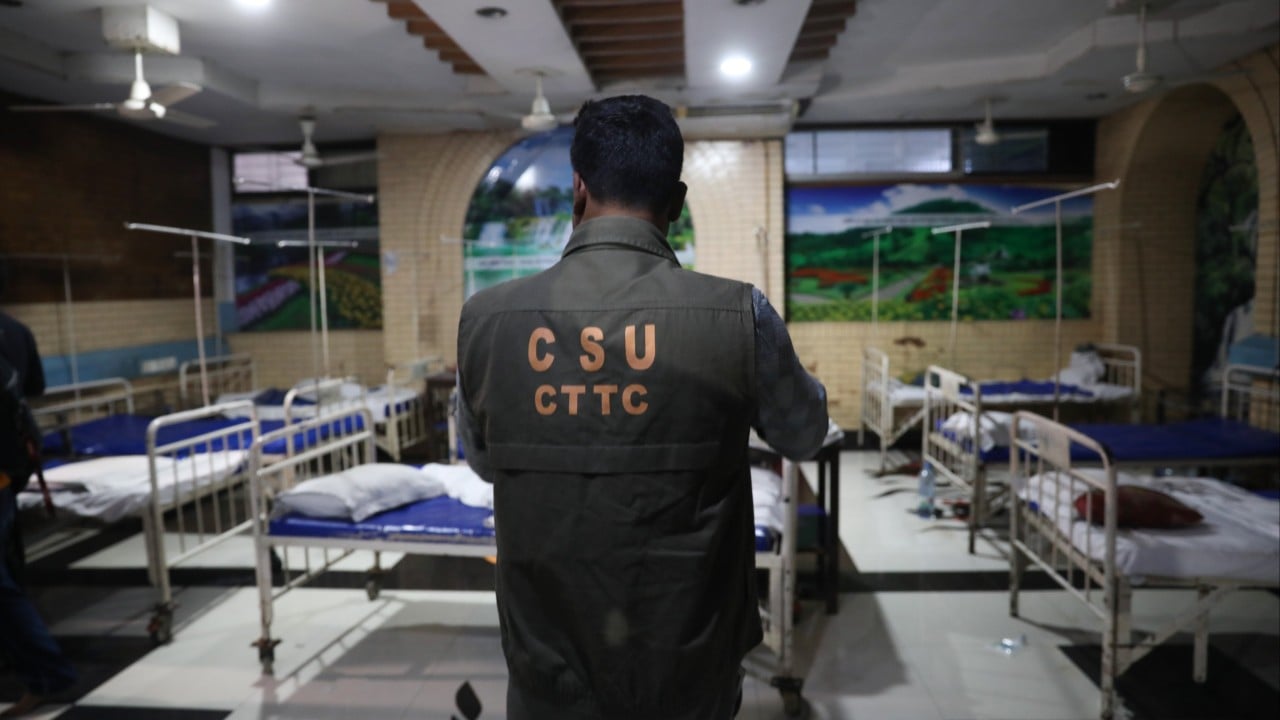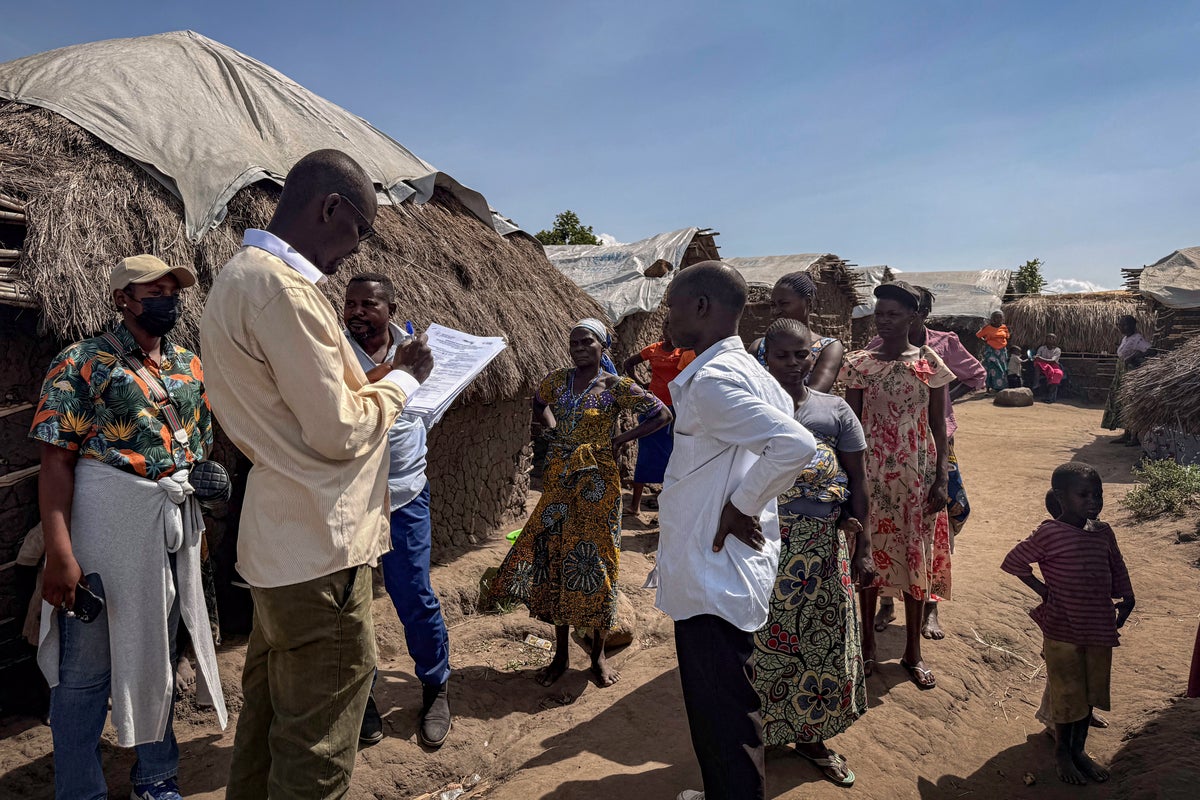
The Democratic Republic of the Congo (DRC) is currently trapped in a biological and geopolitical pincer movement that the international community is failing to contain. While health agencies sound the alarm over the resurgence of Ebola, the reality on the ground is far more complex than a simple viral outbreak. This is a manufactured catastrophe where the virus is merely a passenger on the back of systemic state fragility and a relentless cycle of militia violence. In the North Kivu and Ituri provinces, the infrastructure required to stop a pathogen—contact tracing, secure isolation, and public trust—has been systematically dismantled by decades of warfare.
The world sees a medical emergency. The people living it see a war where the medicine feels like another weapon.
The Anatomy of a Medical War Zone
The fundamental reason Ebola continues to devastate the eastern DRC is not a lack of scientific understanding. We have the vaccines. We have the monoclonals. What we do not have is a permissive environment to deploy them. In a standard outbreak, health workers map the transmission chain through a process called ring vaccination. You find the infected person and vaccinate every contact in their immediate circle.
In the DRC, that circle is often behind a front line or inside a village controlled by the Allied Democratic Forces (ADF) or the M23 rebels. When a surveillance team enters these areas, they are not seen as healers. They are seen as agents of a distant government in Kinshasa or, worse, as high-value targets for kidnapping. This creates a "blind spot" in the epidemiological data. If you cannot track the virus, you cannot kill it.
The violence forces displacement. Thousands of people flee their homes every week, carrying their belongings, their trauma, and potentially the virus into overcrowded camps for internally displaced persons (IDPs). These camps are the perfect petri dish. Sanitation is nonexistent. Clean water is a luxury. When Ebola enters a camp of fifty thousand people who are already malnourished, the math of the outbreak changes from linear to exponential.
The Trust Deficit and the Business of Aid
We must confront the uncomfortable truth about the "Ebola Business." Over the years, a narrative has taken hold among local populations that the virus is a financial engine for NGOs and the government. Residents see white SUVs and expensive mobile clinics rolling into towns that haven't had a paved road or a working school in twenty years. Then, when the Ebola cases drop, the SUVs leave.
This creates a perverse incentive structure. In some communities, there is a belief that the virus is "planted" to secure international funding. While this is factually incorrect, the optics of the response fuel the fire. When health workers wear high-level Personal Protective Equipment (PPE) that obscures their faces, they look like extraterrestrials or soldiers. To a mother who has watched her neighbors killed by militia machetes, a man in a yellow plastic suit dragging her child to a "treatment center" looks like an abduction, not a life-saving intervention.
This trust deficit is why we see attacks on Ebola Treatment Centers (ETCs). These aren't just random acts of violence; they are expressions of a population that feels exploited by the very people claiming to save them. To fix this, the response must shift from a vertical, disease-specific model to a horizontal, community-led model. You cannot treat Ebola in a vacuum while ignoring the malaria, cholera, and hunger that kill far more people in the same village every day.
The Regional Domino Effect
The DRC does not exist in isolation. Its borders are porous, defined more by geography and ethnic ties than by actual checkpoints. The threat of Ebola crossing into Uganda, Rwanda, or South Sudan is a constant shadow.
The current conflict dynamics involve multiple state actors and dozens of non-state armed groups. When a border area becomes a combat zone, formal screenings stop. People cross through the bush to escape gunfire, bypassing the thermal scanners and hand-washing stations set up at official crossings. A single infected individual reaching a major regional hub like Goma or Butembo could trigger a wildfire scenario. Goma, a city of over two million people, is a gateway to the rest of Africa.
The logistical nightmare of managing a viral outbreak in a region with no reliable electricity or cold chain management is hard to overstate. The rVSV-ZEBOV vaccine requires ultra-cold storage, typically around $-60^\circ C$ to $-80^\circ C$. Maintaining that temperature in a jungle where the humidity is crushing and the power grid is a myth requires a massive, expensive military-style logistical operation. Every time a rebel group blows up a bridge or ambushes a convoy, the cold chain breaks. The vaccines spoil. The effort resets to zero.
The Failure of the Global Warning System
The World Health Organization (WHO) issues warnings, but warnings do not provide security escorts for nurses. There is a disconnect between the Geneva-based policy and the mud-caked reality of the forest. The international community is suffering from "Congo fatigue." Funding cycles are erratic, and the focus shifts as soon as a new crisis appears elsewhere on the map.
We are seeing a shift in how pathogens evolve in conflict zones. When a virus is allowed to circulate in a population for extended periods without containment, the risk of "flare-ups" from survivors increases. We now know that Ebola can persist in certain bodily fluids long after a patient has recovered. In a stable society, these survivors can be monitored and supported. In a war zone, they disappear into the forest, potentially starting a new chain of transmission months or years later.
The strategy of simply "extinguishing" an outbreak is no longer enough. The goal must be to build a resilient health system that survives the next militia raid. This means training local nurses, not just flying in foreign experts. It means paying local staff a living wage so they aren't tempted by the "Ebola Business" corruption. It means integrating Ebola surveillance into the primary care that people actually value.
The Militia Factor and Biological Leverage
Armed groups have learned that the presence of Ebola gives them leverage. By blocking access to a hot zone, they can force the government or international agencies to the negotiating table. The virus has been weaponized, not in a laboratory, but through the strategic manipulation of geography and fear.
The ADF, in particular, has shown a sophisticated understanding of how to disrupt the state's response. By targeting the points of contact between the government and the people—clinics, schools, and markets—they ensure that the state appears impotent. If the government cannot stop a virus, why should the people follow the government's laws? This erosion of legitimacy is as dangerous as the virus itself.
The internal politics of the DRC also play a role. Political actors in Kinshasa often use the "security situation" in the East as an excuse for delayed elections or redirected budgets. When the health crisis and the security crisis overlap, it provides a convenient fog for those who benefit from the status quo of chaos.
Reshaping the Response
To break this cycle, the intervention must be demilitarized in appearance but reinforced in its local foundations.
- Transparency in Funding: Every dollar spent on the Ebola response should be audited and visible to the local community. If people see that the money is building a permanent ward in their local hospital rather than just paying for hotel rooms in Goma, the "Ebola Business" narrative dies.
- Security Through Neutrality: There needs to be a clear separation between health workers and the Congolese military (FARDC). When doctors travel with soldiers, they become legitimate targets for the rebels. The use of neutral community mediators—religious leaders, traditional elders, and local women's groups—is the only way to gain entry into "red zones."
- Broadening the Medical Scope: If you go into a village to talk about Ebola, you must also be ready to treat the mother with a high fever from malaria or the child with severe diarrhea. Specialized, single-disease responses are an insult to people living in a multi-crisis environment.
The current trajectory is unsustainable. We are waiting for the "catastrophic collision" to happen, but for the people of North Kivu, the collision occurred years ago. They are living in the wreckage. The virus is just another predator in a forest full of them. Unless the global response addresses the conflict with the same urgency as the contagion, we are simply waiting for the next spark to hit the tinderbox.
Stop looking for a medical silver bullet in a place that is being shredded by lead bullets. Ground the response in the reality of the people, or prepare to watch the virus win again.