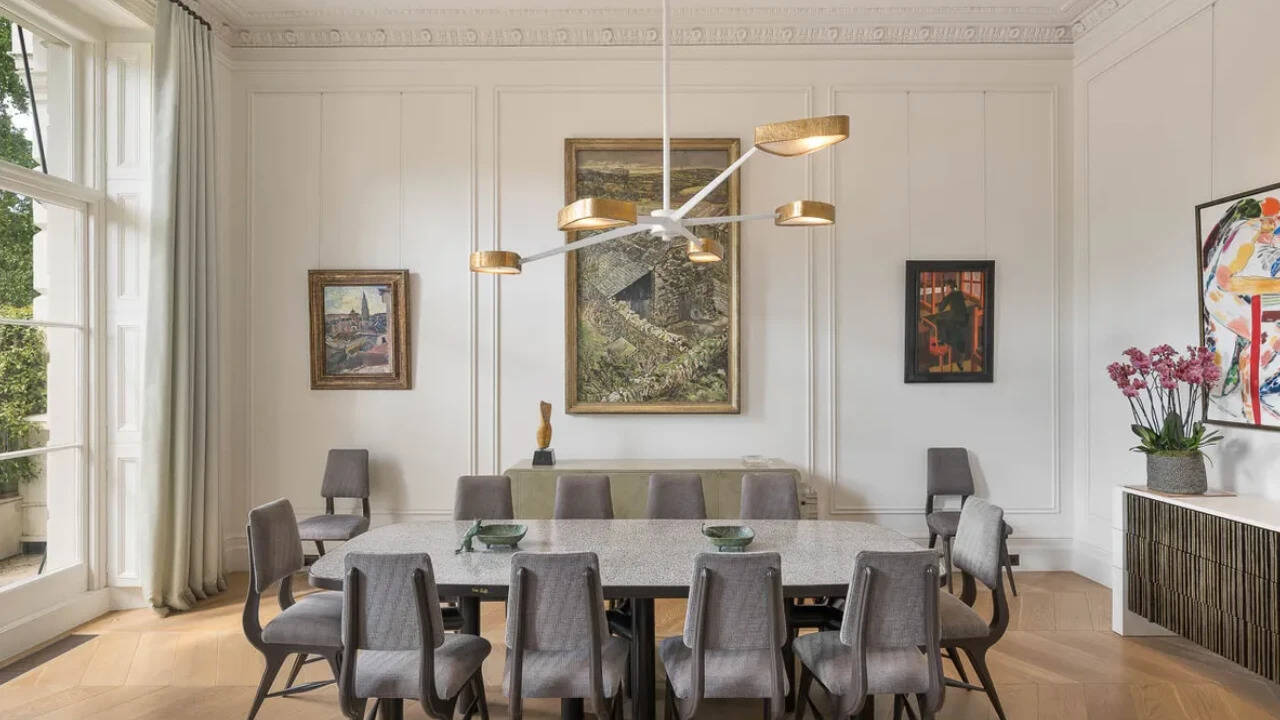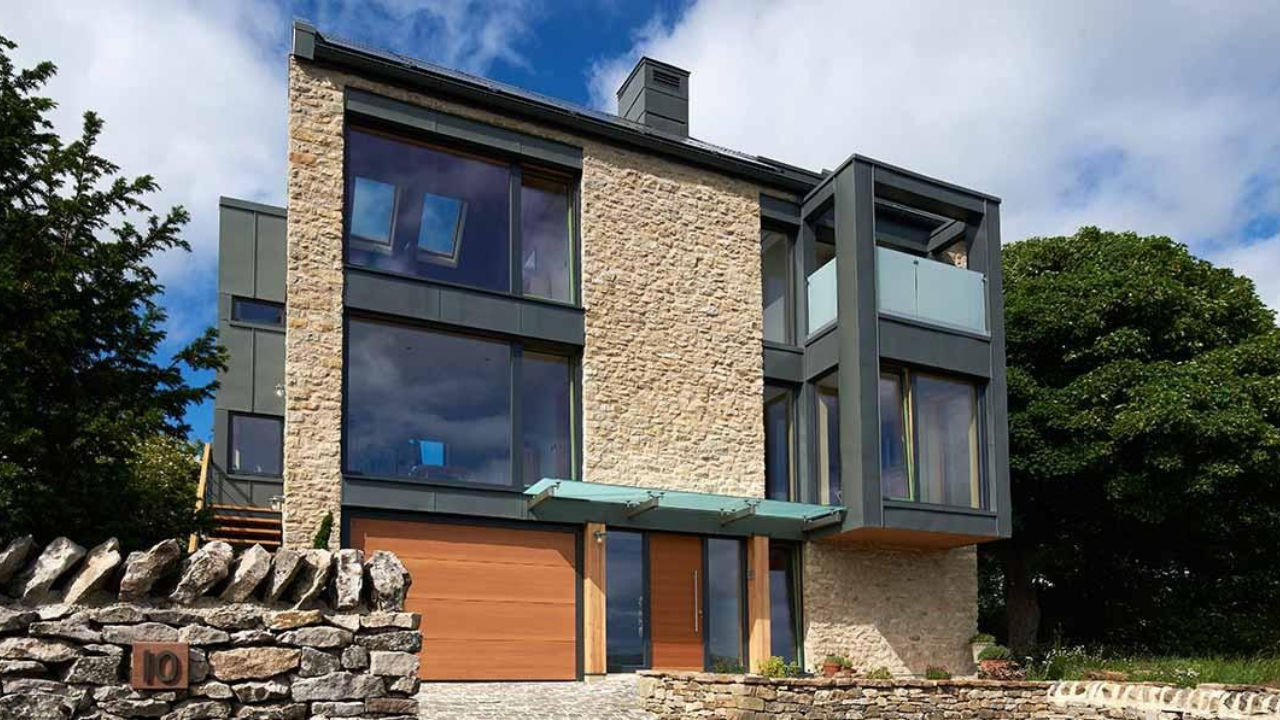
A rural Yorkshire home constructed with straw bale walls in 2018 and listed at £2.75 million exposes a fundamental flaw in residential property valuation: high-asking-price sustainable builds rarely price like standard brick-and-mortar houses because land value, bespoke architectural execution, and non-standard construction risk interact in non-linear ways. When an article headlines a straw-bale home listed for £2.75 million without a missing URL or full text to inspect, the analytical task is not to guess unwritten anecdotes or invent unverified appraisal figures. Instead, the blueprint requires deconstructing the headline's core tension—how an agricultural byproduct wall system sits inside an upper-tier rural property listing—and building a rigorous analytical model covering four mechanisms: the Valuation Split between land and structure, the Envelope Physics and Moisture Risk of straw bale construction, the Liquidity and Lending Friction of non-standard builds, and the Operational Execution Steps required to underwrite or position such an asset.
Deconstructing Competitor Logic Without Inventing Facts
Human-interest property coverage typically relies on a simple narrative arc: an unconventional material choice, a multi-year self-build or custom project timeline, a dramatic visual reveal, and a headline asking price that signals aspirational value. That framing treats the asking price as proof that eco-materials automatically command prime real estate multiples. In practice, an asking price is an entry hypothesis set by a seller and marketing agent, not an adjudicated market clearing price.
Because the competitor reference provides only a title—"Yorkshire couple's straw-bale home, built in 2018, now listed for £2.75 million"—and an undefined URL, any specific room counts, plot acreages, utility setups, or sale histories not stated in the prompt remain unverified facts. Treating unstated details as known facts corrupts analysis. A disciplined analyst separates three distinct layers:
- Established anchor facts from the prompt: The property is located in Yorkshire, incorporates straw bale construction, reached completion or listing readiness in 2018, and carries a £2.75 million asking figure.
- Structural mechanisms of the asset class: How rural amenity land, planning permissions, vapor-permeable wall assemblies, mortgage underwriting rules, and high-net-worth buyer preferences behave in the UK market.
- Educated hypotheses requiring verification: Whether the £2.75 million figure is anchored predominantly by scarce rural land and outbuildings, whether the straw bales serve as primary load-bearing walls or non-structural infill within a timber frame, and whether the eight-year window since 2018 has already tested weather-tightness and thermal performance through multiple winters.
The competitor narrative misses the primary cause-and-effect chain governing price realization. A £2.75 million rural listing in Yorkshire sits well above typical regional median house prices, placing the asset in a thinner buyer pool where lifestyle amenities, privacy, and architectural coherence often carry heavier weight than wall composition alone. At the same time, non-standard construction narrows the pool of mainstream mortgage lenders, meaning a high asking price can collide with financing friction even when physical build quality is sound.
The Four Pillars of High-Ticket Straw Bale Economics
Evaluating a £2.75 million straw-bale property requires separating emotional novelty from the underlying economic and physical variables. Four structural pillars govern how value is created, preserved, or discounted.
The Valuation Split Between Land, Amenity, and Structure
In high-value rural real estate, hedonic pricing theory treats a property as a bundle of distinct attributes rather than a single homogeneous widget. When a home reaches the £2.75 million tier in a rural county like Yorkshire, the valuation rarely rests on wall insulation alone. Buyers at this price bracket weigh plot size, view corridors, privacy, agricultural or equestrian potential, proximity to transport nodes or market towns, and the quality of ancillary buildings or landscaping.
Straw bale construction influences the structural portion of that bundle, not the surrounding topography. If a property sits on a generous rural parcel with high amenity value, the land and setting can anchor a multi-million-pound price even if buyers view the bespoke wall system as an acquired taste. Conversely, if a straw bale home sits on a modest plot in an area where comparable conventional homes sell for a fraction of £2.75 million, asking a prime price forces the architecture to carry an immense premium over local comparables.
A second limitation of headline asking prices is the gap between list price and realized transaction price. In bespoke or unconventional segments with few direct comparables, sellers often test wide price bands early in marketing because there is no dense ledger of identical straw-bale sales down the road to anchor an appraisal.
Envelope Physics and Long-Term Moisture Discipline
Straw bale walls work thermally because compressed cereal straw traps still air pockets, providing high insulation value when properly densified and protected. In building science, however, thermal resistance is only half of envelope performance; hygrothermal control—managing heat, air, and moisture movement across the wall assembly—determines whether the structure endures or degrades.
Straw is an organic bio-based material. Left exposed to bulk water intrusion, wind-driven rain through render cracks, rising damp from inadequate plinth detailing, or interstitial condensation caused by poorly matched vapor barriers, straw can retain moisture, lose insulating efficiency, and suffer fungal decay or pest activity. Well-executed straw bale assemblies rely on sacrificial or breathable finishes such as lime or clay plasters, generous roof overhangs, elevated foundations above splash zones, and strict detailing around window and door openings.
An eight-year operating window since 2018 provides a meaningful diagnostic checkpoint rather than a permanent guarantee. Eight winters in Northern England are long enough to reveal gross execution errors—such as poor roof drainage or unsealed openings—yet still relatively early in the multi-decade service life expected of a serious residence. Over-claiming durability from an eight-year mark is an analytical error; ignoring eight years of real-world weathering is an equal mistake.
Lending Friction, Insurance, and Buyer Pool Narrowing
Conventional residential mortgages are built around standardized construction classifications that lenders understand and insure at scale. When a home uses non-standard walling such as straw bales, underwriting complexity rises. Lenders examine structural engineering sign-offs, building control completion records, warranty or architect certificates, and ongoing maintenance requirements.
This creates a direct liquidity mechanism: fewer mortgage lenders willing to lend smoothly on non-standard construction means a smaller pool of finance-dependent buyers. Cash buyers and high-net-worth purchasers face fewer mortgage bottlenecks than buyers reliant on standard high-street lending, which helps explain why multi-million-pound bespoke homes often depend on wealthier buyer segments. Even among affluent buyers, however, personal conviction matters. Some buyers actively seek low-embodied-carbon, breathable, tactile interiors, while others hesitate over perceived resale liquidity or unfamiliar maintenance protocols.
The Cost Function of Bespoke Low-Carbon Building
Bespoke eco-builds frequently confuse media readers because low-cost raw materials—such as agricultural straw bales or local earth plasters—do not automatically produce a low total build cost. The cost function of a custom sustainable home includes architectural design fees, structural engineering, site preparation, foundations, glazing, mechanical and heating systems, specialist trades familiar with natural plasters, and project contingency overruns.
Labor dynamics also behave differently than in volume housebuilding. When a project relies on specialized craftspeople or self-build labor, unit labor productivity is lower than repetitive tract construction, and coordination costs rise. A buyer looking at a £2.75 million asking price is paying for the finished, integrated product and site position as of today, not merely the farm-gate cost of raw bales nearly a decade ago.
Common Misconceptions About Straw Bale Homes
Several recurring assumptions distort public discussion around high-value straw bale properties and deserve direct correction:
- Misconception: Straw bale homes are inherently cheap at every price tier. Raw straw is inexpensive compared to many manufactured insulators, but total project cost depends heavily on land value, foundation engineering, bespoke finishes, glazing, and labor efficiency. High land value and custom design easily push total valuation into upper brackets.
- Misconception: A £2.75 million asking price proves the house has already achieved a £2.75 million market value. Asking prices reflect seller strategy and market positioning. Final valuation depends on buyer demand, comparable evidence, survey findings, and negotiated sale price.
- Misconception: Natural insulation eliminates all maintenance and moisture risk. Breathable wall assemblies require disciplined detailing and periodic inspection of external renders, eaves, and openings. Neglecting water management compromises any bio-based assembly.
- Misconception: Eco-friendly construction automatically guarantees a buyer premium. Sustainability can attract niche demand and lower certain operating costs, but mainstream valuation still anchors on location, layout, condition, and comparable sales.
Operational Playbook for Buyers, Sellers, and Analysts
Turning this framework into action requires a structured sequence rather than guesswork. Whether analyzing the listing from afar, preparing a similar property for sale, or evaluating a purchase, follow this four-step underwriting and positioning sequence.
- Audit the land-to-structure value ratio first. Separate the value of the plot, setting, privacy, and outbuildings from the value of the dwelling itself. Determine how much of the asking price is driven by irreplaceable rural location versus bespoke construction features.
- Verify technical and regulatory documentation. For any straw bale property, examine structural engineering calculations, building control sign-off, roof overhang and damp-proof detailing, and any moisture or thermal survey records. Confirm how water is kept out of the wall core and around openings.
- Stress-test financing and insurance pathways early. Before committing time or capital, check lender appetite for non-standard construction at the target loan-to-value ratio and obtain indicative buildings insurance terms. Identify whether cash funding or specialist underwriting will be required.
- Price and position around the true target buyer. When marketing or valuing an unconventional high-ticket home, anchor the narrative on lifestyle utility, architectural quality, and verified operating performance rather than generic green labels. Avoid assuming that niche appeal automatically expands the buyer pool at higher price points.
Every analytical framework has boundaries. Without full property disclosures, floor plans, energy data, or comparable local transactions, exact valuation precision remains impossible, and market sentiment can shift faster than architectural theory predicts. For anyone positioning or evaluating a high-value non-standard home in this bracket, the decisive strategic move is to underwrite the property as a bespoke rural asset first—proving land scarcity, structural integrity, and clear exit liquidity—and treat low-impact straw bale engineering as a targeted value differentiator for buyers who specifically reward it rather than a universal price multiplier.