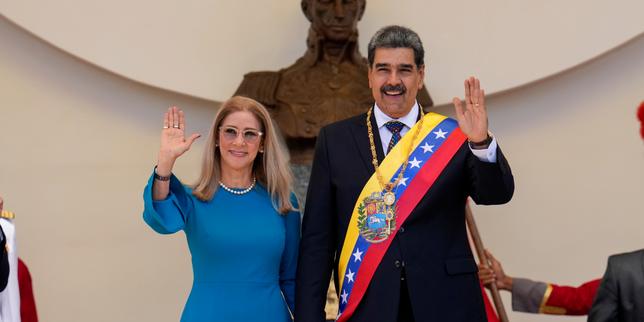
The headlines rolled in with predictable moral outrage. Nicolas Maduro and his wife, Cilia Flores, facing federal charges in a United States court for conspiracy to commit acts of torture. The usual chorus of legal commentators and foreign policy pundits erupted in applause. Another blow for international justice. Another step toward holding the untouchables accountable.
It is a comforting illusion. And it is entirely worthless.
Let us stop pretending that indicting a sitting foreign head of state in a Manhattan courtroom accomplishes anything besides generating press releases for ambitious prosecutors. If you think a federal indictment is going to dislodge a regime entrenched in Miraflores Palace, you do not understand power. You understand PR.
I have watched international legal bodies and Western jurisdictions play this expensive game of make-believe for decades. They issue red notices, seal indictments, and freeze offshore accounts while the actual mechanics of authoritarian survival continue uninterrupted. Worse, this theatrical jurisprudence actively harms the very people it claims to protect.
The Comforting Lie of Extraterritorial Reach
The conventional wisdom dictates that long-arm jurisdiction acts as an effective deterrent. The argument goes that if autocrats know a prison cell awaits them abroad, they will think twice before abusing human rights.
This is fantasy.
Dictators do not calculate their domestic survival strategies based on the nuances of United States federal code. Maduro is not losing sleep over extradition treaties. When a regime's survival depends on maintaining absolute control over the military, the judiciary, and internal security apparatuses, a criminal charge from a foreign magistrate is background noise. In fact, it is a gift.
Autocrats thrive on external enemies. Nothing consolidates domestic loyalty quite like an imperial power filing indictments against the national leadership. It transforms a domestic tyrant into an anti-imperialist resistor in the eyes of the regime's loyalists and the security forces who keep the lights on. Every time a Western prosecutor files charges against a foreign leader who is safely sitting behind a wall of Kalashnikovs, they hand that leader a propaganda victory on a silver platter.
The Misunderstanding of Sovereignty and Force
To understand why these indictments are dead on arrival, you have to look at how international power actually operates. Sovereignty is not a moral concept; it is a monopoly on violence within a defined territory.
When the Department of Justice files a charging document against Maduro, it operates on a legal fiction: that a court order has moral gravity even when it lacks physical enforcement capacity. It treats international politics like a domestic civil dispute where a bailiff can eventually enforce a judgment.
It cannot. Without an invading army or a successful internal coup, an indictment is just ink on paper. And unless Washington is prepared to launch a full-scale military intervention in Caracas—an outcome political leaders on both sides of the aisle know is a non-starter—that indictment is nothing more than a symbolic gesture paid for by taxpayers.
The defenders of these legal maneuvers argue that even if Maduro never sits in a federal dock, the indictment restricts his movement, limits his access to the global financial system, and brands him an international pariah.
Let us look at the reality of that claim. Maduro is already the head of a sanctioned state. He does not vacation in Miami. He does not hold checking accounts at Chase Manhattan. The financial restrictions argument assumes a level of globalization integration that isolated autocrats long ago learned to bypass through illicit gold trades, crypto networks, and sympathetic state sponsors like Iran, Russia, and Cuba.
The Cost of Performative Justice
Performative justice is not just harmless theater; it has a real human cost.
When Western governments invest diplomatic capital and judicial resources into symbolic prosecutions, they siphon attention away from messy, difficult, ground-level diplomacy. Sanctions and sealed indictments become a substitute for a strategy. They allow politicians to signal moral purity while avoiding the hard compromises required to negotiate humanitarian corridors, secure the release of actual political prisoners, or support localized democratic opposition movements that are doing the dangerous work on the ground.
We treat legal actions as foreign policy. They are not. They are a cop-out.
Imagine a scenario where a corporate executive relies on filing lawsuits against a hostile competitor instead of building a better product, fixing their supply chain, or competing in the market. That company goes bankrupt. Yet, in foreign policy, we praise governments for filing lawsuits against dictators they refuse to physically confront, calling it statecraft.
What Real Accountability Looks Like
If we are serious about human rights and the rule of law, we need to abandon the conceit that Western courtrooms are the arbiters of global behavior.
Real accountability is unglamorous. It involves tedious intelligence-gathering, meticulous tracking of illicit financial flows that actually pinch regime insiders, targeted support for investigative journalists inside authoritarian states, and pragmatic, often unsavory negotiations that prioritize the immediate safety of dissidents over the moral vanity of foreign judges.
The next time you read about a sweeping federal indictment against a foreign dictator, do not ask how many counts of torture are listed in the charging document. Ask a simpler question: Does this action bring a single political prisoner closer to freedom, or does it just help a Western prosecutor look tough on the evening news?
Until we are willing to answer that honestly, these indictments will remain what they have always been: expensive fiction written for an audience that prefers the illusion of justice to the messy reality of power.



