The Pipe Dream of Domestic Biomethane
The tech media is buzzing with a familiar, lazy narrative. Headlines claim that scientists have finally solved the problem of running kitchen stoves on pure methane or bio-methane harvested from waste. They paint a cozy picture of a green, circular economy where your dinner is cooked using gas captured from a local landfill or a wastewater plant.
It is a comforting story. It is also a dangerous lie.
The mainstream consensus treats methane adaptation as a simple plumbing and engineering problem. Fix the burner valves, optimize the pressure, change the nozzle size, and presto—you have a sustainable kitchen. Having spent over a decade evaluating energy infrastructure and watching municipal greenwashing projects swallow millions of dollars, I can tell you the problem isn't the burner. The problem is the molecule itself, the crumbling infrastructure beneath our feet, and the stubborn physics of indoor air quality.
Trying to save the residential gas stove by switching to biomethane is like trying to save the typewriter by designing a better ribbon. It misses the entire point of where energy technology is moving, and it ignores the brutal realities of chemical thermodynamics.
The Infrastructure Illusion
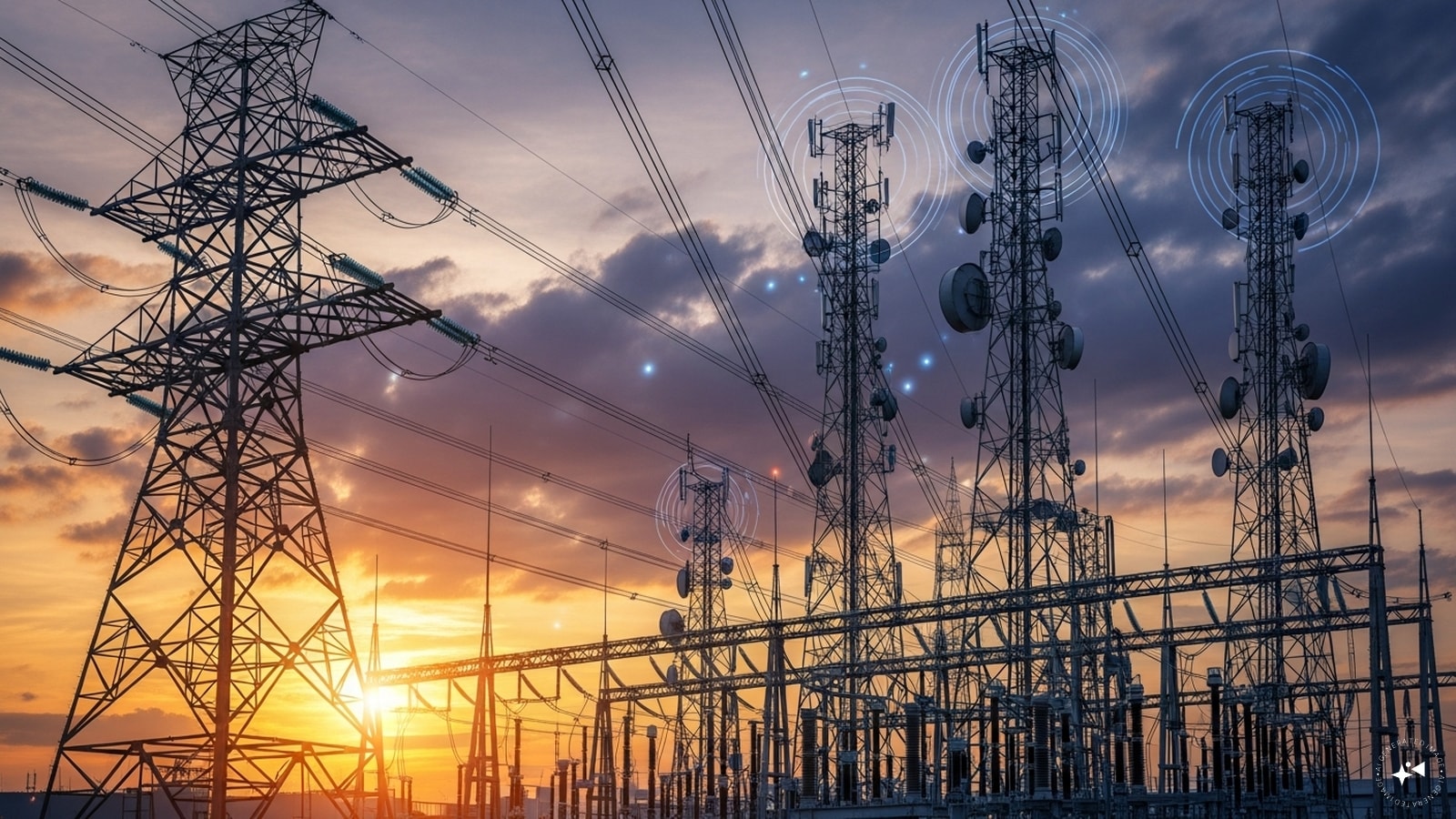
The core argument for domestic methane utilization relies on a massive blind spot: the assumption that our distribution networks can handle it safely without massive environmental blowback.
When media outlets report on "solving the methane stove problem," they focus exclusively on the point of combustion. They tell you the flame burns cleaner now. What they do not tell you is what happens during the journey from the source to your kitchen counter.
Landfill/Digester ➔ Compression ➔ Main Pipelines ➔ City Gates ➔ Home Meter ➔ Stove Valve
                                      ▲
                        (Massive Fugitive Leakage Points)
Methane is a hyper-potent greenhouse gas. Over a 20-year timescale, its global warming potential is more than 80 times greater than carbon dioxide. Our current pipeline infrastructure is a sieve.
The Math of Fugitive Emissions
Let's look at the actual data that the hype cycles ignore. Research from groups like the Environmental Defense Fund and studies published in Environmental Science & Technology have consistently shown that natural gas distribution systems leak between $1.5%$ and $3%$ of their total throughput before it ever reaches an end-user.
If you replace fossil gas with biomethane, those leak rates do not magically drop to zero. In fact, because biomethane production is often decentralized (scattered across thousands of small dairy farms, food waste digesters, and sewage plants), you exponentially increase the number of connection points, valves, and low-pressure pipelines.
Imagine a scenario where we scale this up nationwide. You aren't building a clean energy network; you are building a massive, decentralized methane-venting machine. If a biomethane system leaks just $2.5%$ of its volume during production and transport, the net climatic benefit over burning conventional fossil fuels evaporates completely. The industry knows this, but they keep pushing the "green gas" narrative to justify keeping their pipelines in the ground.
The Chemical Reality of Your Kitchen Air
Let's move past the climate math and talk about your lungs. The current debate frames methane as a "clean" alternative to coal or oil. Inside a laboratory, under perfect stoichiometric conditions, methane ($CH_4$) reacts with oxygen ($O_2$) to produce carbon dioxide ($CO_2$) and water vapor ($H_2O$).
$$CH_4 + 2O_2 \rightarrow CO_2 + 2H_2O$$
But your kitchen is not a sterile laboratory.
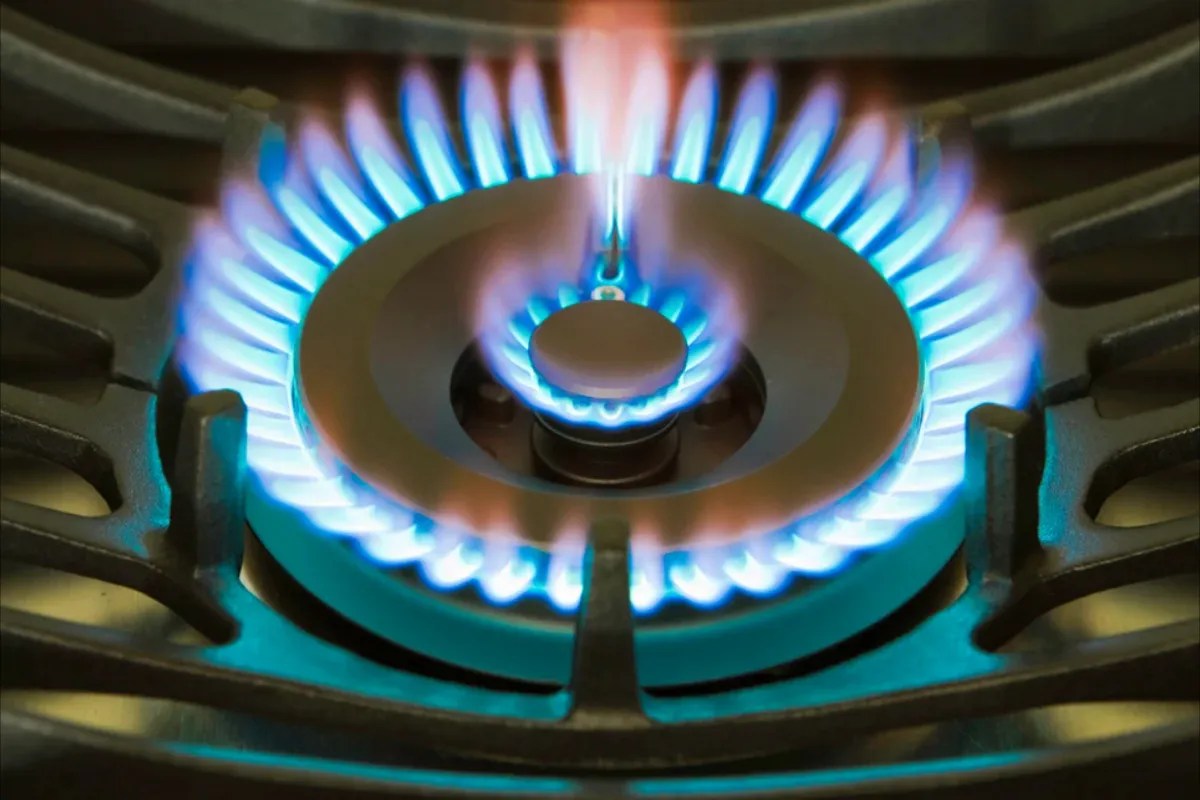
When you open a valve and ignite a gas stove, the combustion is never perfectly efficient. The burner operates in an open room with fluctuating airflow, ambient humidity, and variable fuel purity. This imperfect combustion produces a toxic cocktail of secondary pollutants:
- Nitrogen Dioxide ($NO_2$): Formed when the intense heat of the flame causes ambient nitrogen and oxygen in the air to bond.
- Carbon Monoxide ($CO$): A direct byproduct of incomplete hydrocarbon combustion.
- Fine Particulate Matter ($PM_{2.5}$): Microscopic soot particles that penetrate deep into lung tissue.
- Benzene: A known carcinogen that recent Stanford University studies found leaking from gas stoves even when they are turned completely off.
Switching the source of the methane from a fossil fuel well to a wastewater treatment plant does absolutely nothing to alter this chemistry. The flame temperature remains high enough to generate $NO_2$. The combustion dynamics still produce $PM_{2.5}$. Your kids are still breathing in concentrations of indoor air pollution that would violate federal outdoor air quality standards within minutes of you boiling a pot of water.
The scientific "breakthroughs" claiming to optimize methane burners are just rearranging deck chairs on the Titanic. They make the flame marginally more stable while ignoring the fact that burning any hydrocarbon inside an enclosed living space is an public health disaster.
Dismantling the "People Also Ask" Delusions
If you look up the viability of green gas stoves, you find a string of fundamentally flawed assumptions. Let's dismantle them one by one.
"Can we just blend biomethane into existing gas lines?"
This is the favorite talking point of utility monopolies. They propose blending $10%$ to $20%$ biomethane or hydrogen into existing natural gas streams to "lower the carbon intensity."
This strategy is a financial scam masquerading as environmental stewardship. Blending low concentrations of alternative gases does not change the infrastructure requirements. You still need the same high-pressure lines, the same regulators, and the same home appliances. More importantly, it drives up the cost of the fuel drastically. Biomethane is fundamentally more expensive to capture, refine, and compress than drilling for cheap shale gas. You are asking consumers to pay a massive premium for a fuel mix that is still $80%$ fossil fuel and still leaks into the atmosphere.
"Isn't biogas carbon neutral because it comes from organic waste?"
On paper, yes. In reality, the accounting is fraudulent. When you create an economic incentive for biogas production, you alter upstream behavior.
Look at what happened in Europe with liquid biofuels: instead of using actual waste, agricultural systems shifted to growing energy crops specifically to feed digesters. This drives deforestation, intensifies chemical fertilizer use, and distorts food markets. True organic waste streams (like sewage sludge and unavoidable food waste) are highly localized and limited in volume. There is simply not enough authentic waste in the world to replace even $15%$ of current residential gas demand. Anyone telling you otherwise is selling you a fairy tale built on creative carbon accounting.
The Industrial Sabotage of Induction Technology
The absolute funniest part of the frantic scientific scramble to "fix" methane stoves is that a vastly superior, highly mature technology already exists and dominates everywhere except in the minds of legacy gas executives: induction.
Gas advocates love to stir up cultural panic about losing the precision of a gas flame. "Professional chefs only use gas," they claim. That was true twenty years ago. Today, high-end commercial kitchens are rapidly ripping out gas lines in favor of commercial induction cooktops.
| Feature | Methane/Biomethane Stoves | Modern Induction Cooktops |
|---|---|---|
| Thermal Efficiency | ~35% to 40% (Most heat escapes into the room) | ~85% to 90% (Direct electromagnetic transfer) |
| Indoor Air Pollution | High ($NO_2$, Benzene, Carbon Monoxide) | Zero |
| Response Time | Instant, but low temperature control precision | Instant, down to the exact degree |
| Ambient Heat Load | Massive (Requires heavy ventilation/AC load) | Negligible |
| Safety Risk | Explosion risk, asphyxiation, open flame burns | No open flame, surface remains cool to touch |
The thermodynamic efficiency numbers alone should end this discussion. When you burn methane on a stove, more than half of the energy generated radiates out into your kitchen, forcing your air conditioning system to work twice as hard to cool the house back down. You are paying to heat the room, then paying again to cool it. Induction bypasses the thermal air barrier entirely by using alternating magnetic fields to excite the iron molecules directly inside the cookware.
The push to adapt methane stoves isn't about giving consumers a better cooking experience. It is a desperate rear-guard action by fossil fuel companies to prevent the electrification of buildings. If they lose the kitchen stove, they lose the hookup line to the house. If they lose the hookup line, they lose the ability to sell you gas for your furnace and water heater. The stove is the emotional anchor holding your home hostage to a 19th-century pipeline network.
Admitting the Friction
Let's be completely honest: moving away from gas isn't frictionless. The contrarian view shouldn't hide the ugly truths.
Upgrading an old home from a gas stove to an induction system frequently requires running a dedicated 240-volt electrical line to the kitchen. If your home's electrical panel is already maxed out at 100 amps, that can mean a full panel upgrade costing thousands of dollars. For lower-income households and renters, this barrier is immense.
But the solution to that economic barrier isn't to spend billions of dollars subsidizing a complex, leaky, decentralized biomethane extraction and distribution network just so we can keep burning gas indoors. The solution is to direct capital away from gas infrastructure entirely and pour it into electrical grid modernization and panel upgrade rebates.
Stop fallings for the romance of the "green flame." The future of cooking isn't a slightly cleaner way to set gas on fire inside your home. The future is an electromagnetic field. Rip out the pipes, seal the vents, and turn off the gas for good.