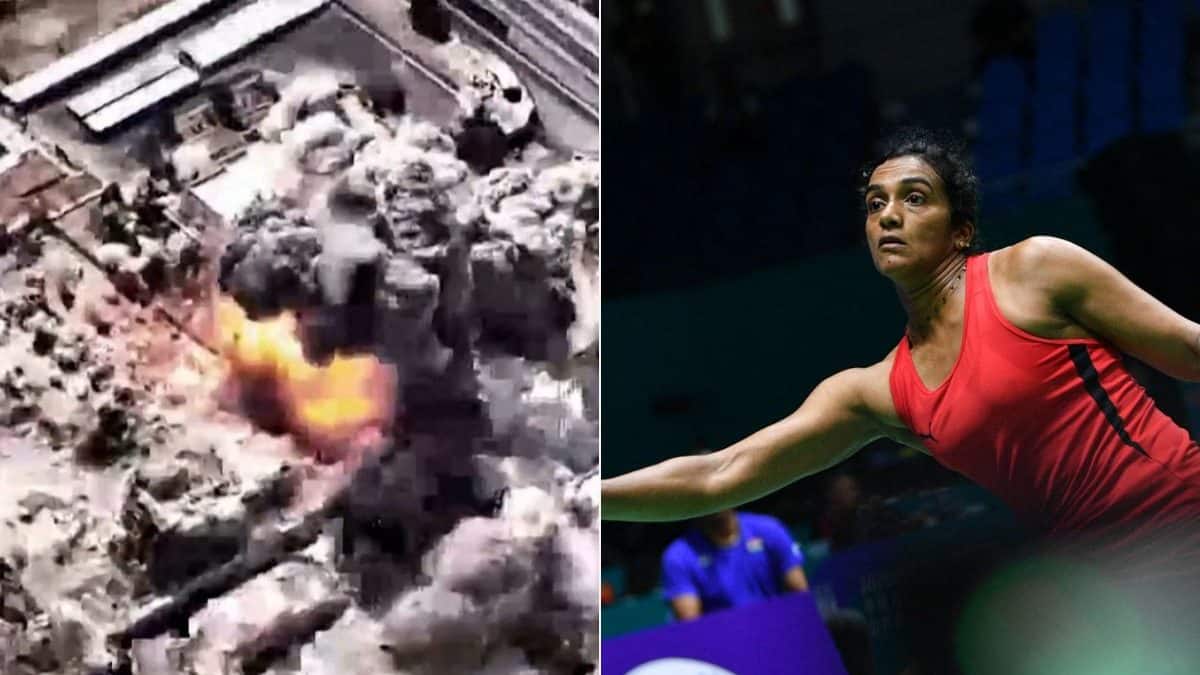
Imagine being one of the greatest athletes in Indian history, sitting in a crowded airport lounge, and suddenly realizing your mentor might be in the middle of a life-threatening security crisis. That’s exactly what PV Sindhu went through at Dubai International Airport. It wasn’t just a delay or a missed connection. It was a high-stakes bomb scare that left the double Olympic medalist shaken.
Sports fans usually see Sindhu as a pillar of composure on the court. She’s the person who stays calm when she's down a match point in a World Championship final. But real-life terror is a different beast entirely. When she recently recounted the details of her coach surviving a massive security alert, it reminded everyone that behind the trophies and the intense training sessions, these athletes deal with the same raw, human fear as the rest of us.
The Moment the Dubai Airport Scare Turned Real
The incident centered around Sindhu’s coach, who found himself separated and caught in a zone that security officials suddenly locked down. Dubai International is a massive, sprawling labyrinth. It’s one of the busiest hubs on the planet. When a bomb threat is called in, the efficiency of the airport turns into a cold, clinical machine.
Sindhu described the situation as "very frightening." That’s an understatement when you’re watching security teams scramble and you don't know if the person responsible for your career—and your friend—is safe. The coach was stuck in an area where a suspicious package had been identified. For several agonizing minutes, communication was cut off.
We often talk about the pressure of the Olympics. We talk about the physical toll of a grueling three-set match. We don't talk enough about the mental toll of being a global traveler in an era where security threats are a constant, low-humming background noise. For Sindhu, seeing her coach emerge from that "hot zone" wasn't just a relief. It was a wake-up call about how quickly a routine flight can turn into a nightmare.
Why Athlete Safety is More Than Just Bodyguards
This incident isn't just a scary anecdote for a talk show. It highlights a massive gap in how we think about elite sports travel. Most people think top-tier athletes like Sindhu live in a bubble of private jets and VIP lounges. That’s a myth.
While they get some perks, international badminton players are essentially professional nomads. They spend more time in airports than they do in their own living rooms. They navigate public terminals, wait at standard gates, and deal with the same chaotic logistics as any holiday traveler.
When a security event like a bomb scare happens, the "celebrity" status of an athlete doesn't provide a shield. If anything, it makes them more vulnerable because they’re recognizable targets in a crowded space. Sindhu’s experience shows that even with a support team, you're at the mercy of the environment.
The Psychological Aftermath of Near Misses
You can't just "shake off" a bomb scare and go play a tournament the next day. The nervous system doesn't work that way. When your "fight or flight" response is triggered by a genuine threat of an explosion, it lingers.
Badminton is a game of millimeters and split-second reactions. If your brain is still processing the sight of armed security personnel cordoning off your coach, your focus on the shuttlecock is going to waver. I’ve seen athletes struggle for months after much smaller travel mishaps. This level of stress creates a cortisol spike that can wreck sleep patterns and recovery for weeks.
Sindhu’s willingness to speak openly about the "frightening" nature of the event is actually a sign of her strength. She isn't trying to act "tough" or pretend it didn't bother her. By acknowledging the fear, she’s humanizing a sport that often demands robotic perfection.
Security Protocols at Major Hubs Like Dubai
Dubai Airport is famous for its high-tech surveillance and rapid response teams. If you’ve ever walked through Terminal 3, you know the presence of authority is everywhere. But technology has its limits.
- Detection vs. Communication: The system is designed to isolate the threat first and inform the public second. This creates a "black hole" of information for people like Sindhu who are waiting just outside the perimeter.
- The Lockdown Effect: Once a zone is flagged, nobody moves. This is where the panic sets in. Seeing people in uniforms running toward a specific point while you’re told to stay put is a recipe for a panic attack.
- The Human Element: Security staff are trained to be curt and direct. They aren't there to comfort passengers. For an athlete and a coach who are used to being in control of their schedules, this total loss of agency is jarring.
What This Means for the Future of Team Travel
If you’re a sports federation or a manager, you should be looking at this incident with a notebook in hand. We need better contingency plans for when travel goes sideways.
It’s not enough to book a flight and a hotel. Teams need protocols for "lost communication" scenarios in foreign hubs. They need mental health support that specifically addresses travel trauma. Sindhu’s coach survived the scare physically, but the mental recovery is a different story.
We also need to stop assuming that "no news is good news." During the Dubai scare, the lack of immediate info was what fueled the terror. In 2026, there’s no excuse for a team not to have a centralized "check-in" system that works even when airport Wi-Fi or cellular service is spotty.
Moving Forward From the Scare
PV Sindhu is already back to work. That’s what champions do. But don’t think for a second that those moments in Dubai haven't changed her perspective on the road. She’s seen how fragile the routine of a professional athlete really is.
Next time you see a highlight reel of a cross-court smash or a podium celebration, remember the Dubai airport. Remember that these stars are navigating a world that is increasingly unpredictable. They aren't just fighting opponents on the court; they’re navigating the same chaotic, sometimes terrifying world we all inhabit.
Keep your emergency contacts updated on your phone and always have a designated "meeting point" if you’re traveling in a group through a major hub. It sounds paranoid until you’re the one standing behind a security line, watching the police move in. Stay aware, keep your gear close, and never take a boring, "uneventful" flight for granted.