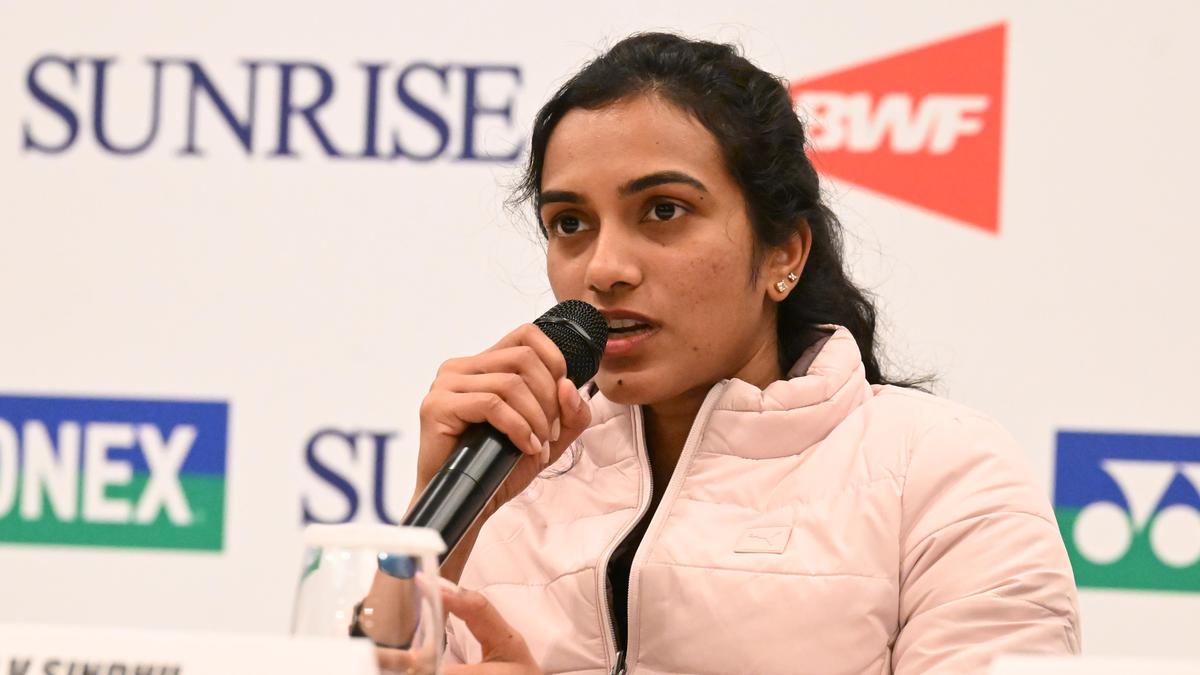
On February 26, 2026, the world of badminton held its collective breath as news broke of a massive explosion in the vicinity of Dubai International Airport. For most, it was a terrifying headline about a global transit hub. For Indian badminton icon PV Sindhu, it was a brush with mortality that exposed the fragile reality of the modern sporting circuit. Sindhu, who was in the city for a promotional event and training stint, found herself caught in the immediate aftermath of a blast that shattered windows and sent a shockwave through one of the most heavily guarded cities on earth.
The incident was more than a momentary scare. It was a stark reminder that elite athletes are essentially high-value assets moving through a world that is becoming increasingly volatile. While the media initially focused on the "tense and scary" nature of her social media updates, the deeper story lies in the logistical nightmare of athlete security and the lack of standardized protocols for non-tournament travel. Sindhu's ordeal highlights a systemic gap in how national federations and private sponsors manage the safety of their stars when they aren't under the official umbrella of an Olympic or World Championship committee.
The Dubai Blast and the Illusion of Safety
Dubai has long cultivated an image of impenetrable security. It is the playground for the sporting elite, a place where Roger Federer, Cristiano Ronaldo, and the titans of badminton frequently retreat for off-season training. When the explosion occurred near the airport’s industrial perimeter, that image cracked.
Sindhu described the sensation of the ground shaking and the subsequent chaos as security forces swarmed the area. This wasn't a controlled environment. There were no team managers or government-appointed security detail at her side. She was, for all intents and purposes, a private citizen in a crisis zone. The "frightening ordeal" she revealed on social media wasn't just about the noise or the smoke; it was the sudden realization that even a double Olympic medalist is vulnerable when the infrastructure of a modern city fails.
Why Athlete Protection Ends at the Terminal
In the current sporting ecosystem, responsibility for an athlete's safety is fragmented. When PV Sindhu represents India at the Thomas & Uber Cup or the Asian Games, she is flanked by a contingent of officials. There are risk assessments, secure transport lanes, and designated safe zones.
However, the modern athlete is a brand that never sleeps. Between major tournaments, they travel for:
- Endorsement shoots and commercial appearances.
- Specialized training at private academies.
- Medical consultations and rehabilitation.
- Charity galas and diplomatic functions.
During these windows, the "protection" usually boils down to a personal assistant or a local driver. In Sindhu's case, the Dubai trip was a mix of brand building and training. Had the explosion been part of a larger coordinated effort, the response would have been reactive rather than proactive. We are seeing a shift where the personal risk for athletes is outstripping the security measures provided by their management teams.
The Economics of Risk in Professional Badminton
Badminton is a sport of grueling travel. Unlike tennis, where the "Big Three" often traveled via private jets and stayed in secluded villas, even the top tier of badminton players—including Sindhu, Viktor Axelsen, and An Se-young—frequently use commercial hubs like Dubai, Singapore, and Doha as their primary transit points.
Every time a player of Sindhu's stature walks through a public airport terminal, they are a recognizable target. The explosion in Dubai was an external event, but it forced a conversation about the "Duty of Care" that sponsors and federations owe to players. If a player is in Dubai on a sponsor's dime to film a commercial, who is liable if a security crisis occurs?
The Missing Protocol
Currently, there is no universal "Crisis Response Plan" for individual athletes. Most management agencies focus on the contract: the payout, the deliverables, and the social media reach. Very few conduct a rigorous geopolitical risk assessment before booking a five-day training camp in a foreign city.
The Dubai incident proves that "safe" cities are a moving target. To fix this, the industry needs to move toward a model used by high-level corporate executives. This includes:
- Real-time intelligence monitoring: Access to localized security feeds and threat levels.
- Exclusion zones: Pre-vetted routes and accommodation that are not just "luxury" but "defensible."
- Extraction plans: Pre-arranged private transport that can bypass public infrastructure like airports during a lockdown.
Beyond the Headlines of Terror
The psychological toll on Sindhu cannot be ignored. Elite performance requires a "bubble" of mental focus. When that bubble is burst by the literal vibration of an explosion, the recovery isn't just physical. It’s about the lingering anxiety of the next flight, the next hotel lobby, and the next crowd.
We often treat athletes as gladiators who are immune to the stresses of the real world. Yet, Sindhu’s candid admission that the experience was "frightening" serves as a rare moment of transparency. It strips away the polished veneer of the champion and shows the human cost of a career spent out of a suitcase.
The Counter-Argument: Is it Over-Reaction?
Skeptics might argue that Sindhu was simply "near" an event and that thousands of others faced the same risk. This misses the point of specialized risk. A high-profile athlete attracts crowds. In a crisis, a crowd becomes a liability. If Sindhu is recognized in a panicked terminal, she becomes a focal point for the chaos, potentially hindering her own escape or drawing unwanted attention to a specific area.
Her security is not just about her life; it is about the management of public order in her immediate vicinity. The "tense and scary" moments she described are a byproduct of a world where the line between a sporting icon and a target is dangerously thin.
The Logistics of Elite Travel Reimagined
If the sporting world is to learn from the Dubai explosion, the change must start with the Badminton World Federation (BWF) and national bodies like the Badminton Association of India (BAI). There is a tendency to view off-season travel as "personal time." This is a legal fiction. A player’s value is tied to their physical and mental health 365 days a year.
Professionalizing the Off-Season
- Federation Oversight: Even for private trips, athletes should be required to log their itinerary with a central security desk at their national federation.
- Sponsor Liability: Contracts must include clauses for "active security" rather than just "travel and lodging."
- Digital Footprint Management: The common practice of posting real-time "stories" on Instagram allows anyone to track an athlete’s exact location. Management teams must enforce a "delay-post" rule to ensure the athlete has left the location before the public knows they were there.
Sindhu’s ordeal was a warning shot. The explosion was not aimed at her, but the chaos it caused could have ended her career just as effectively as an injury on the court.
The Reality of the Global Circuit
The reality is that badminton is a global game played in markets that are often subject to sudden shifts in stability. From the bustling streets of Jakarta to the skyscrapers of Dubai, the athletes are the face of the sport. They are its greatest marketing tool and its most vulnerable participants.
We are entering an era where a "good" manager isn't just someone who negotiates a six-figure shoe deal. A good manager is now someone who understands the distance between a hotel and the nearest embassy. They need to know which airports have the fastest clearing times and which cities have the most reliable emergency services.
The Dubai incident was a fluke of timing, but it was also a test of the support systems surrounding India’s greatest female athlete. By her own account, she was shaken. In a world of increasing volatility, being "shaken" is a luxury we can no longer afford to ignore. The next time an athlete is caught in the crossfire of a regional crisis, the story might not end with a "relieved" social media post.
The sporting industry must decide if it is going to continue gambling on the "it won't happen to us" strategy or if it will finally invest in the physical safety of the people who generate its billions. PV Sindhu got lucky in Dubai. Luck is not a security strategy.
Every athlete traveling today should look at their itinerary and ask one question: who is coming to get me if the world stops moving?