Silence in the mountains rarely means peace. Before dawn breaks over the rugged ridges of Khyber Pakhtunkhwa, the air turns so cold it stings the back of your throat, carrying the faint scent of woodsmoke and wet limestone from the valleys below. For the families sleeping behind mud-brick walls in the border districts, morning usually begins with the low murmur of the call to prayer and the clatter of brass teapots.
They do not hear the boots shifting on loose shale three miles away. They do not hear the static hiss of encrypted radios, or the sharp, metallic click of a safety catch being released in the dark.
When a news wire pushes out a three-line dispatch stating that the Pakistani military neutralized ten militants and foiled a major terrorist plot, the world reads it over morning coffee and scrolls past. Ten. It is a clean, round number. Easy to digest. Completely devoid of texture.
But numbers are a terrible way to measure a bullet that was never fired.
To understand what actually happened in the dark hours of that intelligence-based operation, you have to strip away the sterile vocabulary of press releases. You have to look at the invisible architecture of a thwarted conspiracy, the geography of fear along the Durand Line, and the ordinary lives that continued uninterrupted precisely because a handful of men walked into the dark to stop a clock from reaching zero.
The Anatomy of an Invisible Threat
Consider a hypothetical morning in a district headquarters like Bannu or North Waziristan. Call him Tariq, a secondary school teacher who rides a battered 70cc motorcycle six miles down a single-lane road every day to teach mathematics. Tariq’s life is governed by small, predictable routines—checking the tire pressure before sunrise, buying flatbread from the same roadside tandoor, worrying about whether the monsoon rains will wash out the culvert near his village.
Tariq does not know that forty-eight hours earlier, in a cramped compound tucked into a blind canyon, ten men were assembling the components to shatter his routine forever.
A major terrorist plot does not materialize out of thin air. Security analysts and counter-insurgency veterans know that an operation involving ten armed operatives represents weeks, sometimes months, of logistical preparation. Think of a militant cell not as a lone wolf, but as a machine built from interlocking gears. One gear handles reconnaissance, mapping the blind spots of local checkpoints. Another secures safe houses, relying on coercion or frayed tribal loyalties. A third moves cash, detonators, and heavy weaponry across porous mountain passes where borders exist on maps in Islamabad and Kabul, but rarely on the ground.
When intelligence agencies intercept the chatter of a cell that size, they are not looking at a random skirmish. They are looking at an impending shockwave. Ten well-armed insurgents operating in coordination possess the firepower to overrun a remote police post, ambush a supply convoy, or detonate a vehicle-borne explosive in a crowded bazaar.
The math is brutal. Ten attackers, if left unchecked until they reach a populated center, can easily claim dozens of civilian lives in less than fifteen minutes.
Walking Into the Dark
People often imagine counter-terrorism as a high-tech chess match played from air-conditioned command centers, all satellite feeds and surgical drone strikes. That is a comforting myth. In the jagged terrain of northwestern Pakistan, where deep ravines swallow radio signals and thick juniper scrub hides movement from thermal cameras, intelligence only gets you to the edge of the valley.
Someone still has to walk down into the dark.
I remember speaking years ago with a retired major who spent a decade commanding frontier scouts along the western border. He told me that the hardest part of an intelligence-based operation isn't the firefight itself; it is the final five hundred meters before the first shot is fired. You are moving through terrain the enemy knows by heart. Every dry twig sounds like a rifle crack. Every shadow behind a boulder could be a spotter with an RPG.
"You carry forty pounds of gear," he said, rubbing the bridge of his nose as if he could still feel the dust, "and a hundred pounds of doubt. Because if your intelligence is off by two hundred yards, you aren't the hunter anymore. You're the target."
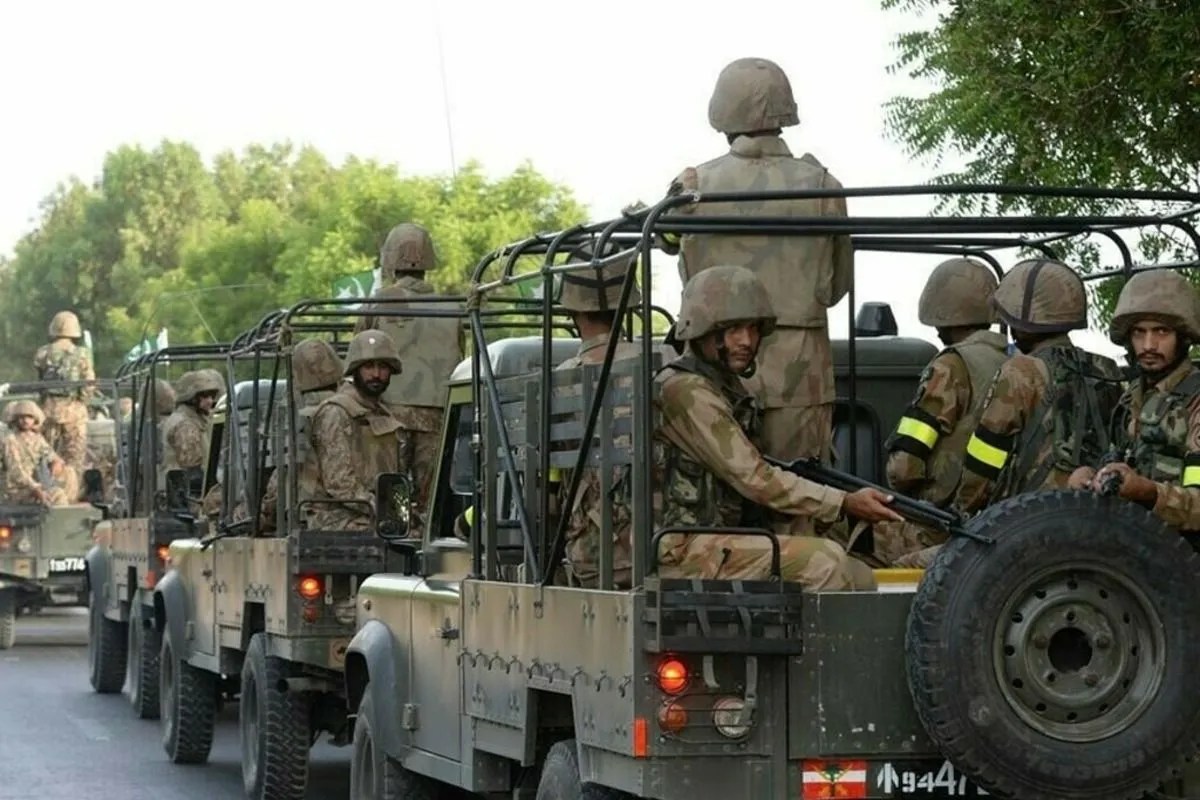
In this latest operation, the Inter-Services Public Relations confirmed that troops engaged the militants effectively at their hideout, recovering a cache of weapons, ammunition, and explosives. Behind that single sentence lies an intense, close-quarters exchange where hesitation is fatal. Militants cornered in mountainous redoubts rarely surrender; they fight with the desperate ferocity of men who have already written themselves off.
When the gunfire finally echoed off the canyon walls and died away, ten operatives were dead. The weapons cache—rifles, grenades, and the raw materials for improvised explosive devices—was seized before it could ever be loaded onto the back of a pickup truck heading toward a city center.
Why the Border Never Truly Sleeps
To understand why these operations keep happening—and why this specific plot matters—you have to step back and look at the broader historical current pulling at the region.
For over two decades, Pakistan’s northwestern frontier has been the anvil upon which regional geopolitics has been hammered. Following the geopolitical shifts in neighboring Afghanistan in 2021, security analysts warned of a dangerous vacuum. Groups like the Tehreek-e-Taliban Pakistan, or TTP, along with various splinter factions, found renewed breathing room across the border.
It is an uncomfortable truth that many observers prefer to gloss over: militant networks thrive on ambiguity. They exploit ungoverned spaces, economic desperation, and the historical grievances of borderland communities that have felt neglected by distant capitals for generations.
Over the past two years, Pakistan has faced a sharp, documented uptick in militant attacks, particularly targeting law enforcement and security personnel in Khyber Pakhtunkhwa and Balochistan. According to independent conflict monitors like the Pakistan Institute for Conflict and Security Studies, hundreds of lives have been lost in a grinding war of attrition. Every week brings another funeral. Another flag-draped coffin. Another village mourning a son who joined the Frontier Corps because it was the only steady paycheck available.
In that context, neutralizing ten insurgents before they execute their plan is not merely a tactical victory. It is a vital disruption of momentum. Militant groups rely heavily on spectacle; a single successful high-profile attack acts as a recruitment poster, proving to their financiers and foot soldiers that they can strike at will. Foiling a plot denies them that oxygen.
The Heavy Cost of Prevention
There is a strange paradox at the heart of successful counter-terrorism. When a bomb goes off, the tragedy is immediate, visible, and undeniable. Cameras rush to the scene. Politicians offer condolences. The world sees the smoke and the grief.
When a plot is stopped in a remote mountain ravine at three in the morning, nothing happens in the city.
The markets open on time. The school buses run their routes. Tariq, our hypothetical math teacher, arrives at his classroom, wipes the chalk dust from his hands, and writes an equation on the blackboard. Nobody in that classroom knows the names of the intelligence officers who spent sleepless weeks piecing together intercepted phone calls, or the soldiers who crawled through freezing scrub to seal the exits of a militant hideout.
You cannot photograph a tragedy that did not occur. You cannot interview the survivors of an ambush that was aborted in the dark.
Yet this invisibility breeds a dangerous complacency. From the safety of distant cities, it is easy to grow numb to the headlines. Another operation. Another ten militants killed. Another stash of weapons recovered. The repetition dulls our sense of urgency, turning a life-and-death struggle into background noise.
Worse still, it tempts us to ignore the deeper roots of the crisis. Military operations, no matter how precise or courageous, are ultimately a tourniquet. They stop the bleeding. They buy time. They cannot, on their own, heal the underlying wound.
As long as young men in the borderlands see no viable economic future, as long as cross-border sanctuaries remain contested and porous, and as long as ideological extremism finds fertile ground in poverty and political marginalization, new cells will eventually form to replace the ones dismantled in the night. Security forces can win every firefight in the mountains, yet the war will only truly end when the villages in the valleys have schools, courts, clinics, and jobs that make militancy obsolete.
Morning in the Valley
Still, you cannot build a school on ground that isn't safe. You cannot pave a road while snipers hold the ridge above it. Everything begins with the hard, unglamorous work of holding the line.
By the time the sun finally cleared the eastern peaks over Khyber Pakhtunkhwa, the smoke in the ravine had already dissipated into the thin mountain air. A recovery team was cataloging the seized rifles and explosives, bagging evidence that would soon be fed back into the intelligence machine to trace the network's remaining threads.
Down in the valley, the mist was lifting off the terraced fields. Smoke curled lazily from clay chimneys as women baked the morning bread. A boy led two goats along the edge of a dry riverbed, whistling a tune that carried faintly up the slope.
Down the road, the bell rang at the local school, and the doors swung open to let the children inside.