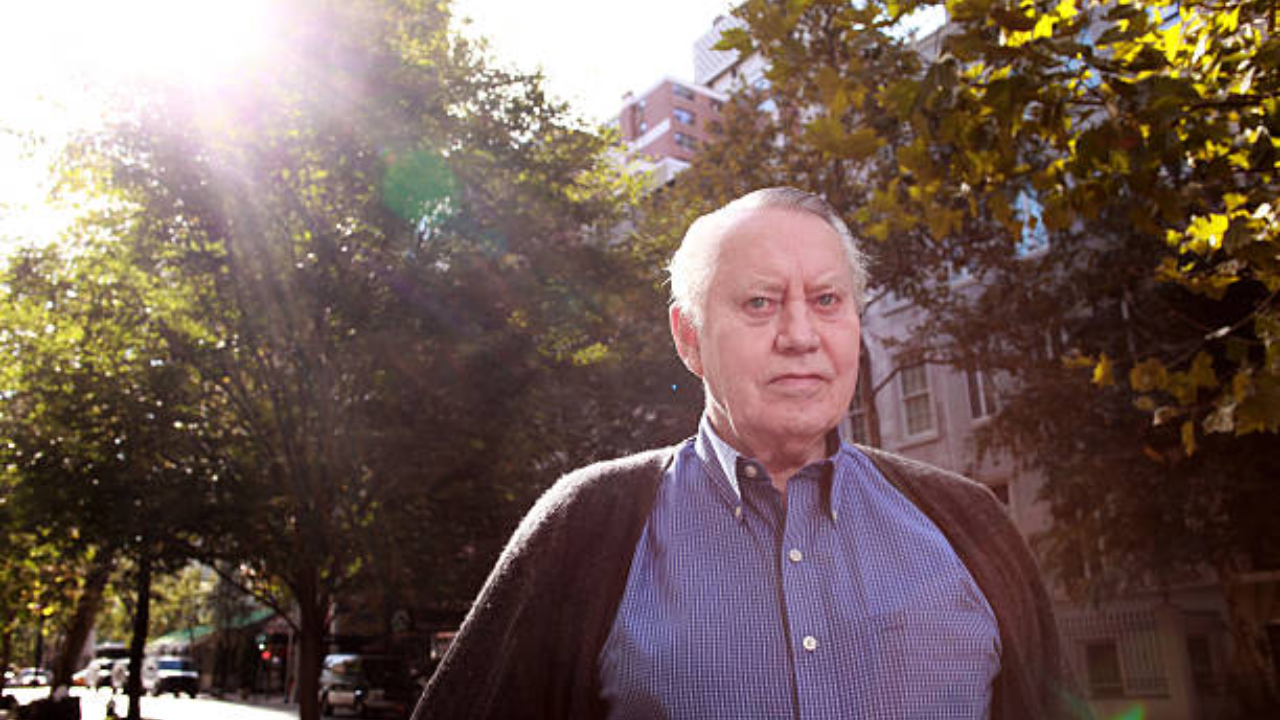
Picture a man riding a subway train in a scuffed pair of shoes, a cheap digital watch strapped to his wrist, carrying his life in a plastic bag. Most people walking past him on a rainy Tuesday in New York would never guess that he built a duty-free empire worth billions and gave nearly all of it away before he died.
His name was Chuck Feeney. For years, he lived like someone counting quarters while quietly moving hundreds of millions of dollars around the globe through his foundation, Atlantic Philanthropies. Money, to Feeney, was never a trophy to polish on a shelf. It was timber, brick, and steel waiting to be hauled to where it was needed most.
In 2011, that quiet conviction turned into a thunderous opening move for New York City. Feeney pledged $350 million to Cornell University to help win a high-stakes city competition to build a brand-new applied sciences and engineering campus in New York. Six years later, in September 2017, the first phase of Cornell Tech opened its doors on Roosevelt Island—a slender strip of land in the East River between Manhattan and Queens.
To read the bare facts is to miss the pulse of what happened. A check was written. A bridge was crossed. Glass and timber rose out of old hospital grounds. Yet behind those dry milestones lies a deeper story about ambition, civic reinvention, and what happens when someone refuses to hoard wealth until the grave.
A City Hungry for a Second Engine
New York has never lacked swagger, skyscrapers, or ambition. For generations, its economic gravity pulled toward Wall Street finance, media, real estate, and law. When the tech boom roared across California, many New Yorkers watched the gold rush from afar—wondering if the city's brightest engineers and founders were packing bags for Silicon Valley and never coming back.
That anxiety wasn't just boardroom chatter. You could feel it in late-night conversations over lukewarm coffee in crowded diners, in the way young programmers talked about leaving town for stock options and sunshine, and in city hall debates over how to keep New York competitive for the next century.
By the early 2010s, city leaders under Mayor Michael Bloomberg decided not to wait around. They launched a bold competition inviting universities from around the world to propose a new tech and applied sciences campus in New York City, offering city-owned land on Roosevelt Island and substantial infrastructure support to the winning bid.
Competing in that contest was not cheap. Universities needed serious private capital to convince the city that their vision had real momentum, staying power, and scale. Cornell needed a spark that could turn an audacious blueprint into an undeniable reality.
Feeney provided that spark. His $350 million commitment—made through Atlantic Philanthropies—wasn't a polite nod from a wealthy alumnus looking for his name carved ten feet high over a lecture hall. For decades, Feeney had insisted on anonymity in much of his giving, believing that public credit distracted from the work itself. He wanted results, not monuments to his ego.
The Invisible Stakes Behind a $350 Million Bet
Why does a single philanthropic gift matter when a city is already bursting with money? Because philanthropy, when aimed right, acts like yeast in heavy dough. It doesn't replace public investment or university grit, yet it changes what feels possible on a Tuesday morning when a budget committee is sweating over risk.
Consider a hypothetical graduate student named Maya—let's be clear, Maya is a composite stand-in invented here to show how these rooms work, not a real person—who grew up in Queens with a knack for coding and urban transit data. Without a local hub connecting computer science, business, and real-world city problems, Maya might have felt forced to leave her family and her neighborhood just to find mentors and startup labs. A campus sitting right in the East River, minutes from midtown and Queens, changes the map of who gets to build the future of a city.
When Cornell won the competition in late 2011, the real test began. Winning a bid is one thing; clearing soil, pouring concrete, designing low-carbon buildings, recruiting faculty, and launching graduate programs in six years is another. Six years sounds long until you are staring at permits, river winds, utility lines, and construction schedules.
I have walked across Roosevelt Island on gray mornings when the wind off the East River cuts straight through a wool coat, watching ferries glide past and wondering how anyone builds anything ambitious on an island reachable by one bridge, a tram, or the F train. Space is tight. Logistics are unforgiving. Every beam and glass panel has to earn its place.
And yet, by September 2017, the first phase opened. Suddenly, New York didn't just have finance towers and advertising agencies; it had a physical anchor for applied tech, engineering, entrepreneurship, and design right in the middle of the five boroughs.
How Philanthropy Works Like a Lever, Not a Lottery Ticket
People sometimes misunderstand big donations. They imagine a giant check lands on a table, and a shiny building magically pops up the next week like a cheat code in a video game. In reality, major philanthropic gifts work much more like a lever—a simple machine that multiplies human effort if you place the fulcrum in the right spot.
Think of it like pushing a stalled car. One person leaning against the bumper can barely make the suspension creak. Add another pair of hands at the right angle, and the car begins to roll; once it's moving, momentum helps carry it forward. Feeney's $350 million was that extra push at a decisive moment, helping unlock city backing, institutional commitment, and long-term growth.
Even so, let's be honest about the uncertainty of big bets like this. No billionaire, no mayor, and no university president has a crystal ball that guarantees every lab, startup, or economic forecast will play out cleanly over decades. Real estate is expensive in New York. Tech markets swing wildly. Building a campus is a multi-decade commitment stretching well past opening day.
Doubt is healthy here. Anyone who promises that a single campus or a single donation solves every economic challenge in a sprawling metropolis is selling snake oil. What Feeney's move did—and what the six-year sprint from 2011 to 2017 proved—was that patient, purpose-driven capital can clear early hurdles and give a bold idea room to breathe.
What Six Years Between Pledge and Opening Actually Mean
Six years is an interesting stretch of time. It is long enough for a toddler to start first grade, for a song to sound nostalgic, and for an entire generation of college students to graduate and enter the workforce. In the life of a major urban campus, six years is remarkably fast.
Between 2011 and 2017, plans moved from pitch decks and architectural models to real classrooms, labs, and residential spaces on Roosevelt Island. That timeline matters because big civic projects often stall in endless meetings and half-finished promises. Getting from a 2011 pledge to a 2017 opening meant turning abstract ambition into physical reality before the energy faded.
It also revealed something telling about Chuck Feeney's philosophy of "Giving While Living." Unlike fortunes locked away for generations or dribbled out in tiny increments over a century, Feeney believed in putting money to work while you are still alive to see it tested against real human needs. He famously aimed to give away his wealth rather than die rich.
You don't have to agree with every detail of how any donor allocates funds to see the clarity in that mindset. If your goal is to help build something useful in the world, waiting until after you're gone means missing the chance to push when the moment is ripe.
The Human Thread We Almost Overlook
When headlines shrink a story down to a dollar figure and a year, we tend to forget the human friction inside it. We forget the engineers sketching systems late at night, the city planners arguing over transit and public access, the professors packing up lives to move to a new academic model, and the students walking onto a fresh island campus for the first time.
More than that, we forget the quiet man behind the check. Chuck Feeney grew up working-class in New Jersey, served in the Air Force, worked his way through Cornell on the GI Bill and his own hustle, and co-founded Duty Free Shoppers into a global giant. He knew what opportunity felt like from the ground up—and he clearly wanted more people to have a shot at building things that mattered.
There is something disarming about a billionaire who doesn't need his name on the wall to feel whole. In a culture obsessed with status, loud branding, and personal myth-making, his restraint feels almost radical. Let the work speak. Let the place do the talking.
Why This Story Still Echoes
Years after that September 2017 opening, the broader lesson isn't really about one man or one island. It's about what happens when wealth is treated as a tool for public possibility rather than a private vault.
Cities change when people are willing to invest in what comes next—not just what pays off this quarter. Universities evolve when they step outside ivory-tower habits and build closer to real-world problems and real communities. And individuals find their footing when doors open closer to home.
Look out across the East River toward Roosevelt Island when dusk settles over New York, lights flickering on along the water while bridges hum with traffic overhead, and you see more than glass and steel—you see what happens when someone decides a fortune is meant to be spent building the future while they're still standing here to watch it rise.


