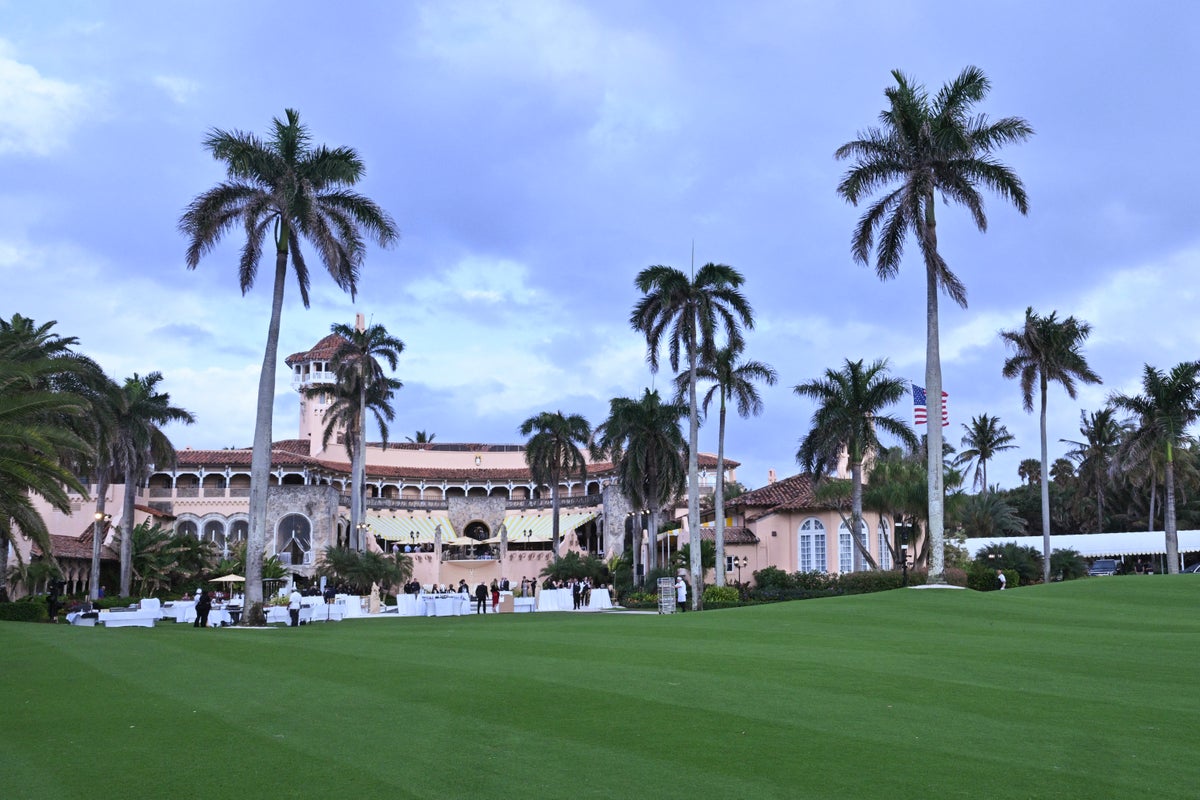
A stark political paradox is unfolding just a short drive from Mar-a-Lago. While the federal government fast-tracks permits for energy-guzzling artificial intelligence facilities, a fierce grassroots rebellion is boiling over in Palm Beach County. At the center of the storm is Project Tango, a massive 202-acre hyperscale data center proposed at the very edge of the Florida Everglades. Local residents are furious, exposing a deep rift between national tech ambitions and the reality of municipal resource limits.
This is not just another neighborhood zoning dispute. It is the frontline of a national struggle over the sheer physical footprint of the computing revolution.
The Federal Acceleration and the Local Brake
President Donald Trump recently made it clear that the federal government is fully committed to a rapid digital buildout. In discussions with reporters, the president revealed his surprise at the astronomical energy demands of modern computing. To prevent the United States from falling behind international competitors, his administration has sought to bypass traditional regulatory logjams.
The plan is simple. The administration intends to clear the way for private gas-fired power plants to feed these hungry server complexes, promising regulatory approvals in weeks rather than years. Tech leaders from Meta, Amazon, OpenAI, and SpaceX have been urged to submit plans directly to take advantage of this accelerated pipeline.
Yet, back in Florida, the machinery of local democracy is grinding that federal momentum to a halt.
On July 2, 2026, the Palm Beach County Zoning Commission voted unanimously to recommend denying the master plan amendment for Project Tango. They broke sharply with their own planning staff, who had suggested approving the project. The final decision sits with the county commissioners, who must choose between aligning with the national infrastructure push or protecting the immediate environment of their constituents.
This friction is repeating across the state. At least ten municipal governments in Florida have passed temporary pauses on data center development, and three counties have rejected projects outright. The national agenda wants speed, but the local reality demands caution.
The Physical Footprint of Project Tango
To understand why local families are organized in opposition, one must look at the geography. The proposed site for Project Tango sits north of Southern Boulevard, on former farmland that borders the fragile Everglades ecosystem. Even more concerning to local parents is its proximity to a recently constructed elementary school, which stands just 1,250 feet away.
When Palm Beach County first approved this land for development in 2016, it was designated as a light industrial employment center, meant to house standard warehouses and a modest 206,000-square-foot server farm.
Hyperscale facilities were not on the radar then.
These modern complexes are vastly different from the quiet, low-impact warehouses of a decade ago. Opponents of Project Tango estimate that the campus could require more than 600 megawatts of electricity. That is roughly 17 times the power consumption of the largest traditional data center currently operating in Florida.
To keep thousands of advanced computer processors from overheating, these facilities require relentless cooling. While the developer, Palm Beach Aggregates, asserts that they plan to use battery storage or natural gas instead of loud diesel generators, neighbors remain highly skeptical. Traditional server farms routinely test massive backup generators, producing a low-frequency hum that can travel for miles.
Water is the other flashing red light. The surrounding area of Northwest Palm Beach County relies heavily on private well water. Families worry that a massive industrial user next door could deplete or contaminate the local aquifer, leaving residential wells dry.
A Fractured Political Base
The backlash against these developments is scramble-testing traditional party lines. The dispute has spilled directly into the Republican primary for Florida governor, revealing a party deeply divided over how to handle the tech boom.
Two of the leading candidates have taken hardline stances against the infrastructure. Former Florida House Speaker Paul Renner vowed to convene a special legislative session specifically to block hyperscale developments. Businessman James Fishback went further, promising to ban new projects across all 67 counties in the state.
Meanwhile, the race's frontrunner, U.S. Representative Byron Donalds, has defended the industry, arguing that these massive computing facilities are an inevitable and necessary component of modern life.
This division shows that the opposition is not coming from typical environmental activist groups alone. It is a broad coalition of suburban homeowners, agricultural preservationists, and conservative voters who feel their property values and quiet neighborhoods are being sacrificed for national tech profits.
Similar battles are raging elsewhere in the state. In Fort Meade, a grassroots organization successfully launched a petition to recall three city officials who approved a $2.6 billion data center project. The local watchdog group accused their leaders of compromising the public trust and moving forward without a thorough environmental review. In response, local officials claimed that opposing the facilities plays into the hands of foreign competitors—a national security argument that is increasingly falling flat with residents who just want quiet neighborhoods and reliable water.
The Real Cost to Everyday Ratepayers
Beyond the immediate environmental footprint, the economic reality of these massive power users is drawing scrutiny.
The Federal Reserve has noted that the arrival of high-demand data centers can drive up wholesale electricity prices in local regions. In some concentrated areas, these wholesale prices have spiked significantly, eventually trickling down to residential utility bills.
This utility strain has prompted federal lawmakers to step in. Representative Kathy Castor of Florida co-sponsored a legislative effort to protect consumers, noting that local families are already struggling with skyrocketing energy bills. Critics of the current legislative landscape argue that while state incentives and tax breaks are handed out to attract tech developers, the cost of upgrading the electric grid to support them is often pushed onto everyday ratepayers.
This dynamic undercuts the standard promise of local economic growth. In its zoning application, Palm Beach Aggregates admitted that Project Tango would have a very low employee count once construction finishes. These facilities are highly automated; they require vast amounts of land, power, and water, but they create very few long-term, high-paying jobs for the communities that host them.
The trade-off is becoming increasingly difficult for local planning boards to justify. The promised tax revenues often fail to offset the long-term strain on public infrastructure and the anger of a mobilized electorate.
As Palm Beach County commissioners meet to decide the fate of Project Tango, they face a choice that will echo far beyond South Florida. The federal push to accelerate America's digital infrastructure is colliding head-on with the fundamental right of communities to protect their water, their schools, and their quiet nights. No matter how fast Washington tries to move the permits, they cannot easily bypass the citizens living right next door.