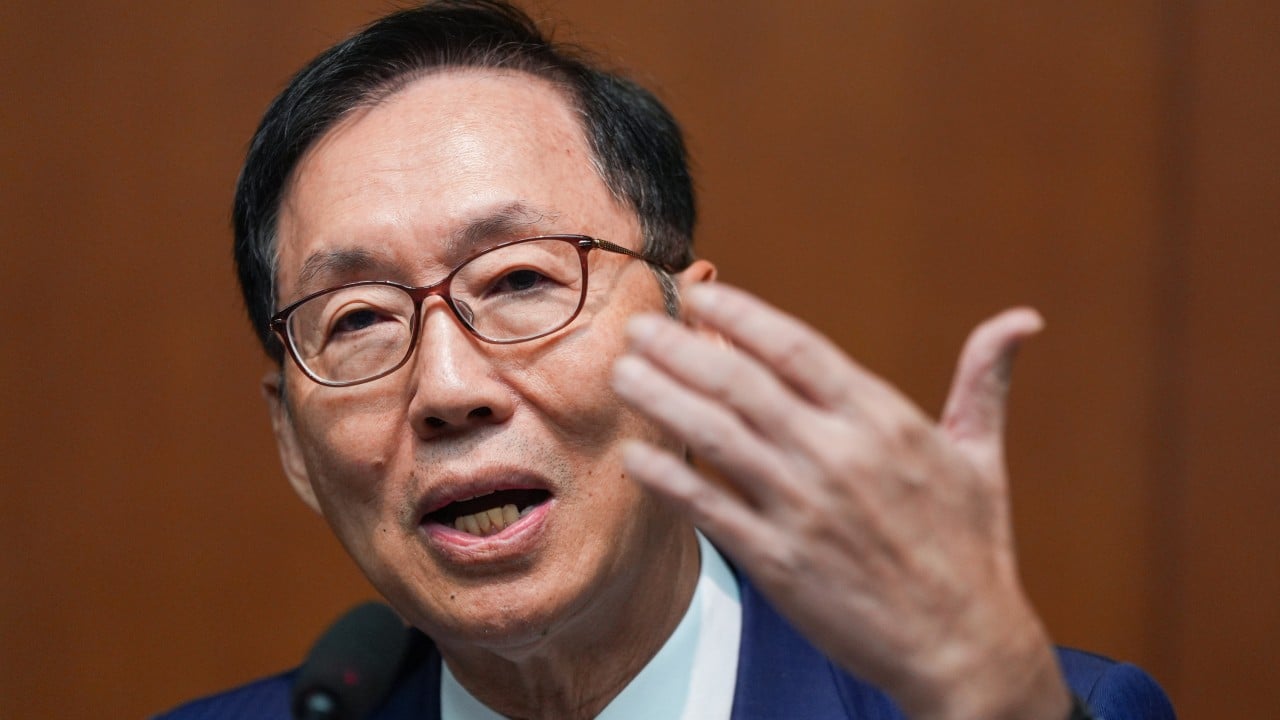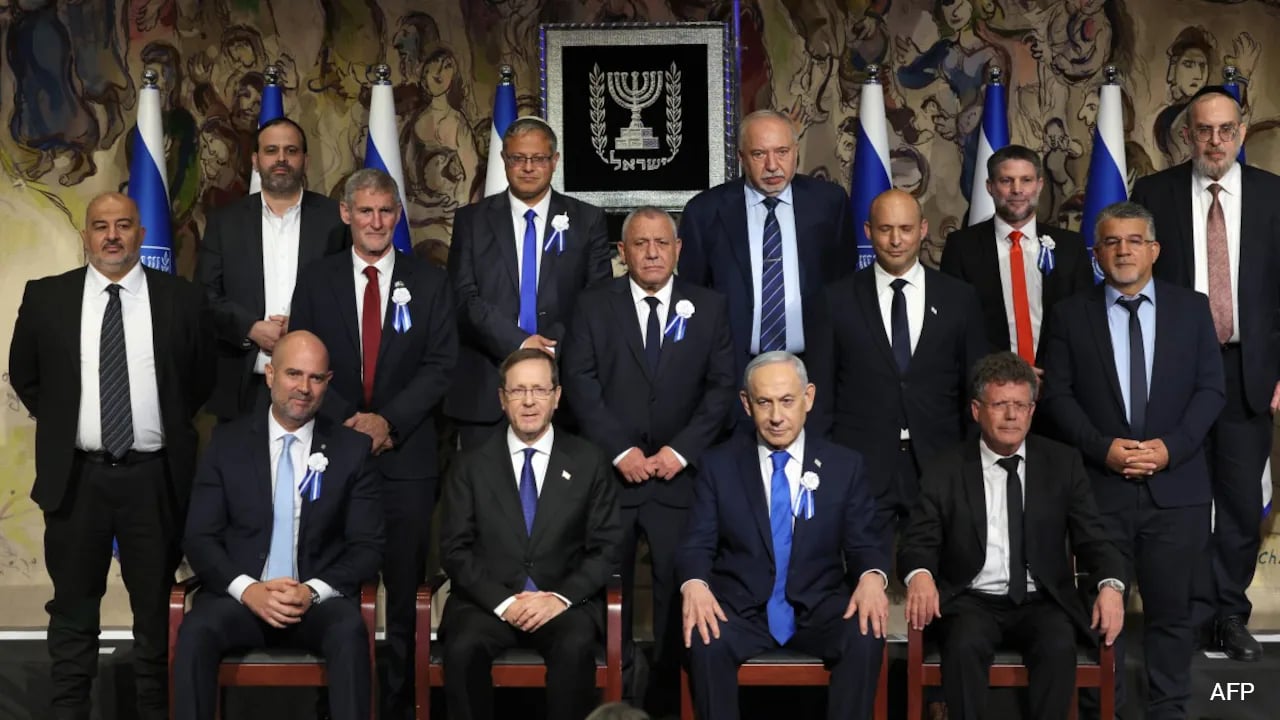
Two men sit across from each other in a room where the air conditioning hums a little too loudly, separated by a polished wooden table and three decades of scar tissue. Outside, the Jerusalem afternoon bleeds into evening, turning the limestone walls the color of bruised peaches. Inside, Benjamin Netanyahu and Gadi Eisenkot are supposed to be building a bridge. Instead, they are measuring the exact distance between two irreconcilable worlds.
They walk out without a signature. No handshake for the cameras. No sudden breakthrough to break the fever of a country stuck in neutral.
Just the headlines, flat and familiar as a dial tone: Netanyahu, Eisenkot Fail To Seal A Deal, Israel Government Deadlock Stays.
If you only read the wires, it sounds like another Tuesday in parliamentary arithmetic. A game of musical chairs played by men in dark suits while the music stopped months ago. You see the numbers—the Knesset seats, the coalition thresholds, the ministerial portfolios traded like baseball cards—and your eyes glaze over. Politics, you think. Just noise.
Except noise doesn't keep a twenty-four-year-old reservist awake at three in the morning wondering if his unit will be called back before he finishes his degree. Noise doesn't freeze a municipal budget in a northern border town where half the storefronts are still shuttered. When a government locks up, the paralysis doesn't stay inside the marble corridors of Jerusalem. It seeps under doors. It sits at kitchen tables.
The Anatomy of a Standoff
To understand why two men who spent years defending the same country could not agree on how to govern it, you have to strip away the press releases and look at the currency they actually trade in.
It isn't money. It is trust. And right now, the vault is empty.
According to political analysts and parliamentary correspondents tracking the negotiations, the breakdown between Netanyahu, Israel's longest-serving prime minister, and Eisenkot, a former Chief of the General Staff of the Israel Defense Forces turned centrist lawmaker, came down to fundamental disagreements over authority, strategic direction, and the price of political survival. Reports from Israeli media outlets detailing the talks indicate that while backchannel discussions explored ways to broaden the governing coalition and stabilize the state during a period of acute national strain, neither side could bridge the chasm on core conditions.
Think of a coalition government like a suspension bridge built over a deep gorge during a windstorm. Every cable has to bear tension. If one anchor slips, the whole deck tilts. Netanyahu, a master of political survival who has navigated Israel's fractured parliamentary system for decades, operates by ensuring his primary anchors—his existing coalition partners—never snap. If he gives Eisenkot too much weight on the bridge, the right-wing and religious parties holding up his majority threaten to cut their cables and walk away.
Eisenkot, by contrast, approaches politics with the mindset of a career general. In the military, command is linear; you do not launch an operation unless you have the authority to execute the objective and a clear exit strategy. According to commentators familiar with his political circle, Eisenkot demanded real influence over war-cabinet decision-making, clear timelines for national elections, and policy shifts that Netanyahu's current partners simply would not tolerate.
Deadlock.
One word. Seven letters. A state of suspended animation where everyone is pushing against a door that opens inward.
What Happens When the Clock Stops
Let's step out of Jerusalem for a moment. Picture a hypothetical family—call them the Levys—living in a modest apartment in Haifa. In a real-world sense, millions of families like them are the ones absorbing the shockwaves of every failed summit in the capital.
David Levy runs a small logistics company. His wife, Maya, teaches high school civics—an irony she no longer finds funny. For months, David has delayed buying two new delivery trucks. Why? Because when a government is deadlocked, long-term economic policy freezes. Credit ratings wobble. International investors wait on the sidelines to see who will actually be holding the steering wheel six months from now.
"You don't build an addition onto a house while the foundation is still shifting," David tells his brother over Friday dinner.
In the classroom, Maya tries to explain checks and balances to seventeen-year-olds who are six months away from military conscription. One student in the back row raises his hand and asks a question that hangs in the fluorescent-lit air: If nobody can agree on who is in charge, who is making the plan?
Maya doesn't have a neat textbook answer. Nobody does.
This is the invisible tax of political gridlock. It isn't collected at the bank; it is collected in hesitation. Ministries operate on caretaker mentalities. Reforms in healthcare, housing, and education sit in folders on desks, waiting for a political horizon that refuses to clear. When the leadership is locked in a stalemate over survival, governance shrinks to mere crisis management. You stop steering the ship and spend all your energy bailing water.
Two Men, Two Worlds
To watch Netanyahu and Eisenkot negotiate is to watch two entirely different operating systems try to run the same program.
Netanyahu's political longevity is a historical phenomenon in modern democracies. Since first taking office in 1996, he has weathered scandals, ideological realignments, and five consecutive election cycles between 2019 and 2022 that nearly broke the country's electoral machinery. Political historians often point out that his core strength lies in tactical ambiguity—keeping options open, delaying irreversible decisions until the last possible second, and outlasting rivals who burn through their political capital too quickly. To his supporters, he is the indispensable statesman, the only leader with the international stature and experience to navigate existential threats and fierce diplomatic pressure.
Eisenkot represents the antithesis of the career politician. Born in Tiberias, raised in Eilat, he spent forty years in uniform, rising through the Golani Brigade to become the top commander of the military from 2015 to 2019. When he entered politics, he brought the unadorned, unvarnished cadence of the briefing room with him. Observers note that Eisenkot rarely speaks in slogans. When he talks about national security or civic duty, there is a heavy, personal gravity behind it—a weight that became painfully public when his son, Gal, was killed in combat in Gaza, followed shortly by his nephew.
When a man who has paid that price sits across from a prime minister fighting for his political legacy, the room isn't just filled with policy papers. It is filled with ghosts.
Reportedly, the sticking points were unmistakable:
- The Question of Duration: Eisenkot and his political allies have consistently argued that a unity arrangement without an agreed-upon date to return to the voters simply prolongs a fractured status quo.
- Decision-Making Power: Entering a government as window dressing—holding a title without veto power over strategic moves—is a non-starter for a former Chief of Staff who knows the cost of flawed directives.
- Coalition Math: For Netanyahu, conceding to those demands means triggering the collapse of his existing bloc, trading a guaranteed parliamentary majority for an uneasy partnership that could dissolve overnight.
Neither man is acting irrationally within his own framework. That is what makes the stalemate so suffocating. It isn't a cartoon of heroes and villains; it is a collision of incompatible survival instincts.
The Exhaustion of the Middle
I remember standing in a crowded bakery in Tel Aviv during one of the previous election cycles—the third or fourth in two years, after a while the numbers blur together like mile markers on a desert highway. The smell of warm sesame and burnt coffee filled the narrow room. Two strangers were arguing over the counter while waiting for their bread, not with anger, just with a hollowed-out fatigue.
"We're going to vote again," one of them sighed, rubbing his temples. "And nothing will change."
That exhaustion is the real story beneath the Netanyahu-Eisenkot deadlock. Israel's parliamentary system, built on strict proportional representation, was designed in the early days of the state to give every voice—every small faction, religious stream, and ideological minority—a seat at the table. For decades, it worked as a pressure valve.
Today, that same design acts like a straightjacket.
When the electorate splits down the middle into rigid camps, small parties gain outsized leverage. A faction with six or seven seats in the 120-member Knesset can hold an entire government hostage over a single ministry or budget line. According to governance researchers at institutions like the Israel Democracy Institute, this structural fragmentation has steadily eroded executive stability, turning coalition-building into a perpetual hostage negotiation.
So when news breaks that Netanyahu and Eisenkot failed to seal a deal, the public reaction isn't shock. It's a collective exhale of frustration. People recognize the pattern. A trial balloon goes up in the press; whispers of a dramatic realignment fill the evening news panels; pundits draw diagrams on glass screens; and forty-eight hours later, the doors open and the status quo walks back out untouched.
What the Headlines Miss
There is a temptation, especially from afar, to view political deadlocks as pause buttons. Nothing happened, therefore nothing changed.
That is a dangerous illusion.
In geopolitics, as in nature, vacuums do not stay empty. While Jerusalem remains locked in internal negotiations, external clocks keep ticking. Regional adversaries watch the parliamentary paralysis and calculate that a divided leadership is slower to respond and harder to deter. International allies hesitate to commit to long-term diplomatic frameworks when they aren't sure whether the government they are negotiating with will survive the winter.
Domestically, the cost is measured in social cohesion. Every week that passes without a broad consensus deepens the trench between citizens who believe the current government must finish its term to ensure stability, and those who believe only fresh elections and a new coalition can restore public confidence. Neighbors stop talking politics over the fence. WhatsApp family groups go quiet or erupt into firestorms.
You can feel it in the cadence of everyday life—a low-grade tension humming just beneath the surface of routine errands, school drop-offs, and evening commutes. People are tired of holding their breath.
The Room After They Leave
Go back to that quiet room in Jerusalem after the chairs are pushed back and the coffee cups are cleared away.
The notes are shredded. The aides pack their briefcases. Outside, the city cools down as night settles over the Judean hills, indifferent to the arguments of mortals as it has been for three thousand years.
Netanyahu returns to his residence to manage a coalition that demands constant vigilance just to survive until morning. Eisenkot returns to the opposition benches, carrying the weight of expectations from millions of citizens desperate for a different path.
Neither man blinked. Neither man yielded.
And tomorrow morning, a shopkeeper in Haifa will unlock his door, flip the sign from Closed to Open, glance at the morning newspaper sitting on the counter, and wonder how much longer an entire country can live in the space between two chairs that refuse to meet.