Paper certificates smell like dust and old ink. Most children never see one. When my grandfather handed me a crinkled slip of paper from a filing cabinet in Ohio—a tiny stake in a regional utility that had long since been absorbed into a bigger company—the paper felt heavier than the value printed on it. I didn't understand dividends. I didn't know what a brokerage account was. Yet looking at that piece of paper made me feel, for the first time in my life, that the adult world wasn't a locked room I had to beg to enter. It felt like a crack in the door.
Now consider what happens when the door isn't a utility company in the Midwest, but a rocket pointing toward orbit.
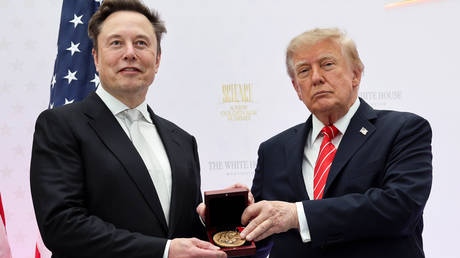
In headlines, the idea sounds almost too neat to be real: Elon Musk vowing to gift every child in the United States a share of SpaceX. Whenever a billionaire promises a windfall to an entire generation, people lean in with a mixture of wonder and skepticism. Promises are weightless until they meet tax law, corporate structure, valuation math, and political friction. And when a story has no verified public record or official filing behind it yet, treating a rumor or headline claim as settled fact is a trap. Still, you don't have to take a headline at face value to recognize why it hits a nerve so hard.
A gift isn't just an asset. It's a relationship.
Let's be honest about where we stand. When a claim circulates about gifting shares of a private aerospace giant like SpaceX to every American child, the first instinct of anyone who has watched tech promises rise and evaporate is caution. Private companies don't hand out equity like Halloween candy. Securities regulations exist for a reason. Taxes complicate everything. Even if a founder dreams of turning millions of kids into stakeholders in spaceflight, turning that impulse into real, legal ownership is a steep climb.
Yet dismissing the idea outright misses something deeper. Why does the notion of giving every kid a piece of SpaceX spark such fierce curiosity, argument, and hope?
Because ownership in America has felt increasingly distant for young people.
The Distance Between Childhood and Capital
Hypothetical scenario: Picture Maya, ten years old, sitting at a kitchen table with a tablet open to a livestream of a Starship test flight. Outside her window, rain taps against glass. Her parents work shift jobs—one in logistics, one at a clinic—and their evenings are measured in grocery receipts and utility bills. Maya loves rockets. She draws boosters in the margins of her math notebooks. She knows what thrust means. She knows what reusability means.
When a rocket lifts off, Maya cheers with the rest of the chat. Then the screen goes dark, the ad plays, and she goes back to homework. She is an audience member. Enthusiastic, sharp, invested emotionally—but an outsider financially.
That gap isn't unique to aerospace. Across modern economies, young people grow up surrounded by brands, platforms, and infrastructure they use every day without owning a single fraction of them. Adults talk about index funds, compounding returns, and market capitalization in tones that sound like a foreign language. Kids hear about money mostly as a scarcity—something parents worry about at the end of the month.
Think about what changes if a child holds even one share of something extraordinary.
Not overnight wealth. Not a magic ticket out of hard work. Just a sliver of ownership tied to a company building launch vehicles, satellite internet, and deep-space hardware.
Even if the underlying claim is unverified or speculative, the thought experiment forces a sharp question: What happens to a child's sense of agency when they aren't merely watching history happen, but holding a tiny claim in the enterprise trying to make it?
Why SpaceX Specifically Captures the Imagination
A share in a mattress company feels practical. A share in a bank feels abstract. A share in SpaceX feels mythic.
That mythic quality is part of why the story travels so fast. Spaceflight has always carried an emotional charge that ordinary business never quite matches. For decades, going to space belonged to governments and astronauts whose names were etched into history books. Then came private launch providers, reusable first stages landing back on drone ships in the Atlantic, and constellations of satellites beaming connectivity from low Earth orbit.
Whether you admire Musk or find him exhausting—and plenty of people feel both at once—SpaceX sits at the crossroads of engineering ambition and high-stakes capitalism. It is private, fiercely watched, valued at eye-watering numbers whenever secondary transactions or tender offers make news, and constantly pushing against physical and financial limits.
Giving a kid a share of SpaceX isn't like handing them a coupon. It's handing them a story with a clock on it. A ten-year-old holding equity today would be approaching adulthood in a very different world—one where orbital infrastructure, commercial space stations, or lunar missions might be routine rather than rare.
Still, romance doesn't pay legal fees.
The Friction Between Generosity and Reality
Let's step away from the launchpad and look at the machinery underneath.
If someone—whether an individual founder, a foundation, or a corporate board—wanted to place shares into the hands of tens of millions of children across the United States, every step would collide with real-world constraints.
First comes structure. SpaceX has historically been privately held, meaning its shares aren't traded freely on a public exchange the way stock in a retail chain is. Distributing fractional or whole shares to millions of minors isn't simply a matter of clicking a button. Custodial accounts, state laws governing minors' property, transfer restrictions, and corporate governance rules all enter the picture.
Second comes tax reality. Gifts of appreciated property or stock carry tax questions—who owes what, when, and how value is calculated. Even well-intentioned financial gifts can turn into headaches if they aren't structured cleanly.
Third comes expectation. Imagine the emotional whiplash if a child—or a parent—hears "free SpaceX share" and pictures an instant payout, only to learn that private shares can be illiquid, restricted, or slow to convert into cash. Financial literacy requires context. Without explanation, a gift can confuse as much as it inspires.
I have sat across from people who inherited small pieces of investments they didn't understand and let them sit untouched for years out of sheer intimidation. Confusion makes people freeze. When something feels complicated, people walk away from it instead of learning how it works.
What Ownership Actually Teaches a Kid
Metaphor time: Think of a tiny seed planted in a clay pot on a windowsill. By itself, a single seed won't feed a family tomorrow. You can't eat it today. You have to water it, watch it, wait through seasons that look like nothing is happening, and understand that growth has its own pace.
A child's first share—if handled thoughtfully—works a lot like that seed.
It introduces three concepts that school rarely makes vivid:
- Time horizon: Real value usually grows slowly. Quarters turn into years. Patience isn't passive; it's part of the math.
- Risk and volatility: Companies don't move in straight lines. Rockets blow up on test stands. Markets swing. Learning early that setbacks happen in real ventures builds resilience.
- Curiosity: When you own even a tiny piece of a business, you start asking real questions. How does it make money? What does it spend money on? Who are its competitors? What happens if a launch slips by six months?
Suddenly, reading an annual letter or tracking a milestone isn't homework. It's personal.
Consider another hypothetical character: David, fourteen, living in a small town where the biggest local employer is a farm supply store. He has never been to a major city, let alone a spaceport. If he held a share tied to SpaceX, he might start looking up orbital mechanics at midnight, reading about satellite payloads, or wondering how propulsion engineers test engines. Curiosity is contagious when it has an anchor.
The Skeptic's Case Deserves a Fair Hearing
You don't build trust by pretending every grand announcement is pure altruism.
Skeptics have sharp questions, and they deserve straight answers rather than eye-rolls. When a high-profile figure floats or is linked to a sweeping promise like gifting shares to every U.S. kid, people rightly ask: Is this a real plan with a timeline and legal architecture, or is it a viral idea floating in the ether? Could it be a public relations spark? Would it ever actually happen, or fade away once the headlines cool?
Uncertainty is part of this story. Right now, there is no verified, concrete public mechanism confirming that every American child is receiving a SpaceX share. Treating a headline rumor as an accomplished fact would mislead the reader.
At the same time, treating every bold idea as cynical theater can blind us to genuine shifts in how people think about wealth and participation. History is full of things that sounded implausible until someone stubborn enough—and rich or connected enough—tried to clear the hurdles.
The honest place to stand is right in the middle: clear-eyed about the obstacles, open to the possibility, and focused on what the idea reveals about us.
Why This Story Hits Harder Now
Why now? Look at the mood around economic opportunity for younger generations.
Many parents look at housing prices, college costs, and shifting job markets and feel a quiet ache. They want their kids to have footing. They want them to feel part of the future rather than squeezed by it. When a story arrives suggesting that children might get a stake in frontier technology—even hypothetically, even as a vow or rumor—it taps directly into that longing for a brighter runway.
It also exposes a divide in how people view big business. Some see massive private enterprises as engines of human progress that put reusable rockets in the sky and connect remote villages. Others see concentrated wealth and power that already loom too large over public life. A proposal to share equity with kids sits right on that fault line. It mixes populism, capitalism, technology worship, and genuine generosity all in one breath.
No wonder people argue about it at the dinner table.
What Happens Next in the Mind of a Child
Forget boardrooms for a second. Come back to the kid.
Imagine a ten-year-old—maybe Maya, maybe someone in your own family—holding a document or a digital statement that says their name next to a share of an aerospace company. Even if it takes years to understand what it means, something shifts in how they see themselves.
They aren't just consumers buying snacks or watching videos. They are part-owners of an idea that reaches past the clouds.
Maybe nothing comes of the headline. Maybe legal hurdles stop it cold. Maybe it turns out to be nothing more than internet noise around a famous name.
Yet even the idea leaves a mark. It reminds us how starved young people are for real stakes in the future they're inheriting—and how much difference a single crack in a locked door can make.
One day, that seed on the windowsill either grows into something real or stays a story we told ourselves while watching the sky. Either way, the child looking up at the stars isn't looking down anymore.

