Cold.
That is the first thing anyone notices in a room where superpowers trade assurances. Not the winter chill outside the glass, nor the air conditioning humming behind drywall, but a deliberate, practiced flatness in the air—the kind of quiet that tells you two people are speaking English and Mandarin while actually negotiating the price of someone else’s survival.
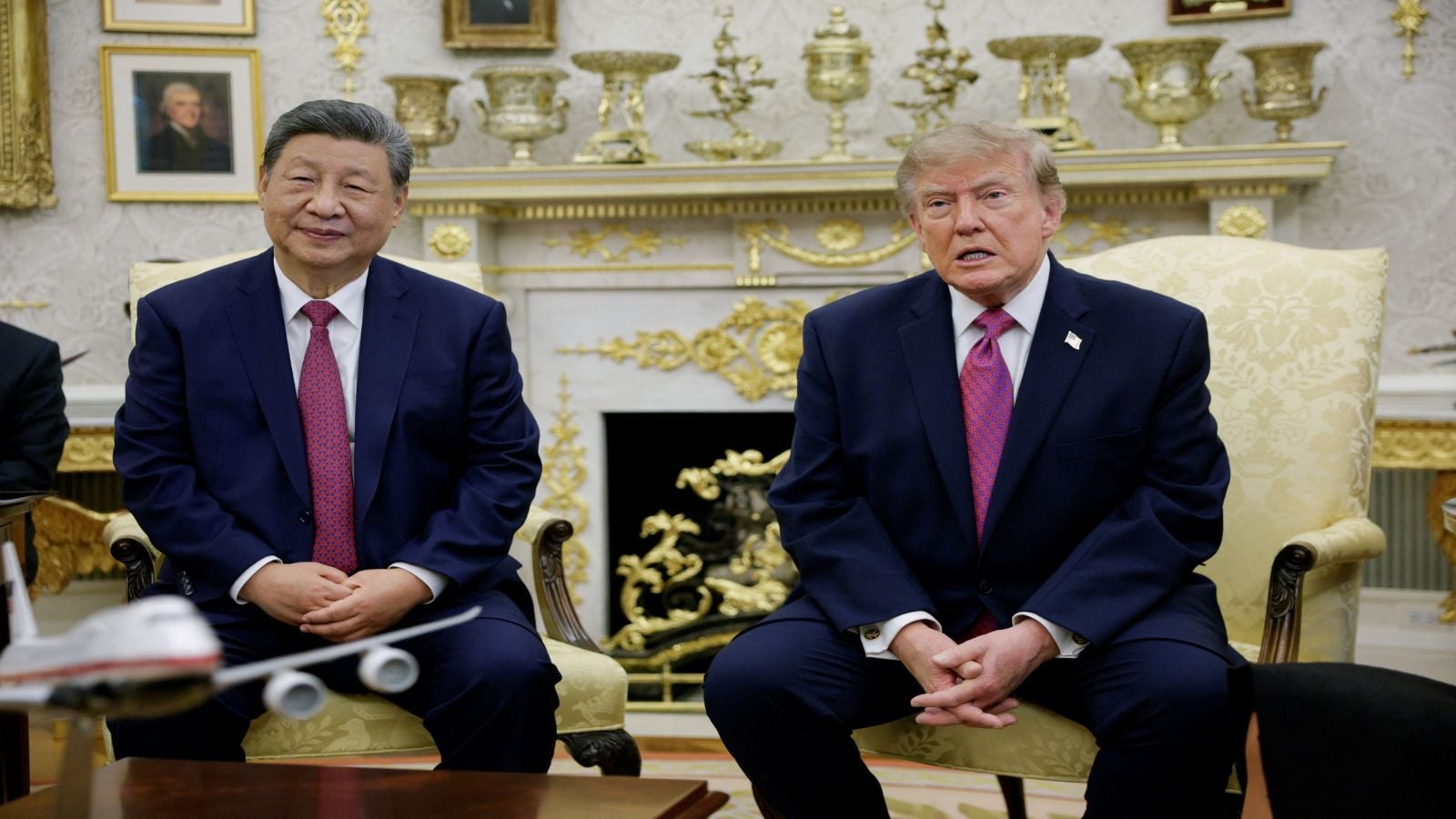
A headline crosses a wire: Donald Trump warns Xi Jinping over Chinese support for Iran, and a U.S. envoy reports that Beijing offered assurances.
Read that sentence ten times. You will not find a heartbeat in it. No sweat on a brow. No kitchen table in Tehran where groceries cost twice what they did in June, no logistics desk in Guangdong where a compliance officer stares at a shipping manifest wondering if a single signature will freeze his company’s dollar accounts overnight, no briefing room in Washington where a diplomat tries to translate a threat into a timeline before a tanker leaves port.
History rarely announces its turning points with sirens. Usually, it arrives as a polite nod across a polished table.
Consider what happens next when a warning travels from Washington to Beijing and bounces back as an assurance. To understand why that word—“assurances”—carries so much weight, you have to strip away the diplomatic fog and look at what sits underneath Tehran’s economy, Beijing’s industrial engine, and Washington’s leverage.
I have spent years watching how sanctions and backchannel warnings land on ordinary people who never set foot in a ministry. You smell it before you read it in a white paper. You smell it in the diesel exhaust idling outside a port warehouse in Bandar Abbas, where drivers wait three days for paperwork that used to take three hours. You hear it in the flat, clipped voices of small-business owners in Shenzhen who suddenly stop answering calls from middlemen in Dubai because a correspondent bank flagged a wire transfer. None of those people chose to be pawns in a triangle between Washington, Beijing, and Tehran. Yet their livelihoods rise and fall on phrases like Chinese support for Iran and assurances.
Let’s be honest about what we actually know—and what remains murky. Public wire dispatches tell us the core architecture: Trump pressed Xi over Beijing’s backing of Tehran, and a U.S. envoy came away saying assurances were given. What those assurances entail in granular detail—whether they cover crude purchases, dual-use components, financial clearing, or diplomatic cover—is rarely laid out on a public ledger. Anyone who claims to have the full classified transcript is guessing. Still, we do not need classified ink to see the mechanics. Statecraft has a grammar, and its verbs are predictable.
Think of the relationship between Washington, Beijing, and Tehran as three interconnected pipes carrying pressure rather than water. For years, Iran’s ability to weather Western financial isolation has leaned heavily on China: buying discounted barrels, keeping trade channels open, absorbing goods that European and American firms walked away from. From Beijing’s vantage point, keeping Iran upright—or at least predictable—served a clear strategic purpose. It tied down U.S. attention in the Middle East, kept energy markets from snapping shut in ways that hurt China’s own manufacturers, and proved that American sanctions were not a global monopoly.
Now picture a U.S. president putting direct pressure on Xi over that exact lifeline. Why does going straight to Beijing matter so much? Because secondary pressure works best when it hits the hub rather than a hundred scattered spokes. If Washington squeezes a small shipping firm in a third country, another shell company pops up by Tuesday. If Washington puts Xi on notice—tying Chinese support for Iran to broader bilateral friction, tariffs, tech restrictions, or security stakes—the calculation changes at the very top.
To make this concrete, let’s introduce a hypothetical composite—a character stitched together from real patterns observed across trade desks and port cities, not a real living individual.
Call him Lin Wei. In our hypothetical scenario, Lin runs mid-sized industrial equipment logistics out of a coastal hub in eastern China. He is not a billionaire oligarch, nor a party ideologue. He is a forty-four-year-old father who checks commodity freight indices before his morning tea and worries about his daughter’s university tuition. For four years, part of Lin’s margin came from routing pumps, valves, and electrical gear through intermediaries that eventually ended up servicing energy and infrastructure projects linked to Iran. It was grey-zone work—technically legal under local norms, quietly tolerated, profitable enough to keep his warehouse payroll padded.
Then a warning goes from Trump to Xi, and a U.S. envoy emerges saying assurances were received.
Lin does not read the envoy’s remarks as a warm diplomatic triumph. He reads it as a tightening valve. Within weeks, his state-linked banking contacts start asking sharper questions about end-users. Insurance premiums on certain routes jump. A partner in Dubai goes quiet. Nothing dramatic explodes on camera—no missiles fly, no stock market crashes in a single afternoon—yet Lin’s cash flow slows to a trickle.
That is how an "assurance" feels at street level. It is a quiet instruction filtering downward through state banks, customs brokers, and compliance departments.
Now turn the lens around and place another hypothetical figure in Tehran—let’s call her Sara, a pharmacist in her late thirties who tracks import delays the way sailors watch barometers. Iran’s economy has lived under sanctions pressure for so long that adaptation became a reflex. When Western doors closed, eastern doors cracked open. Chinese trade and energy ties acted like a shock absorber, cushioning prices, keeping certain inputs flowing, giving planners in Tehran room to breathe.
When Sara hears that a U.S. envoy claims Beijing gave assurances after Trump warned Xi, she does not think about grand strategy. She thinks about exchange rates on the open market. She thinks about whether imported active ingredients for blood-pressure medication will sit in customs for six weeks instead of ten days. When a lifeline looks even slightly thinner, speculators front-run the fear before a single barrel of oil actually stops moving.
Notice the asymmetry here. A warning from a U.S. president to China’s leader does not need to trigger an immediate blockade to alter behavior. Perception moves markets, currencies, and risk tolerances faster than ships cross the Indian Ocean.
But here is a metaphor worth naming explicitly so you never confuse illustration with fact. Imagine the global trade system as a vast plumbing network built out of trust and dollar clearing. Washington holds several of the main shutoff valves; Beijing operates massive pumping stations that keep pressure steady across Asia and parts of the Middle East. When Trump warns Xi over Chinese support for Iran, Washington is standing next to the main valves, hand on the wheel, while Beijing is being asked to dial back a pump that feeds Tehran. That plumbing metaphor helps you visualize leverage, though real geopolitics is far messier—pipes bend, counterfeit certificates circulate, and actors route fluid through side alleys no blueprint shows.
Why, then, would Beijing offer assurances at all?
skeptics inside and outside foreign policy circles ask this constantly. Why would Xi give Washington anything on Iran if Beijing wants to keep the U.S. bogged down?
The answer lies in what Beijing values more than Tehran: predictability with Washington when China’s own core economic and technological priorities are on the line. Statecraft is rarely pure charity; it is triage. If keeping full-throttle support for Iran invites punishing American measures against Chinese firms, shipping lanes, or financial institutions, Beijing weighs the cost. Offering measured assurances—perhaps pledging to curb sensitive transfers, tighten visible compliance, or avoid overt provocation—buys breathing room. It lets Beijing tell Washington, We heard you, while telling Tehran, Do not push us into a corner where we must choose between your survival and our own growth.
Look closely at the word assurances again. In diplomacy, an assurance is not a binding treaty ratified by legislatures. It is a promise with elastic edges. Washington hears a commitment to rein in certain forms of backing; Beijing hears a way to de-escalate friction without surrendering its broader regional footprint. Both sides can claim movement while leaving room to argue over what was actually promised if a dispute flares three months later.
That ambiguity is both the danger and the point.
If an assurance is too vague, Tehran tries to test the gaps—routing goods through third countries, renaming entities, relying on barter arrangements that dodge standard reporting. If Washington reacts too sharply to every rumor of cheating, Beijing accuses the U.S. of acting in bad faith and walks back the understanding entirely.
I have watched enough negotiations stall in that exact gap to know how fragile these moments are. When people talk about "strong leadership" or "tough diplomacy," they often picture a movie scene where one side blinks and hands over the keys. Real life looks much closer to two tightrope walkers adjusting their poles by half an inch every step, praying neither sneezes.
The Invisible Ledger Inside Every Barrel
Strip away the speeches and follow the money, because money is the most honest narrator in international politics.
For years, Chinese refiners—especially independent ones—bought Iranian crude at steep discounts. For Beijing, cheap energy lowered input costs; for Tehran, those sales kept hard currency trickling in when almost every other major buyer had vanished. Even if the U.S. envoy’s report of assurances from Beijing signals a willingness to curb certain kinds of support, unwinding years of intertwined trade does not happen overnight. Ships still sail. Intermediaries still exist. Accountants still invent clever ways to obscure origin.
Yet direction matters as much as volume. A river does not have to dry up completely to starve a valley; shifting its course by a few degrees changes everything downstream.
Consider what happens inside a boardroom in Beijing when top leadership signals caution on Iran. Nobody publishes a memo saying, Ignore the envoy’s trip. Instead, risk committees raise red flags on transactions touching Iranian entities. Legal teams demand extra documentation. Smaller traders hesitate because they know a single enforcement action can wipe out years of retained earnings.
Now flip back to our hypothetical logistics operator, Lin Wei, in eastern China. He sits at his desk looking at two contracts. One promises a healthy margin moving industrial parts toward a Middle Eastern hub with known ties to Tehran. The other pays less, moving standard components to Southeast Asia with clean paperwork and zero regulatory shadow. After a U.S. envoy reports that Beijing gave assurances following Trump’s warning to Xi, which contract gets signed? Almost certainly the boring one. Survival instincts beat ideological loyalty every single time.
And what about Sara, the pharmacist in Tehran? She wakes up to news fragments—a wire headline about Trump warning Xi, a follow-up line about assurances from Beijing, commentary arguing back and forth over whether the U.S. envoy got real concessions or hollow words. She does not care which pundit wins the television debate. She cares whether her wholesalers still extend thirty-day credit or demand cash up front.
That is the human core of this story. Great-power warnings and diplomatic assurances are written in the language of statecraft, yet their consequences land in pharmacies, warehouses, family budgets, and port queues thousands of miles from the cameras.
Why Skepticism and Hope Live in the Same Room
If you feel torn between thinking this is a genuine breakthrough and suspecting it is theater, you are reacting normally. This is a domain where certainty is usually a trap.
On one hand, direct pressure from Trump to Xi carries real weight. Unlike lower-level diplomatic exchanges that get bogged down in bureaucratic stalling, a leader-to-leader warning puts stakes squarely on the table. When a U.S. envoy then reports that assurances were received, dismissing it as pure bluff ignores how Beijing manages high-stakes friction when economic stability is on the line.
On the other hand, history is littered with diplomatic assurances that looked airtight in a readout and leaked like a sieve in practice. Beijing has long preferred strategic ambiguity—keeping channels open to Washington while preserving relationships with states under Western pressure. Even if Chinese officials curb sensitive military or dual-use support for Iran, broader commercial and diplomatic ties rarely snap cleanly in half.
So where does that leave someone trying to make sense of the headline?
Look at three signals rather than one statement:
First, watch enforcement actions, not just rhetoric. When assurances are real, regulatory friction increases quietly—fewer gray-market shipments, tighter bank screening, slower approvals.
Second, watch energy and currency flows. If Iranian crude discounts narrow or payment bottlenecks widen, market participants are pricing in tighter constraints.
Third, watch how Tehran responds publicly and privately. When Iran’s officials downplay outside pressure while quietly scrambling for alternative buyers or barter partners, you know the warning registered.
None of those signals require blind faith or knee-jerk cynicism. They simply treat diplomacy as an ongoing process rather than a single finished photograph.
A harbor at dusk.
Tugboats nudge a massive container ship toward a berth while cranes stand silhouetted like giraffes against a bruised violet sky. Somewhere in a control room, a clerk checks a manifest line by line—one code approved, one code held for review, one signature delayed until morning. No one on that deck hears the exact words Trump spoke to Xi, nor the precise phrasing the U.S. envoy carried back from Beijing. Yet the ship’s pace, its cargo, and the paychecks waiting at the end of its voyage all bend toward that quiet handshake.
The headline fades from your feed in ten seconds. The ripple keeps moving.