The humid air of Shenzhen smells faintly of solder, rain on hot asphalt, and espresso pulled too fast in glass-walled lobbies.
Stand on a pedestrian bridge overlooking Nanshan District at dusk, and you are watching the nervous system of the twenty-first century pulse in real time. Below, delivery scooters weave through traffic with algorithmic precision. Above, neon logos of hardware giants and software labs flicker against bruised purple clouds. For the past several years, the prevailing story told about this skyline—and its counterpart across the Pacific in Silicon Valley—has been one of inevitable collision. A cold war written in microchips, export controls, and whispered anxieties about who will build the smarter machine first.
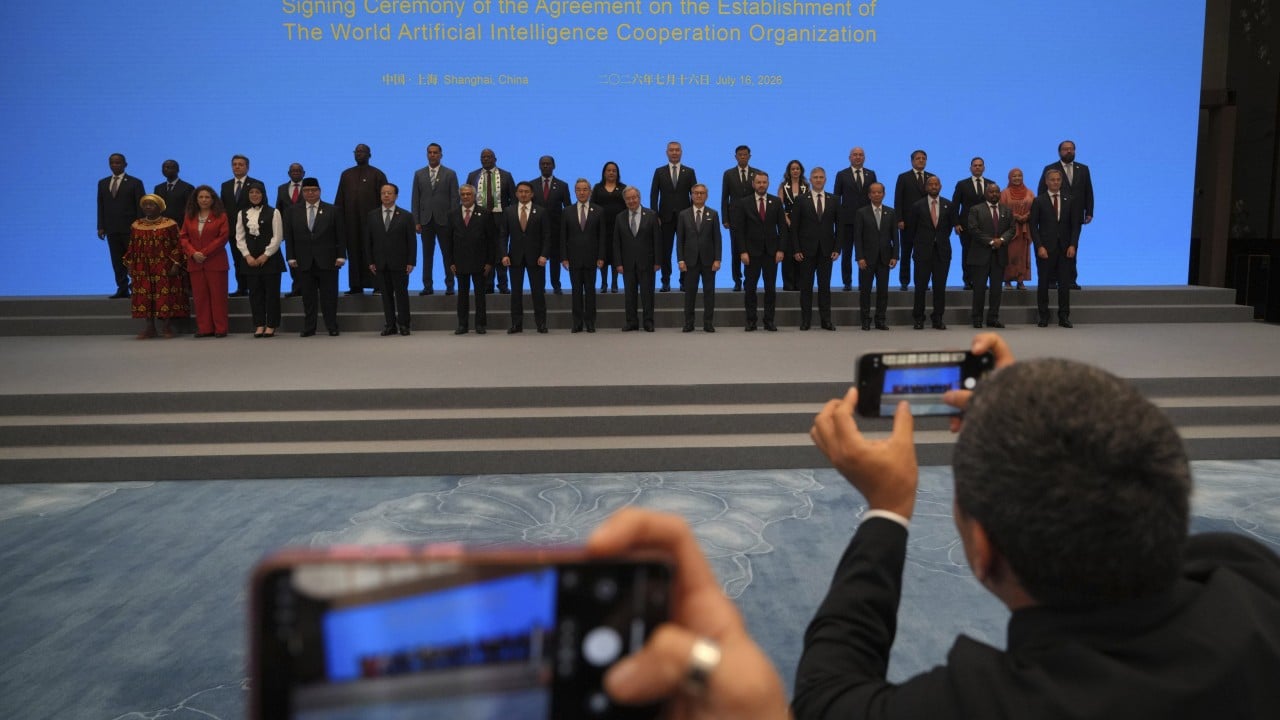
Then came the diplomatic overture ahead of the Shenzhen APEC summit.
On paper, the news reads like standard geopolitical choreography. Beijing signals a willingness—an active push, even—for artificial intelligence cooperation with Washington before leaders gather in China’s southern tech capital for the Asia-Pacific Economic Cooperation forum. Diplomats trade measured phrases about shared governance, risk mitigation, and keeping communication channels open. Analysts in Washington and Brussels squint at the wording, searching for hidden traps or shifts in leverage.
Read that dry summary, and you might scroll right past it. You might file it away under routine diplomatic posturing and go back to checking your email.
That would be a mistake.
Because beneath the stiff language of communiqués and trade summits lies a deeply human, terrifyingly practical reality. Two rival superpowers, locked in the fiercest technological race since the splitting of the atom, have quietly realized they are strapped into the same speeding car—and neither has a firm grip on the brakes.
The Architecture of a Shared Nightmare
To understand why Beijing is extending an olive branch in Shenzhen—and why Washington cannot afford to simply swat it away—you have to step out of the briefing rooms and into the messy, unpredictable reality of how modern AI actually works.
Consider a hypothetical scenario, grounded in the real-world vulnerabilities computer scientists lose sleep over every night.
Imagine a mid-level grid operator named Marcus working the graveyard shift in Ohio, while six thousand miles away, an engineer named Lin monitors water treatment telemetry in Guangdong. Neither Marcus nor Lin works for the military. Neither writes foundational AI models. They simply rely on automated software tools—built on open-source code libraries, trained on overlapping global datasets, and fine-tuned by third-party vendors—to keep lights on and water clean.
One Tuesday morning, an autonomous software agent designed to optimize energy load-balancing encounters an edge-case anomaly. Because its architecture shares underlying mathematical DNA with models deployed across borders, a cascading error doesn't respect maritime boundaries or tariff walls. A subtle poisoning of training data in one hemisphere manifests as a phantom surge in another.
This is not science fiction. It is the daily math of systemic risk.
When people talk about artificial intelligence competition, they tend to picture a footrace. One runner crosses the tape; the other loses. Victory is clean, absolute, and permanent. I used to view global tech policy through that exact lens—a tidy scoreboard of semiconductor fabrication capacity, parameter counts, and venture capital inflows. Watching how software actually propagates across borders cured me of that illusion.
AI is not a sprinter on a track. It is weather.
Once a breakthrough in model efficiency or autonomous reasoning is published, or once a vulnerability in a widely used neural network architecture is discovered, it does not stay parked inside a fenced compound in California or Shenzhen. Ideas leak through academic preprints, GitHub repositories, and the simple reality that mathematics obeys the laws of logic, not national passports.
Beijing’s push for AI dialogue ahead of the Shenzhen summit is an implicit acknowledgment of this atmospheric reality. You cannot build a seawall against the tide if you refuse to talk to the people standing on the opposite shore.
Why Shenzhen Matters More Than the Talking Points
Choice of venue is never an accident in international diplomacy.
If Beijing wanted merely to recite familiar grievances about semiconductor restrictions or cloud computing bans, any conference hall in any capital would suffice. Hosting the APEC summit in Shenzhen—and placing AI cooperation squarely on the pre-summit agenda—carries a deliberate, unmistakable subtext.
Forty-five years ago, Shenzhen was a collection of fishing villages and rice paddies bordering Hong Kong. Today, it is the hardware foundry of the planet. If you need a custom circuit board prototyped by tomorrow morning, a sensor array miniaturized by next week, or ten thousand robotic actuators assembled by the end of the month, you come here. The city’s identity is built on physical execution—turning abstract lines of code into plastic, glass, and silicon you can hold in your hand.
By anchoring AI cooperation talks in Shenzhen, Chinese officials are making a subtle, pragmatic argument to Washington and the broader APEC bloc. They are saying, in effect: Look around. The supply chains of intelligence are already entangled.
Consider what happens next when a researcher in San Francisco designs a new architecture for embodied AI—software meant to inhabit physical robots, surgical tools, or autonomous warehouse systems. The brain of that machine might be conceived in Palo Alto, trained on servers running chips designed in Santa Clara, tested using datasets annotated in Southeast Asia, and ultimately housed inside mechanical limbs machined in the Pearl River Delta.
Severing those links completely is not like unplugging a toaster. It is like trying to perform open-heart surgery on two conjoined twins while both are running a marathon.
The economic tremors are already visible. Export controls on advanced lithography equipment and high-end GPUs have forced Chinese labs to innovate around scarcity—squeezing extraordinary efficiency out of older hardware and aggressively championing open-weight AI models. Meanwhile, American firms face mounting pressure from investors to justify hundreds of billions of dollars in data center capital expenditure while navigating a patchwork of domestic and international rules.
Both sides are bleeding money, talent, and time into redundant parallel tracks. And both sides know that unchecked escalation increases the odds of a catastrophic miscalculation.
The Invisible Stakes of Safety
Strip away the trade tariffs and national pride, and you arrive at the core emotional nerve of the entire AI debate: fear.
Not the cinematic fear of silver-plated robots marching down Main Street. The real fear among the engineers, policymakers, and ethicists I have spoken with over the past decade is far quieter and much harder to legislate. It is the fear of losing comprehension.
Modern frontier models are no longer programmed line by line; they are grown. Engineers set the initial conditions, feed in oceans of text, video, and sensor data, and observe what emerges. Even the architects of these systems frequently admit they cannot trace the exact internal reasoning behind a given output.
Now layer geopolitical paranoia on top of technical opacity.
Suppose an early-warning system used by a national defense network misinterprets a routine satellite maneuver or an automated financial trading bot triggers a flash crash across Asian and North American markets simultaneously. In a world where Washington and Beijing have established clear technical hotlines, shared red-line protocols, and joint testing standards for AI safety, a crisis stays a crisis. Engineers pick up the phone, compare telemetry, and isolate the bug.
In a world without cooperation, a bug looks indistinguishable from an attack.
Pause and let that sink in.
History offers a sobering mirror. During the height of the Cold War, even as the United States and the Soviet Union aimed thousands of nuclear warheads at each other, scientists from both nations met quietly in places like Pugwash, Nova Scotia. They argued, drank terrible coffee, and hammered out shared vocabularies around radiation fallout, arms verification, and accidental launch prevention. They did not trust each other’s governments. They trusted the physics—and they understood that mutual ignorance was a death sentence.
We are standing at our own Pugwash moment, except the weapons are invisible, dual-use, and sitting on commercial servers accessible from a laptop in a coffee shop.
When China calls for AI cooperation with the United States ahead of APEC, skeptics rightly ask whether such calls are sincere or merely tactical—a bid to ease Western export restrictions or burnish Beijing’s image as a responsible global stakeholder. That skepticism is healthy. In statecraft, altruism is rare; self-interest is the reliable engine.
Yet self-interest is precisely what makes cooperation plausible. You do not need to trust a rival’s intentions to recognize that neither of you wants an engineered pathogen designed by an unaligned bio-model, an automated cyberweapon spiraling out of control, or a global financial system destabilized by rogue algorithmic trading.
What Cooperation Actually Looks Like on the Ground
If diplomats in Shenzhen manage to move past lofty speeches and sign something meaningful, it will not look like a grand merger of American and Chinese tech giants. The rivalries are too deep, the ideological differences over speech, surveillance, and state control too wide.
Instead, real progress will look unglamorous, technical, and granular.
It will look like standardized watermarking protocols so that synthetic audio and video generated in one country can be reliably detected by platforms in another before election interference or financial fraud takes root.
It will look like shared evaluation benchmarks—agreed-upon stress tests that frontier AI systems must pass before deployment, measuring whether a model can assist in creating biological threats or autonomously replicate across networks.
It will look like crisis-communication channels staffed not just by career diplomats, but by technical leads who actually know how to read a model’s weight logs and network traffic in real time.
It will also mean carving out protected zones for scientific collaboration. Climate modeling, protein folding for neglected tropical diseases, early earthquake detection across the Pacific Rim—these are domains where pooling compute and data across borders harms neither nation’s security while lifting millions of lives across APEC economies from Chile to Indonesia.
Of course, there is real uncertainty here. Domestic politics in Washington make any agreement with Beijing a lightning rod for accusations of weakness. Conversely, internal pressures within China to achieve total technological self-reliance push hard against concessions that might slow domestic champions. One poorly timed trade dispute, one naval incident in the South China Sea, or one high-profile intellectual property breach could derail months of quiet diplomatic groundwork overnight.
I won’t pretend the path forward is guaranteed. Honestly, watching how quickly trust can evaporate between capitals, there are days when pessimism feels like the only intellectually honest stance.
The Human Pulse Beneath the Code
Late at night in Shenzhen, after the trade delegates have retired to their hotels and the conference translators have taken off their headsets, the city reveals its true character.
In small noodle shops tucked behind gleaming office towers, young programmers sit shoulder to shoulder, scrolling through research papers published hours earlier in Montreal, London, and Seattle. Many of them studied at American universities. Many have former roommates working at leading labs in San Francisco. When they talk about artificial intelligence, they rarely speak in the language of geopolitical dominance. They talk about latency, hallucination rates, energy consumption, and whether the tools they are building will actually make life easier for their aging parents.
Across the ocean, in dimly lit apartments in Berkeley and Boston, young engineers ask the exact same questions over cold pizza.
Governments draw lines on maps and write rules about where silicon can travel. They have every right—and duty—to protect national security and economic vitality. Yet the technology itself is being birthed by a generation of builders who inhabit a shared intellectual commons, even when politics forces them behind separate firewalls.
The upcoming gathering in Shenzhen will test whether the leaders of the world’s two most powerful nations possess the imagination to match the brilliance of their engineers. Calling for cooperation is the easy part; it costs nothing to utter hopeful words before the cameras flash. Turning those words into binding guardrails—while suspicions run hot and billion-dollar fortunes hang in the balance—will require rare political courage.
Outside the glass atrium of the Shenzhen convention center, rain begins to fall again, washing the dust from the palm fronds and reflecting the amber glow of streetlights across the wet pavement. Somewhere inside a server rack humming beneath the city, trillions of mathematical weights adjust by a fraction of a decimal point, learning from the patterns we leave behind.
They are watching how we solve this.