The smell of damp newsprint and stale chai clings to the walls of a twelve-by-twelve room in Prayagraj, a city where two sacred rivers meet and millions of young dreams quietly go to die.
Picture a twenty-four-year-old named Aarav—a composite of the hundreds of thousands of students currently pacing the narrow alleyways of northern India’s coaching hubs. Aarav has spent four years memorizing the exact year the Battle of Plassey was fought, the precise constitutional amendments governing panchayats, and the chemical formulas of obscure compounds. He does not care about the chemistry. He cares about a stamp. A government stamp that promises a modest salary, a pension, and the right to look his aging father in the eye without flinching.
When the exam results finally drop on a glitchy government portal at two in the morning, Aarav does not find his roll number. Instead, he finds rumors of leaked question papers circulating on Telegram hours before the test began. He sees sudden, statistically impossible clusters of top scorers from a single testing center. He watches the institutions meant to guarantee his future shrug, issue a boilerplate denial, and move on.
Rage.
It does not arrive like a sudden thunderstorm; it builds like humidity before the monsoon, heavy and suffocating, until the air itself feels flammable. Across the world’s most populous nation, a demographic dividend—long celebrated in glossy economic forecasts as India’s greatest superpower—is curdling into a volatile political crisis.
The Architecture of Betrayal
To understand why young Indians are risking police batons and criminal records to flood the streets, you have to understand the math of desperation. India is a young country, with a median age under twenty-nine, and every year roughly twelve million young people enter the workforce. Yet the formal economy simply cannot absorb them. According to data from the Centre for Monitoring Indian Economy and various international labor reports, youth unemployment among graduates has hovered at alarming highs—often exceeding forty percent in certain brackets.
A government job in India is not merely a career choice. It is a lifeboat in a churning sea of informal, precarious labor.
When ten million applicants compete for thirty thousand railway or police clerk positions, the examination system becomes the sole arbiter of social mobility. It is the secular religion of the Indian middle and lower-middle classes. For a decade, Prime Minister Narendra Modi’s administration built an aura of invincibility around efficiency, meritocracy, and corruption-free governance. Young voters believed it. They rallied behind the promise of a "New India" where hard work, not family connections, dictated destiny.
Then came the cracks in the foundation.
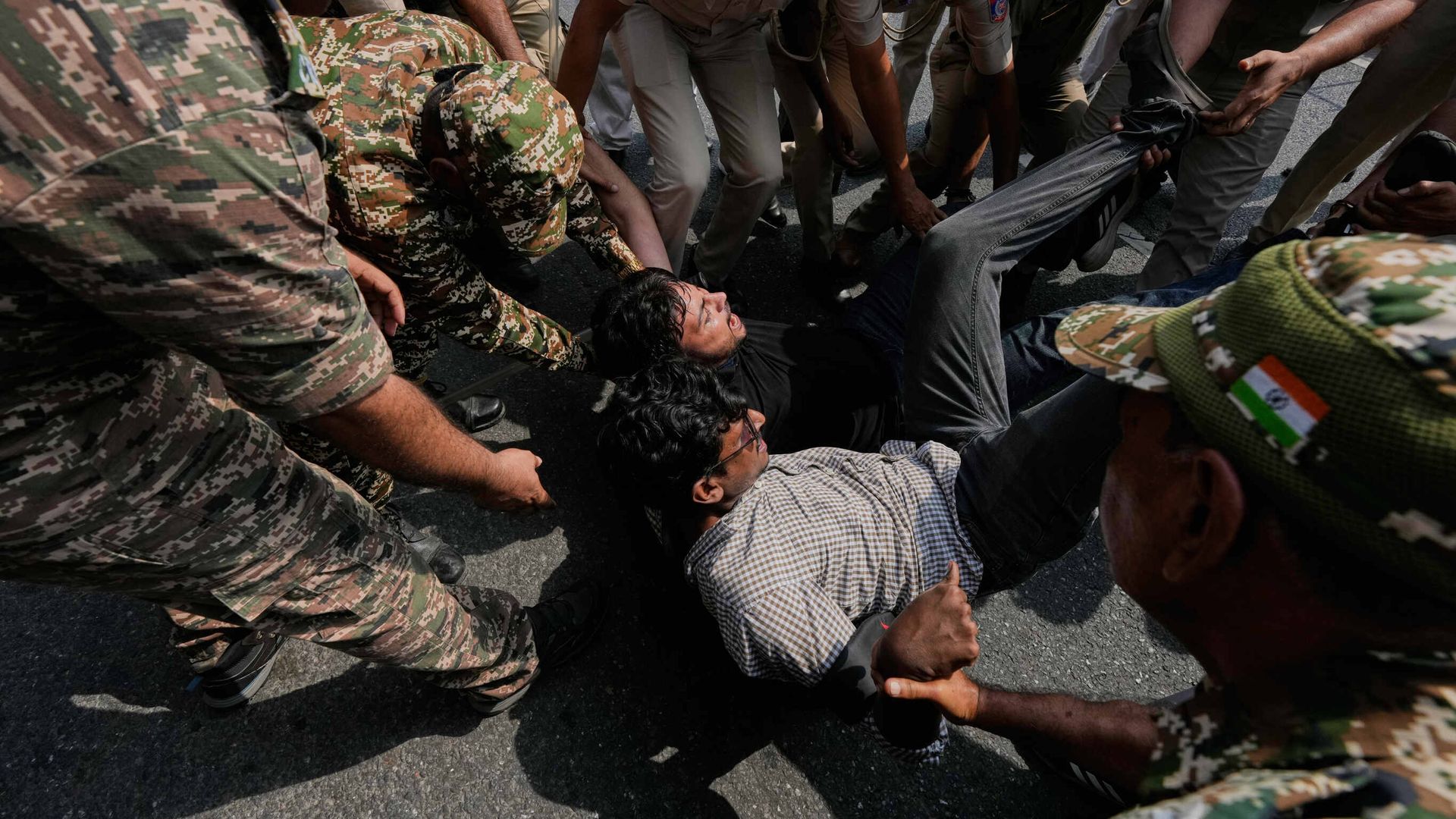
From the widespread uproar over the National Eligibility-cum-Entrance Test (NEET) for medical aspirants to the repeated cancellations of state-level recruitment exams in Uttar Pradesh and Bihar, the machinery began to visibly grind. Paper leaks ceased to be isolated anomalies; they became an industrialized shadow economy. When students took to the streets demanding accountability, they expected the state to act as a protector. Instead, they met barricades, water cannons, and preventive detentions.
When the Referee Joins the Game
The anger spilling onto the avenues of New Delhi, Patna, and Lucknow is no longer just about botched exams or vanishing jobs. It has mutated into a deeper, more existential crisis of faith—one aimed directly at the twin pillars of executive power and electoral legitimacy.
Think of a democracy like a high-stakes championship match. Citizens will endure losing a season, and they will tolerate bad weather, provided they believe the referee is blind to the jerseys. In India, that referee is the Election Commission.
For decades, the Election Commission of India enjoyed near-mythic status as an fiercely independent institution capable of conducting the largest logistical exercises in human history without fear or favor. Lately, however, a growing chorus of young activists, opposition figures, and civil society observers has begun questioning the umpire’s neutrality. Controversies surrounding the appointment process of election commissioners—which critics argue tilted the balance decisively toward the ruling executive—combined with heated disputes over voter roll deletions, delayed turnout data, and perceived leniency toward ruling party campaign rhetoric, have eroded that sacred trust.
To a twenty-two-year-old watching a protest get broken up by riot police, these seemingly abstract constitutional debates suddenly become visceral. If the exam board is compromised, you cannot get a job. If the courts are too slow, you cannot get justice. And if the election chief is perceived as unwilling to check the power of the Prime Minister, how do you ever change the system peacefully?
That is the invisible stake behind the headlines. When young people lose faith in the ballot box as a mechanism for self-correction, the street becomes the only parliament left.
The Anatomy of a Crackdown
I have walked through university campuses in the aftermath of student crackdowns, and the lingering sensation is rarely triumphant defiance. It is a cold, hollow dread. You see it in the way twenty-year-olds suddenly start glancing over their shoulders before mentioning a politician’s name in a coffee shop. You hear it in the lowered voices of hostel wardens warning students that a single First Information Report—an FIR filed by local police—is enough to permanently disqualify them from ever sitting for a government exam again.
Think about the sheer, surgical cruelty of that leverage.
You do not need mass arrests to silence a generation of job seekers. You only need to threaten their background checks. By deploying sedition-adjacent statutes, strict public order laws, and aggressive policing against peaceful campus sit-ins, the state turns a student’s own ambition into a leash. Protest today, and the police file ensures you never wear a uniform or sit behind a government desk tomorrow.
Consider what happens next in a hypothetical household in rural Bihar. A father sells half an acre of ancestral land to pay for his daughter’s coaching fees in the city. She marches peacefully outside a commission office because the answer key to her exam was blatantly wrong. A baton strikes her shoulder; a camera captures her face; a local constable jots down her name. Within forty-eight hours, the family isn't talking about exam reform anymore. They are pooling their remaining savings to hire a local lawyer to scrub her name from a police ledger.
The protest ends not because the grievance was resolved, but because the cost of speaking up was raised beyond what any working-class family can afford.
The Echoes of History
History rarely repeats itself cleanly, yet it has a habit of rhyming in the exact same meter.
In the mid-1970s, student protests in Gujarat and Bihar—initially sparked by mundane issues like rising hostel food prices and corruption—snowballed into a nationwide movement that ultimately shook the foundations of Indira Gandhi’s government. Those young people were not ideological revolutionaries. They were pragmatic kids who felt the social contract had been torn up in front of their eyes.
Today’s youth movement is fractured, decentralized, and largely leaderless, making it both harder to organize and harder to permanently extinguish. Unlike the analog era, censorship cannot fully erase a smartphone video of police dragging female students by their hair outside a university gate. Digital networks allow a spark in Allahabad to ignite a solidarity march in Bengaluru within hours.
Yet the response from the top remains strikingly rigid. Rather than treating student unrest as an early warning system for a structural economic failure, the political establishment frequently frames dissent as an orchestrated conspiracy—a law-and-order nuisance instigated by political rivals or "anti-national" elements determined to tarnish India’s global image.
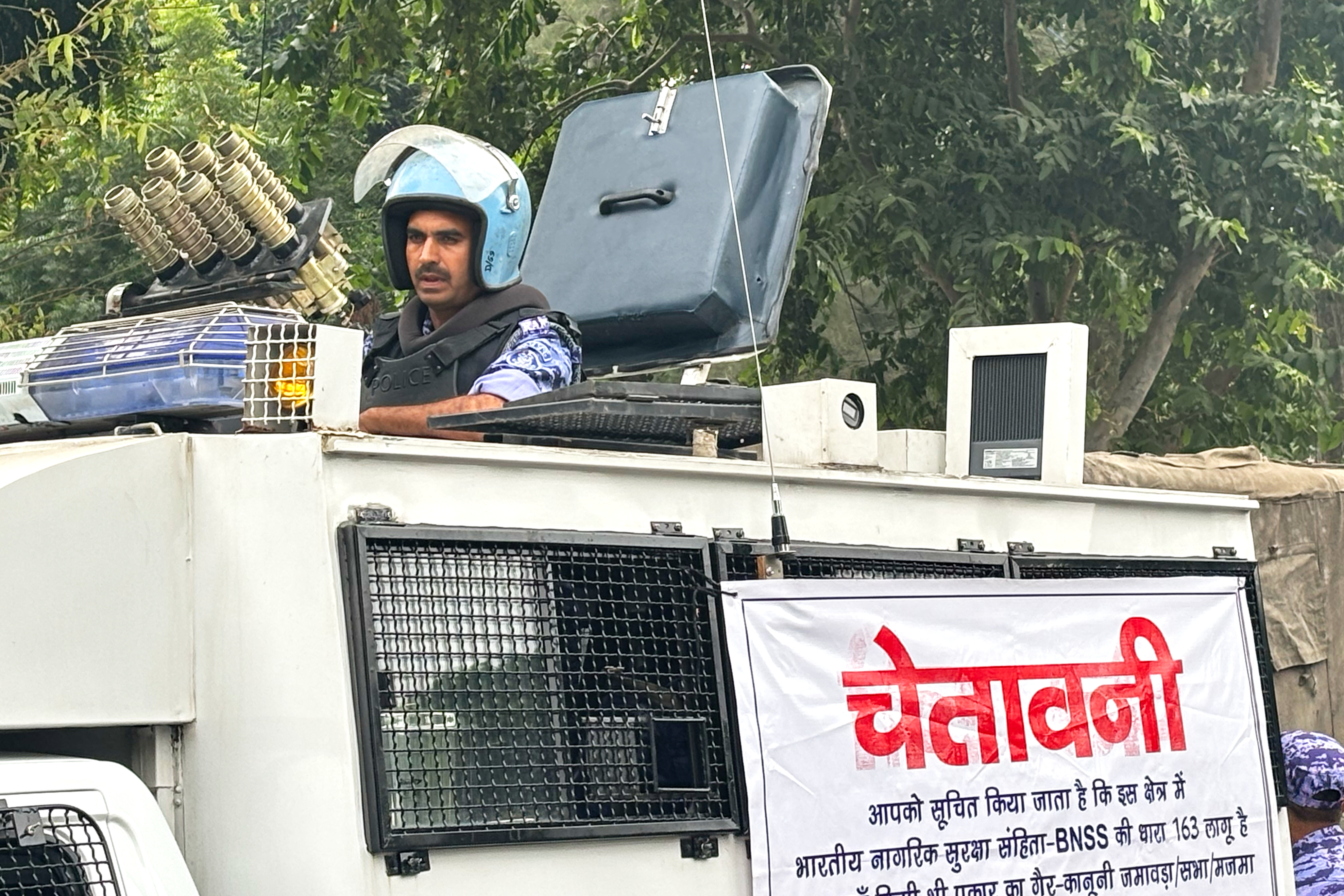
It is an old political reflex, and a dangerous one. You can arrest the student leaders, ban gatherings under Section 163 of the new criminal code, and flood television news panels with pundits praising macroeconomic GDP growth. None of those tactics creates a single entry-level job. None of them restores the credibility of an election commission whose impartiality is being debated at village tea stalls.
Living in the Uncertainty
It is tempting, from a comfortable distance, to reduce this turmoil to a simple morality play—heroic youth versus an authoritarian state. Reality on the ground is far messier, and honestly, more unsettling.
Many of the young men and women shouting slogans against the Prime Minister and the electoral apparatus today voted enthusiastically for the very same leadership just a few years ago. They are not driven by an entrenched hatred of the government; they are driven by the panic of watching their youth slip away in waiting rooms. Some worry that if the current administration weakens, political instability could stall the infrastructure boom India desperately needs. Others fear that unchecked executive power will hollow out democratic guardrails until India resembles a managed democracy in name only.
Both fears can exist in the same crowded hostel room. That confusion is precisely what makes this moment so volatile. When citizens do not know whom to trust—not the politicians, not the bureaucrats, not the courts, not the election monitors—cynicism fills the vacuum. And cynicism is a terrible fuel for a democracy.
The Unopened Envelope
Back in that cramped room in Prayagraj, night falls over the concrete rooftops. The ceiling fan wobbles on its iron rod, slicing the humid air with a rhythmic, metallic click.
On a plastic table next to a stack of dog-eared general knowledge guides lies a brown envelope containing a freshly printed admit card for yet another rescheduled exam. The ink is slightly smudged. Outside, down on the main road, the blue and red strobes of a police patrol van wash rhythmically across the shuttered storefronts, casting long, trembling shadows up the stairwell.
Aarav sits on the edge of his cot, staring at the paper in his hands, trying to calculate the odds that this time the test won't be leaked, the results won't be rigged, and his voice will actually count.