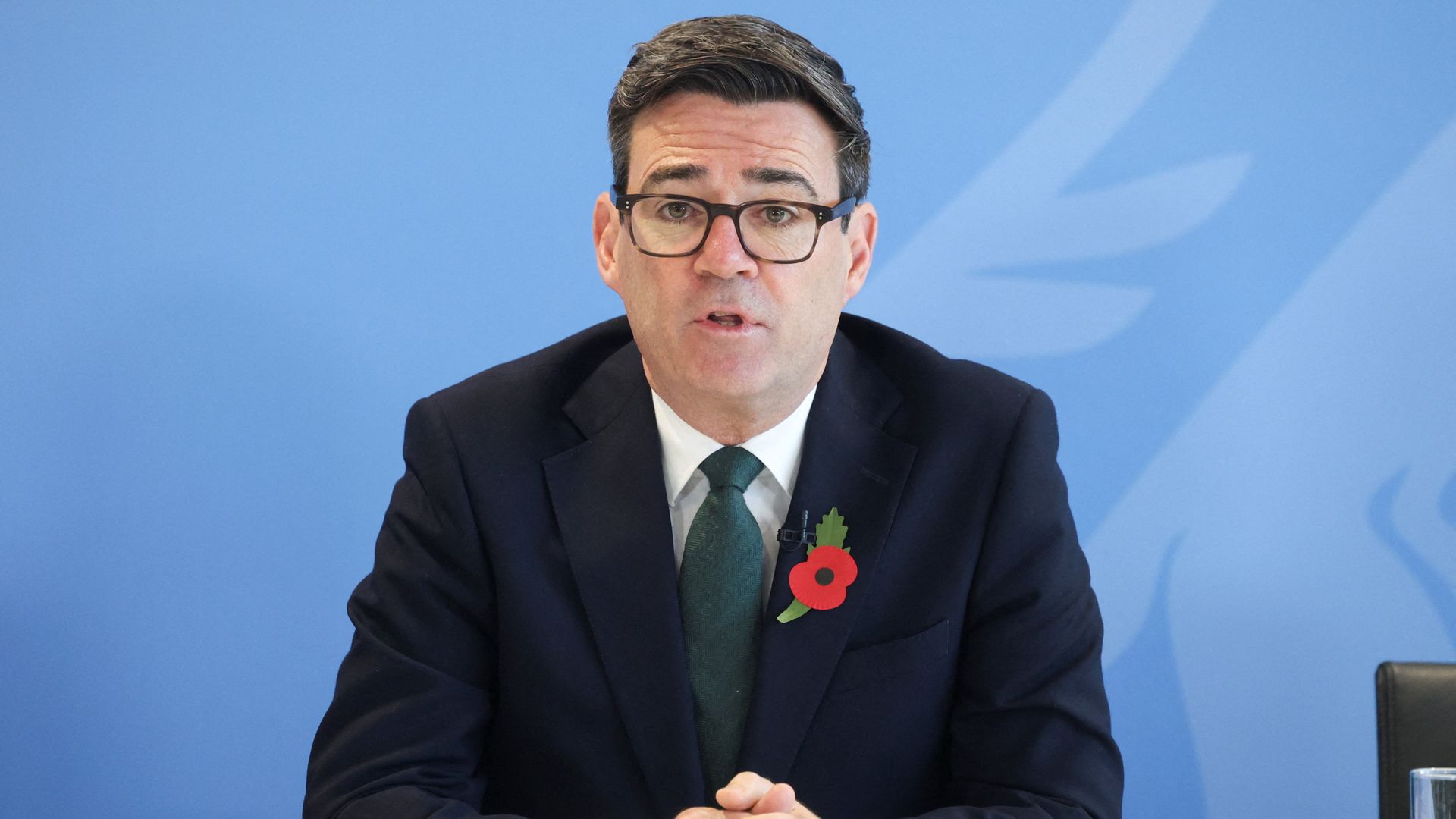
Downing Street is signaling a willingness to engage in an "honest discussion" about restoring aspects of European Union free movement, specifically through targeted youth mobility schemes and sector-specific visa arrangements. While official spokespeople continue to rule out a full return to the single market or the wholesale restoration of pre-Brexit migration rules, the rhetoric from Number 10 marks a distinct shift in British political calculus. Facing persistent labor shortages, stagnant productivity, and mounting pressure from European capitals during broader trade and security negotiations, the Prime Minister is testing the political waters for a pragmatic softening of the UK-EU border.
For years, the phrase "free movement" functioned as the ultimate third rail of British politics. Touching it meant instant electoral electrocution. Both major parties treated the end of automatic residency and work rights for European Economic Area citizens as an immutable baseline, a settled question carved into the bedrock of post-2016 governance. Yet economic gravity has a way of eroding even the sturdiest political dogma.
The numbers tell a stark story. Since the UK formally exited the single market at the end of 2020, British businesses across hospitality, construction, logistics, and higher education have struggled to fill hundreds of thousands of vacancies. The post-Brexit points-based immigration system was designed to prioritize high-skilled global talent while curbing lower-wage inflows from the continent. In practice, it created a bureaucratic labyrinth that proved prohibitively expensive for small and medium-sized enterprises while failing to reduce overall net migration, which actually surged to record highs driven by non-EU arrivals in health, social care, and university sectors.
The Brussels Bargaining Table
To understand why the Prime Minister is opening the door to this conversation now, one must look across the English Channel rather than at Westminster press briefings. The UK government has made resetting relations with the European Union a centerpiece of its foreign and economic policy. Downing Street wants closer security cooperation, a veterinary agreement to ease agrifood border checks, mutual recognition of professional qualifications, and smoother touring arrangements for British artists.
Brussels has been entirely transparent about the price of admission. For the European Commission and key member states like France, Germany, and Spain, a "reset" cannot be an a la carte menu where Britain picks the trade easements it likes while ignoring the priorities of the bloc. At the very top of the European Union's wish list is a reciprocal Youth Mobility Scheme.
In April 2024, the European Commission formally proposed negotiations on an agreement that would allow young citizens aged 18 to 30 from the EU and the UK to live, study, and work in each other's territories for up to four years. Initially, the British political establishment rejected the proposal out of hand, branding it "free movement by the back door."
That flat refusal proved unsustainable. European diplomats made it clear in private meetings that without movement on youth mobility, progress on defense pacts, energy cooperation, and trade friction reduction would stall indefinitely. When the Prime Minister speaks of an "honest discussion," it is a direct acknowledgment of this diplomatic reality. You cannot demand frictionless trade and security integration from a trading bloc while refusing to discuss the mobility of its citizens.
The Anatomy of a Youth Mobility Scheme
Opponents of any rapprochement with Brussels frequently conflate a youth mobility scheme with the full restoration of EU free movement. From a legal and operational standpoint, the two concepts are fundamentally different, though the distinction is easily blurred in partisan debate.
Under the pre-Brexit regime of free movement, any citizen of an EU member state had an automatic, treaty-backed right to enter the UK, seek employment, establish a business, bring dependents, and eventually claim permanent residency and access to the welfare state. There were no caps, no time limits, and no visa fees.
A youth mobility arrangement operates on entirely different mechanics:
- Strict Age Limits: Eligibility is restricted strictly to young adults, typically between the ages of 18 and 30 or 35.
- Temporary Duration: Visas are time-limited, usually ranging from two to three years, and do not automatically provide a pathway to permanent settlement.
- No Dependents: Applicants generally cannot bring spouses or children with them under the scheme.
- Financial Self-Sufficiency: Participants must prove they have sufficient savings to support themselves upon arrival and are barred from accessing public funds or welfare benefits.
- Reciprocity: Every right granted to a French or German citizen in London is mirrored for a British citizen in Paris or Berlin.
The UK already operates bilateral youth mobility schemes with more than a dozen countries, including Australia, Canada, New Zealand, South Korea, and Japan. In 2023, the British government even expanded its agreement with Australia, raising the age limit to 35 and extending the maximum stay to three years. Extending a similar framework to European neighbors is hardly a radical departure from existing British immigration policy.
The friction lies in the details of the European Commission's specific proposal. Brussels wants the scheme to be uncapped, wants EU students to pay domestic rather than international tuition fees at British universities, and wants to waive the Immigration Health Surcharge—a fee that currently costs visa applicants over £1,000 per year to fund the National Health Service. For a British Treasury desperate for revenue and a political class sensitive to net migration figures, those specific demands remain major sticking points.
The Economic Reality Behind the Rhetoric
Beyond the diplomatic chess match with Brussels sits a domestic economic problem that neither the Treasury nor the Bank of England can easily solve. For decades, the British economy relied on a flexible supply of European labor to absorb seasonal spikes in demand and fill essential roles in sectors with thin profit margins.
Consider a hypothetical medium-sized hospitality group operating twenty hotels across the south of England. Prior to 2021, this business could recruit seasonal staff from Spain, Poland, or Italy within weeks, paying zero visa fees and facing minimal administrative overhead. Today, sponsoring a single overseas worker under the Skilled Worker visa route costs thousands of pounds in upfront fees, requires the role to meet strict salary thresholds that far exceed standard hospitality wages, and involves months of bureaucratic processing. The result is predictable: reduced operating hours, uncleaned rooms, higher prices for consumers, and lost tax revenue for the Exchequer.
The same structural bottleneck plagues other vital industries.
- Construction and Infrastructure: The government has set ambitious targets for building new homes and upgrading national energy grids. Yet the domestic construction workforce is aging rapidly, and apprenticeship pipelines take years to yield qualified tradespeople.
- Higher Education and Research: British universities rely heavily on international tuition fees to subsidize domestic teaching and scientific research. Since Brexit, the number of EU students enrolling at UK institutions has plummeted by more than half, stripping universities of vital funding and weakening cross-border academic networks.
- Creative Industries: British musicians, theatre companies, and technical crews face costly carnets, work permits, and cabotage rules when touring Europe, damaging an export sector that punches far above its weight globally.
An "honest discussion" about mobility is, at its core, an admission that the current post-Brexit economic model is misfiring. Growth has remained sluggish, business investment has lagged behind G7 peers, and the promised transition to a high-wage, high-productivity economy fueled purely by domestic automation has failed to materialize on the timeline politicians promised.
The Political Trap of Net Migration Numbers
If the economic logic for closer mobility ties is straightforward, the political math is treacherous. The British public remains deeply skeptical of high immigration levels, and any policy perceived as loosening border controls invites immediate backlash from opposition parties and segments of the national press.
The central challenge for Downing Street is how net migration is measured and perceived. Under standard international definitions used by the Office for National Statistics, anyone coming to the UK for more than twelve months is counted in the headline net migration figure. This includes international students, temporary workers, and youth mobility participants, even though the vast majority leave the country once their visas expire.
If the UK signs a youth mobility agreement with the EU and tens of thousands of young Europeans arrive to work in London cafes or study in Manchester, the headline net migration statistics will rise in the short term. To an electorate that has repeatedly voted for lower immigration, the technical distinction between a temporary two-year cultural exchange visa and permanent settlement matters very little. Critics will point to the rising headline number as proof that the government has broken its promises on border control.
Furthermore, polling consistently reveals a sharp divide within the electorate. Voters in major metropolitan centers, younger demographics, and business owners overwhelmingly favor closer ties with the EU and reciprocal mobility rights. Conversely, voters in post-industrial towns and older demographics remain fiercely protective of national sovereignty over borders and view any concession to Brussels with deep suspicion.
Navigating this divide requires delicate political framing. Downing Street must convince skeptical voters that structured, time-limited mobility schemes actually strengthen border control by replacing chaotic, expensive visa bottlenecks with orderly, reciprocal agreements that benefit young Britons just as much as their European counterparts.
What an Actual Deal Would Look Like
A full return to EU free movement—complete with treaty-enshrined rights to permanent residency and full welfare access—remains off the table for the foreseeable future. Neither the current British government nor the opposition has the political mandate or the parliamentary appetite to reopen the core constitutional questions of the 2016 referendum.
Instead, the "honest discussion" is likely to produce a series of targeted, pragmatic compromises over the next two years. Based on ongoing diplomatic signals from both London and Brussels, a realistic landing zone includes several key components:
- A Capped Youth Mobility Framework: The UK will likely resist the EU's demand for an uncapped scheme, pushing instead for an annual quota—perhaps 30,000 to 50,000 places per year—mirroring existing arrangements with Commonwealth nations.
- Retention of Health Surcharges: Downing Street is unlikely to waive the Immigration Health Surcharge entirely, though it may negotiate discounted rates for students or short-term placements to appease Brussels.
- Mutual Recognition of Qualifications: A streamlined framework allowing architects, engineers, accountants, and medical professionals to have their credentials recognized across borders without redundant requalification exams.
- Touring Visa Waivers: Specific exemptions for creative professionals, sportspeople, and business travelers conducting short-term work in the EU and UK, eliminating the red tape that currently hamstrings touring artists.
Brussels will push hard for more, particularly on university tuition fees, arguing that EU students should not be treated identically to applicants from non-European countries. London will push back just as hard, knowing that British universities, already facing severe financial strain, would rebel against any policy that cuts their fee income without a corresponding Treasury bailout.
The End of the Post-Brexit Taboo
The most significant aspect of the Prime Minister's intervention is not any immediate policy announcement, because none has been made. It is the breaking of a decade-long silence. For nearly ten years, British political discourse was paralyzed by the fear of re-litigating the past. Politicians spoke in coded euphemisms, pretending that geography did not matter and that the UK could diverge indefinitely from its largest trading partner without paying an economic price.
By acknowledging the need for an honest conversation about mobility, Downing Street is admitting that the post-Brexit settlement is a living, evolving arrangement rather than a finished monument. Whether through a formal youth mobility scheme, bilateral labor accords with individual member states, or targeted sector exemptions, the wall between Britain and Europe is gradually becoming more permeable. The debate is no longer about whether the UK will find new ways to move people across the Channel, but how much political capital the government is willing to spend to make it happen.