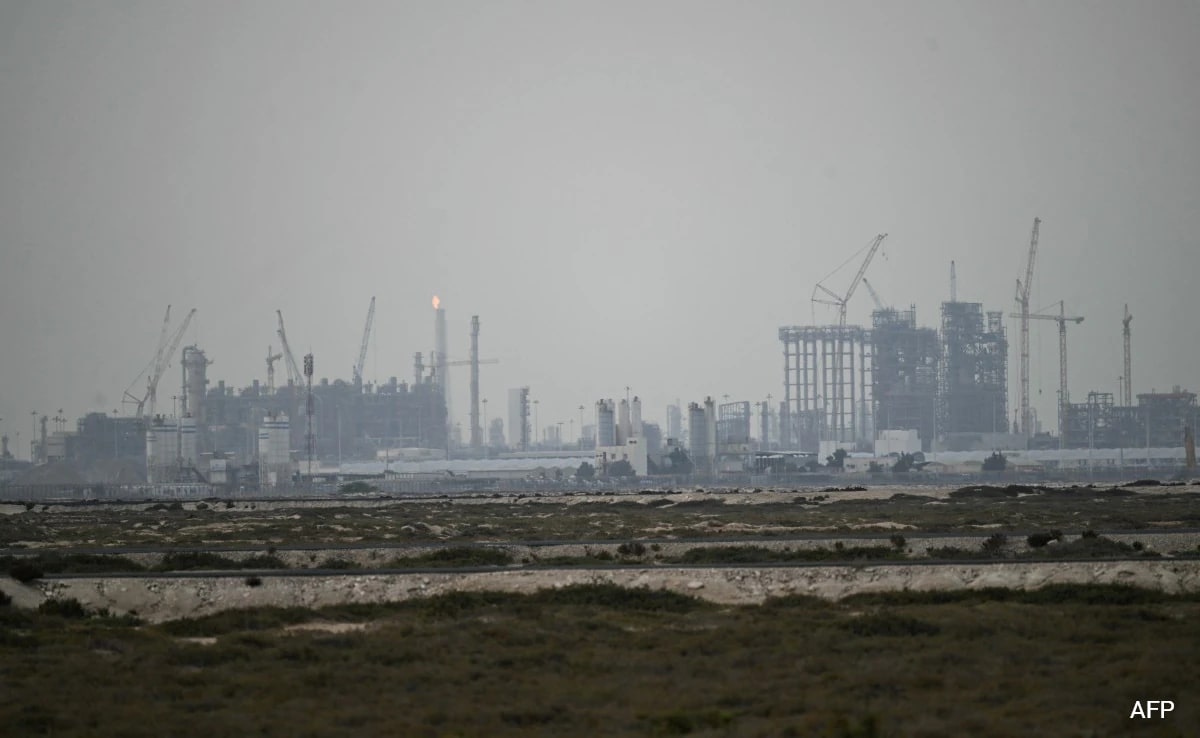
A massive fireball tore through the night sky north of Doha, lighting up the horizon for miles. The sudden, violent boom on Sunday evening shattered the quiet across Qatar’s premier industrial zone. It didn't take long for the grim numbers to emerge from official channels.
Fifty-four people are injured. Eighteen remain completely unaccounted for.
The crisis hit the Barzan gas facility, a vital nerve center located within the massive Ras Laffan Industrial City complex. While state-owned QatarEnergy quickly announced that emergency response teams contained the fire, the sheer scale of the human toll tells a much heavier story. Search and rescue crews, including the specialized Qatari International Search and Rescue Group, worked straight through the night under floodlights, desperately combing through twisted steel and scorched infrastructure to find the missing workers.
For anyone tracking global energy, this isn't just a localized workplace tragedy. It's a wake-up call at the absolute center of the world's liquefied natural gas network.
The Breakdown at Barzan
State officials are calling the blast a technical accident. According to corporate statements, the explosion triggered during the delicate start-up phase of local gas operations. Anyone who has ever worked on an industrial energy site knows that start-ups are uniquely dangerous. Bringing massive, pressurized systems online involves complex thermal dynamics, shifting pressures, and highly volatile hydrocarbon compounds. One minor valve failure or a single structural weakness can spell instant disaster.
Fortunately, the Ministry of Interior confirmed that no hazardous gas leaks escaped into nearby communities. Public safety outside the fence line isn't under threat. But inside the facility, the devastation is real.
To understand why this specific location matters so much, you have to look at what the Barzan plant actually does.
- Domestic Powerhouse: The facility possesses a massive processing capacity of 1.4 billion cubic feet of gas per day.
- Local Lifeblood: Unlike other sections of Ras Laffan that ship fuel across the globe, Barzan specifically fuels Qatar's domestic power grid and water desalination plants.
- Industrial Feedstock: It produces vital secondary commodities, including ethane, liquefied petroleum gas, and sulfur for local manufacturing.
Basically, if Barzan stays offline for an extended period, Qatar's internal infrastructure feels the squeeze immediately.
Why the Timing Couldn't Be Worse
Let's look at the bigger picture because context changes everything. This technical failure didn't happen in a vacuum. It struck right in the middle of severe geopolitical friction throughout the Persian Gulf. Even though Qatari officials explicitly blame an internal mechanical issue, energy markets are incredibly jittery right now.
Ras Laffan is the undisputed crown jewel of global LNG production. The complex processes a staggering 77 million metric tonnes of gas annually through 14 massive processing units called trains. A major disruption here doesn't just threaten local electricity. It threatens winter heating supplies in Europe and industrial manufacturing hubs across Asia.
When a critical cog in that machine catches fire, traders notice. Insurance premiums for shipping vessels spike. Natural gas futures fluctuate. It forces everyone to realize just how fragile our highly centralized energy networks really are.
What Happens Right Now
If you operate in the industrial safety space, or if you are tracking the economic ripples of this event, the immediate next steps are highly tactical.
First, the immediate focus remains entirely on accountability and recovery. Civil defense teams must finish clearing the blast zone before structural engineers can safely enter to assess the integrity of the surrounding processing trains.
Second, expect an immediate tightening of operational protocols across all Middle Eastern energy hubs. When an incident of this scale occurs during a standard procedure like a facility start-up, every similar plant in the region usually pauses non-essential maintenance to audit their own valves, pressure sensors, and ignition-prevention systems.
The coming days will reveal the true extent of the structural damage at Barzan. Until then, the primary focus stays on the safety teams navigating the wreckage, searching for the eighteen individuals who went to work on a Sunday evening and never came home.