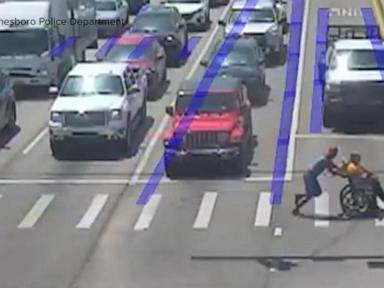
A guy dressed in full Spider-Man gear running across a jammed four-lane road isn't something you see every Tuesday.
When a viral video caught a cosplayer sprinting into heavy traffic to guide an elderly man across a busy intersection, the internet reacted the way it always does. People cheered. Clips got reposted millions of times. Headlines declared humanity saved for another afternoon. Meanwhile, you can find other stories here: The Media Circus at the Press Gala Misses the Real Political Play.
Viral feel-good moments hit different when real risk is involved.
Traffic wasn't stopped. Drivers weren't paying attention. A frail pedestrian was stranded halfway through a signal cycle that clearly didn't give him enough time to reach the curb. The cosplayer didn't hesitate. He stepped off the sidewalk, held out a hand to signal oncoming cars, and walked the man safely to the other side before slipping back into the crowd. To explore the full picture, we recommend the recent article by The Guardian.
It made for great footage. But it also points to a much bigger problem we usually ignore once the video loops out of our feeds.
Why Street Intersections Are Failing Pedestrians
Our roads aren't built for people. They're built for speed.
Urban design across most major cities prioritizes vehicular throughput over pedestrian safety. That sounds technical, but it's simple. Traffic lights give cars broad windows to clear an area, while giving walking pedestrians barely enough seconds to make it across if they maintain a brisk pace.
If you move slowly, carry heavy groceries, or rely on a cane, crossing a modern avenue turns into a dangerous gamble.
According to data from the National Highway Traffic Safety Administration (NHTSA), pedestrian fatalities have hit levels not seen in three decades. Thousands of pedestrians die on roads every year, with a staggering percentage of those incidents taking place at non-signalized locations or during brief crossing windows at complex junctions.
When a guy in a suit has to physically block traffic to help someone cross, your city's infrastructure failed.
The Hero Effect and Why Public Action Matters
Psychologists talk a lot about the bystander effect. It's that eerie phenomenon where twenty people watch a problem unfold and nobody moves because everyone assumes someone else will handle it.
Breaking that trance takes a clear spark.
Wearing a mask ironically gives people a weird kind of freedom. Cosplayers often report feeling less self-conscious and more empowered to step up when wearing a suit. Whether it was the costume or raw instinct, the individual in that clip bypassed the usual hesitation that keeps observers glued to the sidewalk.
Good actions trigger a cascade.
Seeing someone take a risk for a stranger disrupts our daily routine. It snaps us out of autopilot. Research in behavioral economics shows that witnessing direct prosocial acts makes people significantly more likely to offer help in immediate follow-up situations.
You don't need a spandex suit to break the bystander effect, though. You just need to be willing to be the first person to move.
Simple Steps to Keep Your Community Streets Safe
Waiting for city planners to redesign every dangerous crosswalk in town takes years. You can take immediate, practical steps right now to improve pedestrian safety in your neighborhood.
- Report bad signals. Most municipalities have a 311 service or online portal. If a pedestrian light in your area doesn't grant enough time for a slow walk, submit a timing adjustment request today.
- Drive with active scanning habits. Put the phone away. When approaching any intersection, look specifically for pedestrians waiting at the curb corners, not just for the green light ahead.
- Step up directly. If you see someone struggling with a walker, heavy bags, or a stroller near a fast road, offer a hand or walk alongside them to increase their visibility to oncoming traffic.
- Advocate for traffic calming. Push local city council representatives to implement simple fixes like bulb-outs, pedestrian refuge islands, and lowered speed limits near high-foot-traffic zones.