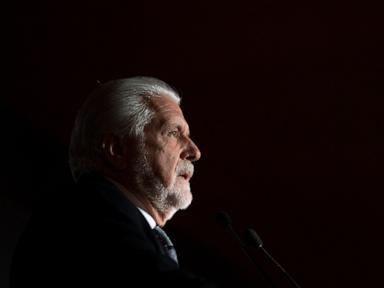
The international press is running its favorite playbook again. A high-profile ally of Brazilian President Luiz Inácio Lula da Silva gets targeted in a federal fraud investigation, and the media immediately jumps to the same tired narrative: corruption is an exceptional rot, the judiciary is heroically cleaning house, and political stability is hanging by a thread.
This lazy analysis misses the fundamental reality of how power operates in Brasília.
These sprawling federal police operations are not existential crises for the Brazilian political establishment. They are the cost of doing business. For decades, observers have watched the spectacle of police vans pulling up to politicians' mansions at dawn, treating it like a sudden rupture in the democratic fabric. Having analyzed emerging market risk and political economy dynamics for over fifteen years, I can tell you that these raids are actually a lagging indicator of a highly stable, self-regulating equilibrium.
The mainstream press views corruption as an external virus attacking an otherwise healthy bureaucratic organism. The reality is far more transactional. In a highly fragmented congressional system where a president must wrangle dozens of ideological parties to pass a single line of legislation, the distribution of state resources isn't an aberration—it is the primary mechanism of governance.
The Illusion of the "Clean Sweep"
Every time the Federal Police launch a phase of a major probe, global markets react with rehearsed shock. Headlines scream about the end of an administration or a massive shift in voter sentiment.
They said it during the Mensalão scandal in 2005. They said it during the multi-year saga of Lava Jato (Operation Car Wash), which supposedly dismantled the entire political class. Yet, if you look at the structural mechanics of Brazilian governance today, the exact same dynamics persist. The names on the office doors change; the system remains perfectly intact.
The fundamental flaw in the standard media narrative is the belief that anti-corruption operations permanently shrink the scope of political horse-trading. They do not. They merely reprice the risk. When the judiciary increases the pressure on a specific faction, it temporarily devalues that faction's political currency, allowing rivals to step into the vacuum and demand a higher premium for their legislative votes.
Consider how the Centrão—the fluid block of centrist parties that effectively controls the Brazilian Congress—operates. They do not care about ideological purity, nor are they existential targets of these probes. They are the survivors. When an ally of the executive branch falls under scrutiny, it gives congressional power brokers more leverage, not less. The executive branch becomes desperate for legislative protection, meaning more budgetary amendments and more administrative appointments get handed over to keep the government afloat.
Why More Investigations Equal More Stability
It sounds entirely counter-intuitive, but a steady stream of targeted police investigations actually prevents total systemic collapse.
Imagine a scenario where a boiler has no release valve. The pressure builds until the entire structure explodes. In the Brazilian context, high-profile judicial probes serve as that release valve. They offer the public a recurring spectacle of accountability—complete with televised arrests and leaked wiretaps—without ever forcing a rewriting of the underlying constitutional rules that mandate coalition management via pork-barrel spending.
The public gets its catharsis. The media gets its clicks. The political class sacrifices a pawn or two to protect the king.
Look at the hard data regarding economic performance during these political storms. While the headlines suggest total paralysis, the underlying structural reforms and macroeconomic policies often move forward completely uninterrupted. The central bank maintains its autonomy, fiscal frameworks are renegotiated, and agricultural exports continue to break records. The institutional framework is deeply decoupled from the individual fates of political actors. If an ally of the president falls, the market might twitch for forty-eight hours, but the structural trend lines remain flat.
The True Cost of the Anti-Corruption Spectacle
There is a severe downside to this cycle, but it is not the one the editorial boards complain about. The real danger of the continuous, sensationalized fraud probe is the weaponization of the compliance apparatus itself.
When anti-corruption becomes the primary tool for political competition, institutions are forced to over-regulate. Bureaucrats become terrified of signing off on legitimate infrastructure projects, public works stall not because of theft, but because of administrative paralysis. Risk aversion replaces execution. I have seen massive municipal development projects grind to a halt for years simply because a low-level administrator refused to sign a standard procurement order, fearing that a future, politically motivated audit would retroactively classify the decision as fraudulent.
This institutional paralysis costs developing economies far more in lost GDP growth than the actual leaked funds from the original corruption schemes ever did. We are trading the economic cost of graft for the far higher economic cost of total administrative stagnation.
Dismantling the Premise of the "Clean Government"
When people ask, "When will Brazil finally clean up its political system?" they are asking a fundamentally flawed question. They are operating under the assumption that a modern nation-state can govern a continental territory with massive regional disparities through pure ideological alignment and technocratic perfection.
It cannot. The fragmentation of the Brazilian electorate requires a transactional political currency to forge majorities. If you outlaw the current form of regional budget allocations, the system will naturally innovate a new, more complex method to achieve the exact same result.
Stop looking at the dawn raids as a sign of a regime on the brink of collapse. Start looking at them for what they truly are: a highly sophisticated, public-facing ritual that allows a deeply entrenched political ecosystem to shed its most exposed liabilities, recalibrate its internal power balances, and continue operating exactly as it always has.
The vans will drive back to headquarters, the assets will be frozen, the political allies will issue calculated statements of distance, and by Monday morning, the bills in Congress will still be bought and sold using the exact same arithmetic. The show goes on because the show is the system.


